

中国核心期刊要目总览
中国科技核心期刊
CSCD数据库源刊
中国科技核心期刊
CSCD数据库源刊
兽类学报 ›› 2026, Vol. 46 ›› Issue (2): 278-286.DOI: 10.16829/j.slxb.151006
孙雨婷, 杨东东, 李印虎, 巩匆然, 胡罕, 苏丽娜, 李佩韦, 刘艳, 张洪锋, 吴晓民( )
)
收稿日期:2024-08-28
接受日期:2025-02-20
出版日期:2026-03-30
发布日期:2026-03-06
通讯作者:
吴晓民
作者简介:孙雨婷(1983- ),女,博士,主要从事野生动物保护与利用研究.
基金资助:
Yuting SUN, Dongdong YANG, Yinhu LI, Congran GONG, Han HU, Lina SU, Peiwei LI, Yan LIU, Hongfeng ZHANG, Xiaomin WU()
Received:2024-08-28
Accepted:2025-02-20
Online:2026-03-30
Published:2026-03-06
Contact:
Xiaomin WU
摘要:
肠道菌群在宿主的生理稳态中起着至关重要的作用,受多种因素的影响。本研究运用16S rDNA高通量测序和生物信息学方法对雄性和雌性藏羚(Pantholops hodgsonii)肠道菌群组成及多样性进行分析。结果表明:雌性藏羚获得6 896个OTUs,雄性藏羚获得5 609个OTUs,二者共有2 650个OTUs。在α多样性分析中雌性藏羚的肠道菌群丰富度显著高于雄性藏羚(P < 0.05)。厚壁菌门(Firmicutes)和拟杆菌门(Bacteroidota)为雌雄性藏羚优势菌门。气单胞菌属(Aeromonas)、假单胞菌属(Pseudomonas)、甲基杆菌属(Methylobacterium)等12个菌属在雄性藏羚肠道中的丰度显著高于雌性(P < 0.05),而Ruminococcaceae_UCG、阿克曼氏菌属(Akkermansia)、消化球菌属(Peptococcus)等16个菌属在雌性藏羚肠道中的丰度显著高于雄性(P < 0.05)。主坐标分析两组之间的群落结构组成存在明显分离,雌性的样本重复性好于雄性。菌群功能预测分析发现,藏羚肠道微生物群主要参与碳水化合物代谢、氨基酸代谢、辅酶因子和维生素代谢、萜类和多酮类代谢,此外,未发现雌性和雄性之间有显著差异的代谢通路。本研究探讨了藏羚肠道微生物组成与性别的关系,为深入理解藏羚对高原极端环境的适应性进化机制提供了参考。
中图分类号:
孙雨婷, 杨东东, 李印虎, 巩匆然, 胡罕, 苏丽娜, 李佩韦, 刘艳, 张洪锋, 吴晓民. 不同性别藏羚肠道菌群分析[J]. 兽类学报, 2026, 46(2): 278-286.
Yuting SUN, Dongdong YANG, Yinhu LI, Congran GONG, Han HU, Lina SU, Peiwei LI, Yan LIU, Hongfeng ZHANG, Xiaomin WU. Effect of sex on the gut microbiota of Tibetan antelopes[J]. ACTA THERIOLOGICA SINICA, 2026, 46(2): 278-286.
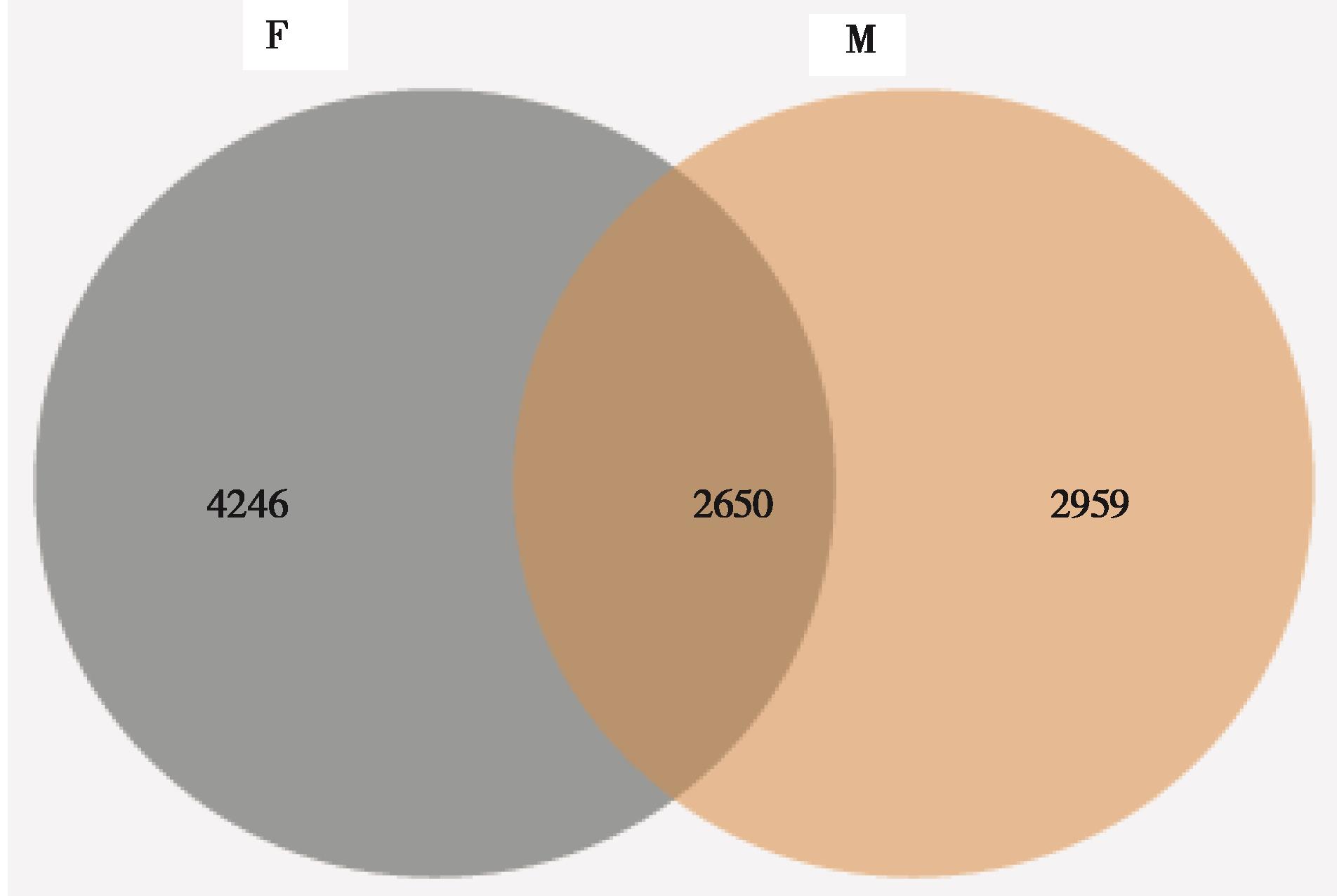
图1 不同性别藏羚肠道菌群OTUs分布韦恩图. F:雌性藏羚组;M:雄性藏羚组
Fig. 1 The Veen diagram of OTUs distribution of gut microbial in Tibetan antelope of different sexes. F: Female group; M: Male group
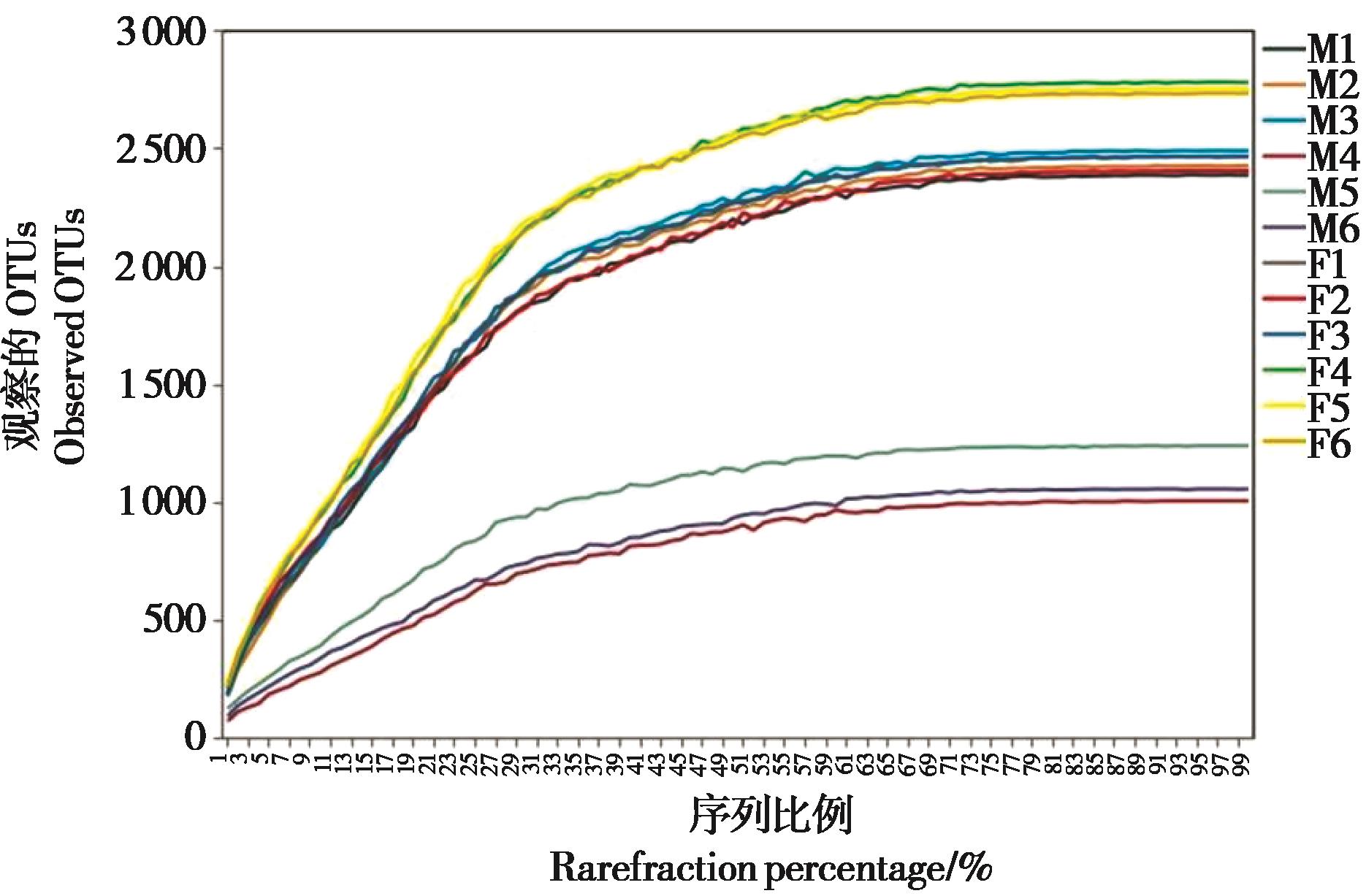
图2 不同性别藏羚稀释曲线.F:雌性藏羚组;M:雄性藏羚组
Fig. 2 The rarefaction curve in Tibetan antelope of different sexes. F: Female group; M: Male group
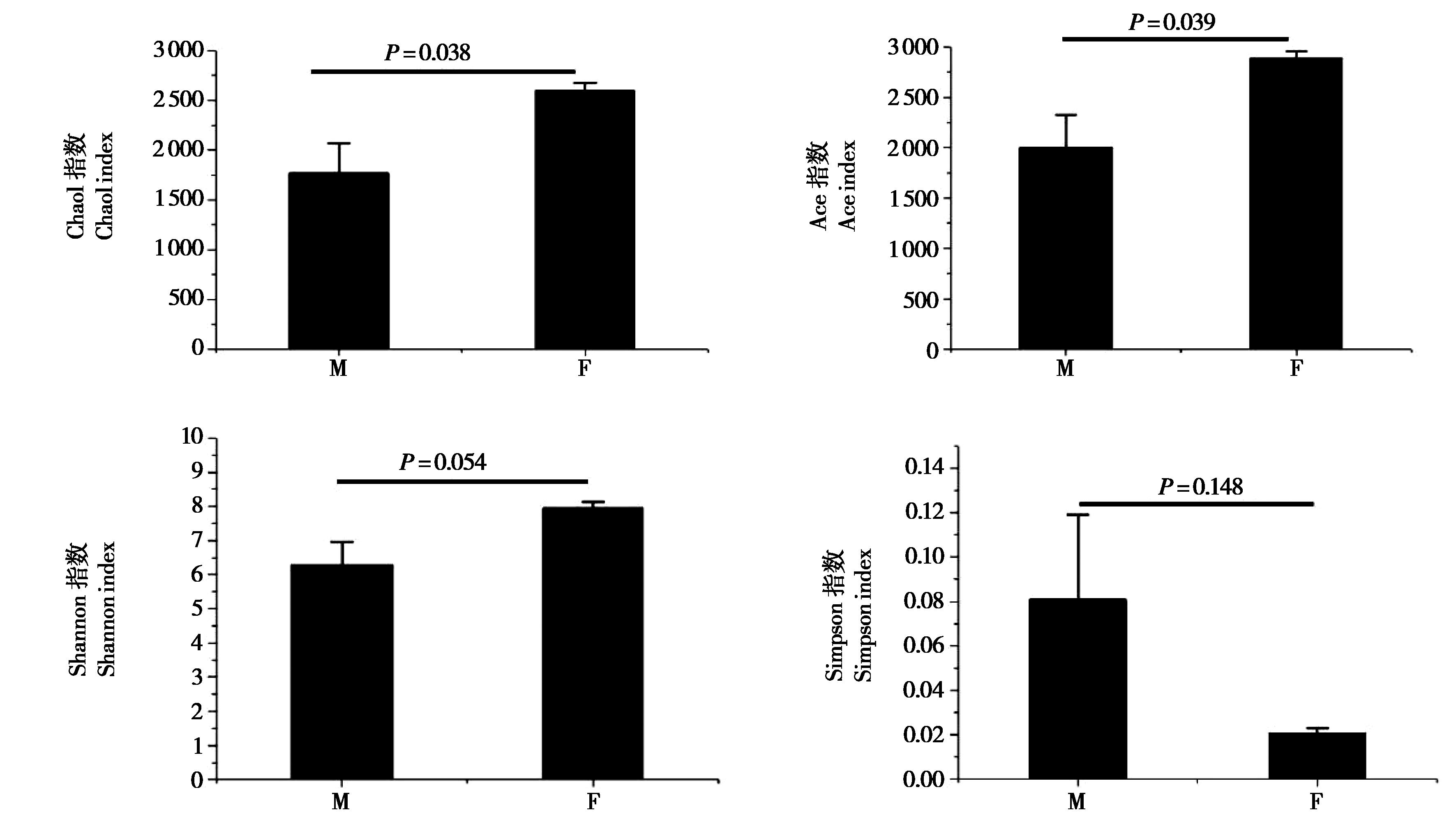
图3 不同性别藏羚肠道微生物α多样性分析. F:雌性藏羚组;M:雄性藏羚组
Fig. 3 Analysis of gut microbial Alpha diversity in Tibetan antelope of different sexes. F: Female group; M: Male group
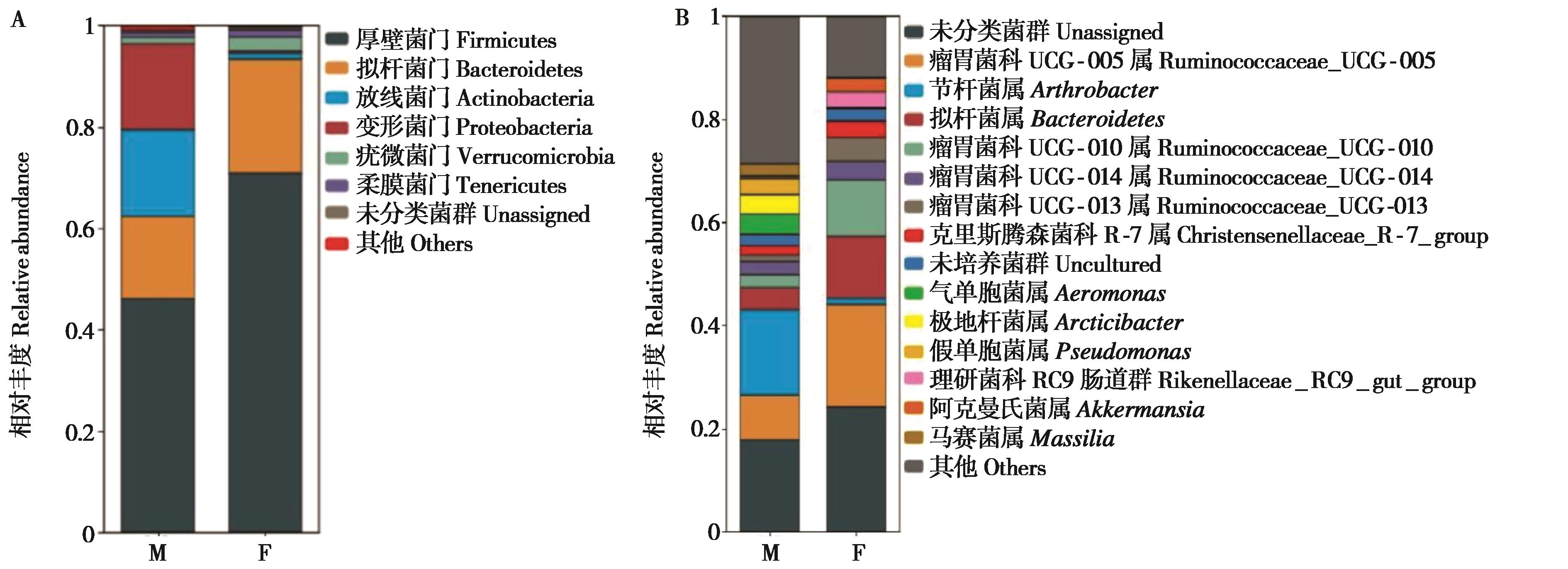
图4 不同性别藏羚肠道菌群门(A)和属(B)水平下相对丰度.F:雌性藏羚组;M:雄性藏羚组
Fig.4 Relative abundance of gut microbial in Tibetan antelope of different sexes at phylum (A) and genus (B) level. F: Female group; M: Male group
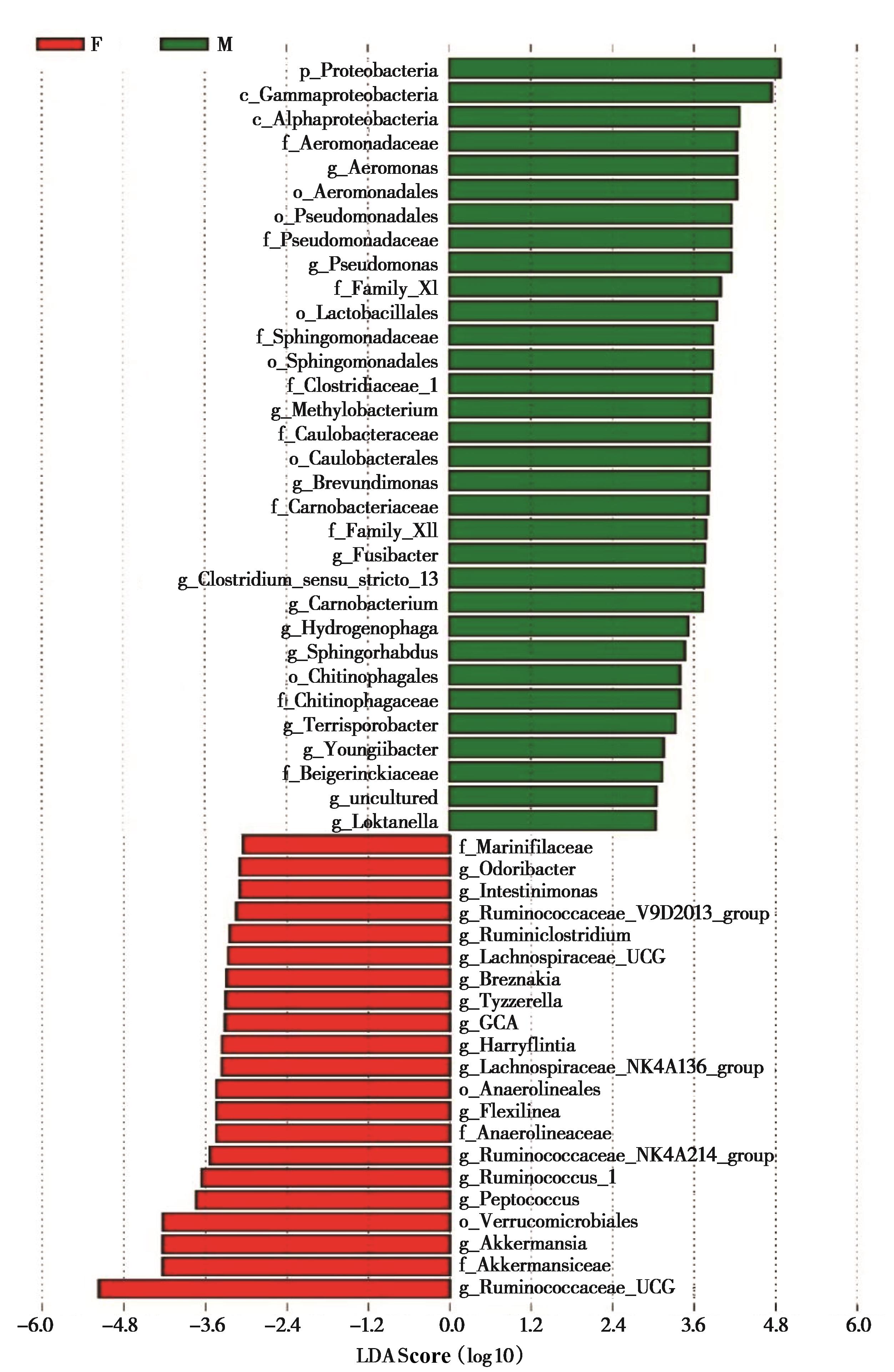
图5 不同性别藏羚肠道微生物LEfSe分析. F:雌性藏羚组;M:雄性藏羚组
Fig.5 LEfSe analysis of gut microbial community in Tibetan antelope of different sexes. F: Female group; M: Male group
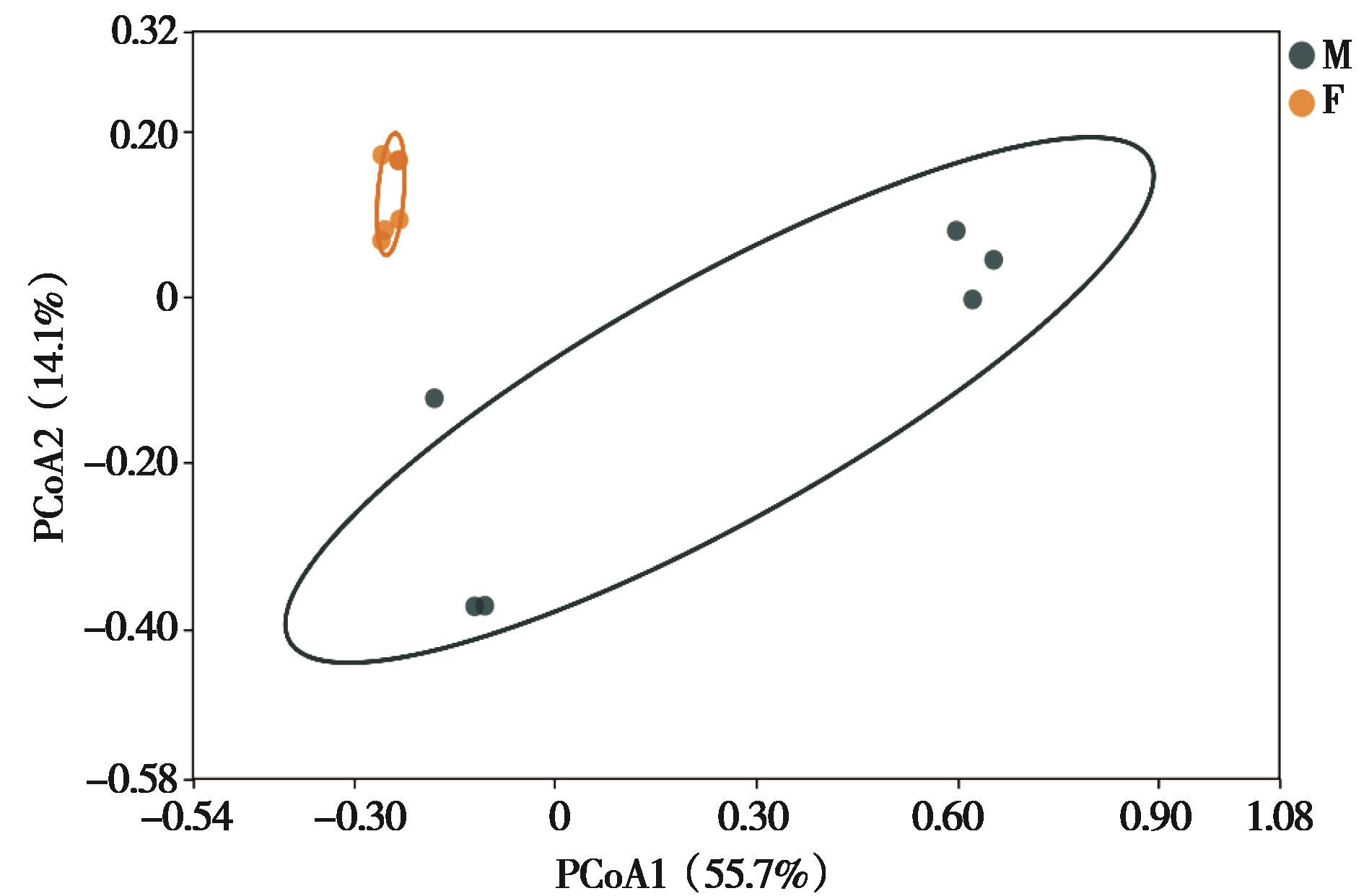
图6 基于Bray Curtis距离矩阵的主坐标分析(PCoA). F:雌性藏羚组;M:雄性藏羚组
Fig.6 Principal coordinates analysis (PCoA) based on Bray Curtis. F: Female group; M: Male group
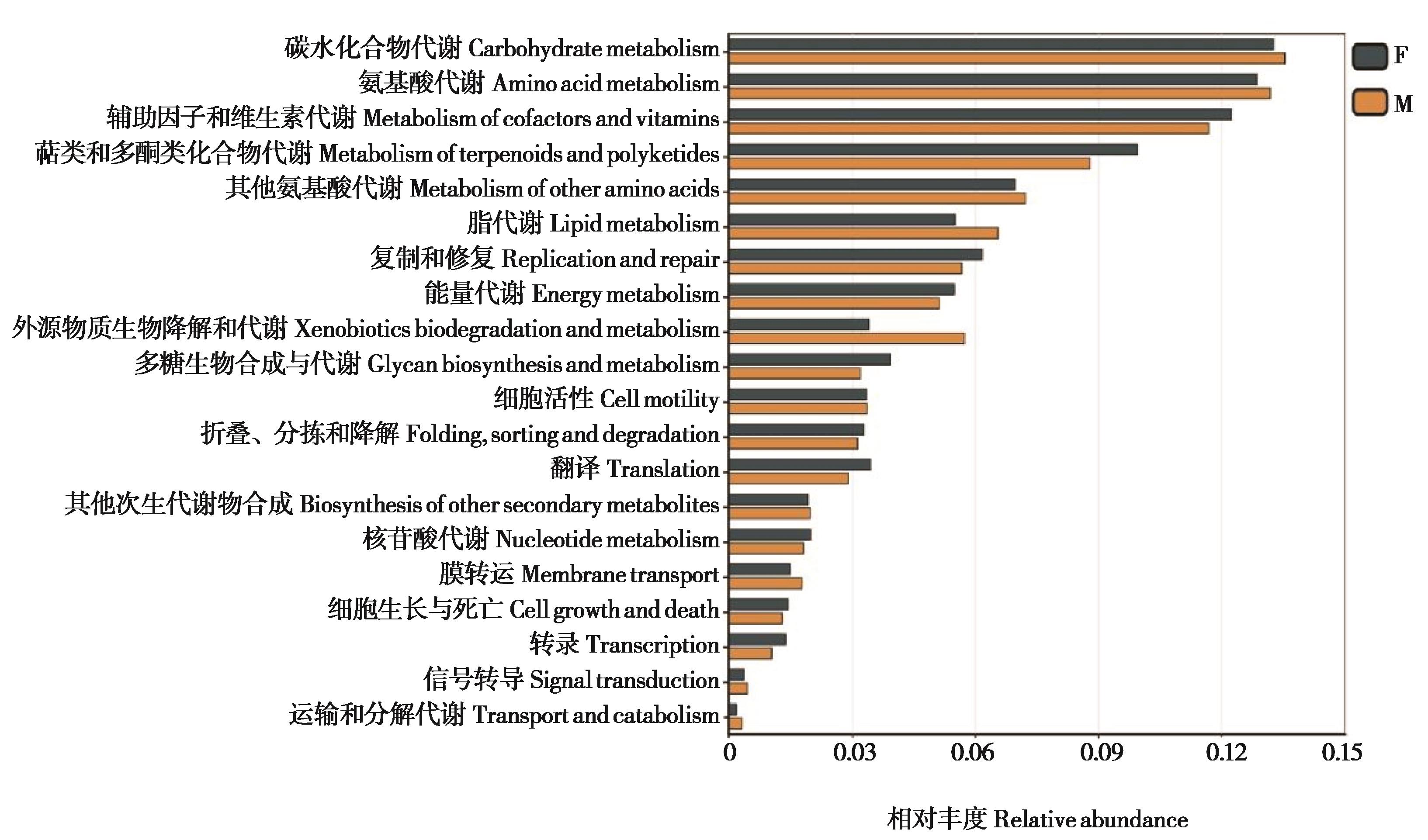
图7 不同性别藏羚肠道物微生物群落功能预测. F:雌性藏羚组;M:雄性藏羚组
Fig.7 The predicted gut bacterial function of Tibetan antelopes from different sex. F: Female group; M: Male group
| Bäckhed F, Ley R E, Sonnenburg J L, Peterson D A, Gordon J I,2005.Host‑bacterial mutualism in the human intestine[J]. Science,307(5717):1915-1920.DOI:10.1126/science. 1104816 . | |
| Bolnick D I, Snowberg L K, Hirsch P E, Lauber C L, Org E, Parks B, Lusis A J, Knight R, Caporaso J G, Svanbäck R,2014.Individual diet has sex‑dependent effects on vertebrate gut microbiota[J]. Nature Communications,5:4500.DOI: 10.1038/ncomms5500 . | |
| Cabral L, Persinoti G F, Paixão D A A, Martins M P, Morais M A B, Chinaglia M, Domingues M N, Sforca M L, Pirolla R A S, Generoso W C, Santos CA, Maciel L F, Terrapon N, Lombard V, Henrissat B, Murakami M T,2022. Gut microbiome of the largest living rodent harbors unprecedented enzymatic systems to degrade plant polysaccharides[J].Nature Communications,13(1):629.DOI:10.1038/s41467-022-28310-y . | |
| Chu D M, Meyer K M, Prince A L, Aagaard K M,2016. Impact of maternal nutrition in pregnancy and lactation on offspring gut microbial composition and function[J].Gut Microbes,7(6):459‑470.DOI:10.1080/19490976.2017.1308719 . | |
| Daly K, Proudman C J, Duncan S H, Flint H J, Dyer J, Shirazi‑Beechey S P,2012.Alterations in microbiota and fermentation products in equine large intestine in response to dietary variation and intestinal disease[J]. The British Journal of Nutrition,107(7):989‑995.DOI:10.1017/S0007114511003825 . | |
| De Filippo C, Cavalieri D, Di Paola M, Ramazzotti M, Poullet J B, Massart S, Collini S, Pieraccini G, Lionetti P,2010.Impact of diet in shaping gut microbiota revealed by a comparative study in children from Europe and rural Africa[J].Proceedings of the National Academy of Sciences of the United States of America,107(33):14691‑14696.DOI:10.1073/pnas. 1005963107 . | |
| Dillon R J, Vennard C T, Buckling A, Charnley A K,2005. Diversity of locust gut bacteria protects against pathogen invasion[J].Ecology Letters,8(12):1291‑1298.DOI:10.1111/j. 1461-0248.2005.00828.x . | |
| Ding Yun, Wu Qi, Hu Yibo, Wang Xiao, Nie Yonggang, Wu Xiaoping, Wei Fuwen,2017.Advances and prospects of gut microbiome in wild mammals[J]. Acta Theriologica Sinica,37 (4):399‑406. DOI:10. 16829 /j.slxb.201704010. (in Chinese with English abstract) | |
| Ezenwa V O, Gerardo N M, Inouye D W, Medina M, Xavier J B. 2012. Microbiology. Animal behavior and the microbiome[J]. Science,338(6104):198‑199.DOI:10.1126/science. 1227412 . | |
| Fan C, Zhang L, Jia S, Tang X, Fu H, Li W, Liu C, Zhang H, Cheng Q, Zhang Y,2022.Seasonal variations in the composition and functional profiles of gut microbiota reflect dietary changes in plateau pikas[J].Integrative Zoology,17(3):379‑395.DOI:10.1111/1749-4877.12630 . | |
| Ge R L, Cai Q L, Shen Y Y, San A, Ma L, Zhang Y, Yi X, Chen Y, Yang L F, Huang Y, He R J, Hui Y Y, Hao M R, Li Y, Wang B, Ou X H, Xu J, Zhang Y F, Wu K, Geng C Y, Zhou W P, Zhou T C, Irwin D M, Yang Y Z, Ying L, Bao H H, Kim J, Larkin D M, Ma J, Lewin H A, Xing J C, Platt R N, Ray D A, Auvil L, Capitanu B, Zhang X F, Zhang G J, Murphy R W, Wang J, Zhang Y P, Wang J,2013. Draft genome sequence of the Tibetan antelope[J].Nature Communications,4:1858.DOI:10.1038/ncomms2860 . | |
| Greene L K, Andriambeloson J B, Rasoanaivo H A, Yoder A D, Blanco M B,2022. Variation in gut microbiome structure across the annual hibernation cycle in a wild primate[J].FEMS microbiology Ecology,98(7):fiac070.DOI:10.1093/femsec/fiac070 . | |
| Guo Qiuyan,2023. Sex,age,and seasonal differences of gut bacteria in wild whiteheaded langur(Trachypithecus leucocephalus)[D].Guilin:Guangxi Normal University.DOI:10.27036/d.cnki.ggxsu.2023.000394. (in Chinese with English abstract) | |
| Guo Shihui, Yu Yongtao, Wan Jiahong, Mao Yanni, Zhang Haodong, Zhang Jinshen, Tian Xinyue, Zhao Qingmei,2022. Progress in research on the relationship between Proteobacteria and the imbalance of mammalian colonic intestinal flora[J].Chinese Journal of Microecology,34(4):479‑484.DOI:10.13381/j.cnki.cjm.202204021. (in Chinese with English abstract) | |
| Huang G P, Wang X, Hu Y B, Wu Q, Nie Y G, Dong J H, Ding Y, Yan L, Wei F W,2021. Diet drives convergent evolution of gut micro‑biomes in bamboo‑eating species[J]. Science China‑Life Sciences,60(1):88‑95. DOI:10.1007/s11427-020-1750-7 . | |
| Hsiao E Y, McBride S W, Hsien S, Sharon G, Hyde E R, McCue T, Codelli J A, Chow J, Reisman S E, Petrosino J F, Patterson P H, Mazmanian S K,2013. Microbiota modulate behavioral and physiological abnormalities associated with neurodevelopmental disorders[J].Cell,155(7):1451‑1463.DOI:10.1016/j.cell.2013.11.024 . | |
| Ley R E, Hamady M, Lozupone C, Turnbaugh P J, Ramey R R, Bircher J S, Schlegel M L, Tucker T A, Schrenzel M D, Knight R, Gordon J I,2008. Evolution of mammals and their gut microbes[J].Science,320(5883):1647‑1651.DOI:10.1126/science.1155725 . | |
| Li Shijie, Zhang Jinhui, Wang Yingmin, Li Manman, Zhao Hang, Wang Rongjun, Li Junqiang, Li Xiaoying, Xu Huiyan, Jian Fuchun,2024. Analysis of intestinal flora early colonizing in Hu‑sheep of different genders[J].Journal of Henan Agricultural University,58(2):249‑258.DOI:10.16445/j.cnki. 1000-2340.20231120.001. (in Chinese with English abstract) | |
| Li Y M, Hu X L, Yang S, Zhou J T, Zhang T X, Qi L, Sun X N, Fan M Y, Xu S H, Cha M, Zhang M S, Lin S B, Liu S Q, Hu D F,2017.Comparative analysis of the gut microbiota composition between captive and wild forest musk deer[J].Frontiers in Microbiology,8:1705.DOI:10.3389/fmicb.2017.01705 . | |
| Liu H, Zhao X, Xu S, Zhao L, Han X, Xu X, Zhao N, Hu L, Luo C, Wang X, Zhang Q, Guo T,2024.Multi‑omics reveal the gut microbiota‑mediated severe foraging environment adaption of small wild ruminants in the Three‑River‑Source National Park,China[J].Integrative Zoology,20(5):916‑935.DOI:10.1111/1749-4877.12830 . | |
| Liu Zhanying,2008.Isolation and Identification of major cellulolytic bacteria in rumen of sheep and effects of nitrogen sources on their cellulolytic activities[D]. Hohhot:Inner Mongolia Agricultural Universit.(in Chinese) | |
| Maslowski K M, Mackay C R,2011.Diet,gut microbiota and immune responses[J].Nature Immunology,12(1):5‑9.DOI:10.1038/ni0111-5 . | |
| Nuriel‑Ohayon M, Neuman H, Koren O,2016.Microbial changes during pregnancy,birth,and infancy[J].Frontiers in Microbiology,7:1031.DOI:10.3389/fmicb.2016.01031 . | |
| Pandya P R, Singh K M, Parnerkar S, Tripathi A K, Mehta H H,2010.Bacterial diversity in the rumen of Indian Surti buffalo(Bubalus bubalis),assessed by 16S rDNA analysis[J].Journal of Applied Genetics,51(3):395‑402.DOI:10.1007/BF03208869 . | |
| Rusconi B, Good M, Warner B B,2017. The microbiome and biomarkers for necrotizing enterocolitis:Are we any closer to prediction?[J].The Journal of Pediatrics,189:40‑47.DOI:10.1016/j.jpeds.2017.05.075 . | |
| Segata N, Izard J, Waldron L, Gevers D, Miropolsky L, Garrett W S, Huttenhower C,2011. Metagenomic biomarker discovery and explanation[J].Genome Biology,12(6):R60.DOI:10.1186/gb-2011-12-6-r60 . | |
| Shi Y, Miao Z Y, Su J P, Wasser S K,2021. Shift of maternal gut microbiota of Tibetan antelope(Pantholops hodgsonii) during the periparturition period[J].Current Microbiology,78(2):727‑738.DOI:10.1007/s00284-020-02339-y . | |
| Sun Y G, Zhang S S, Nie Q X, He H J, Tan H Z, Geng F, Ji H H, Hu J L, Nie S P,2022. Gut firmicutes:relationship with dietary fiber and role in host homeostasis[J].Critical Reviews in Food Science and Nutrition,63(33):12073‑12088.DOI:10.1080/10408398.2022.2098249 . | |
| Tian Chen,2022. Study on the gut microbiome of high altitude adaptation of Pantholops hodgsonii [D].Kunming:Yunnan University.DOI:10.27456/d.cnki.gyndu.2022.002862. (in Chinese with English abstract) | |
| Waite D W, Taylor M W,2014. Characterizing the avian gut microbiota:membership,driving influences,and potential function[J].Frontiers in Public Healthl,5:223.DOI:10.3389/fmicb.2014.00223 . | |
| Wang X, Zhang Y, Wen Q, Wang Y, Wang Z, Tan Z, Wu K,2020. Sex differences in intestinal microbial composition and function of Hainan special wild boar[J].Animals(Basel),10(9):1553.DOI:10.3390/ani10091553 . | |
| Yang Hong,2019. The gut microflora structure of giant pandas viewed across gender[D].Nanchong:China West Normal University.(in Chinese with English abstract) | |
| Zhang J, Gao H, Jiang F, Liu D, Hou Y, Chi X, Qin W, Song P, Cai Z, Zhang T,2022. Comparative analysis of gut microbial composition and functions in Przewalski’s gazelle(Procapra przewalskii) from various habitats[J].Frontiers in Microbiology,13:913358.DOI:10.3389/fmicb.2022.913358 . | |
| Zhao Guijun, Hang Jie, Zhu Jibin, Zheng Chengli, Zeng Dejun, Zhang Chenglu, Qi Wenhua, Feng Xiaolan,2019. Study on fecal bacterial microbiota of captive musk deer in different gender[J].Southwest China Journal of Agricultural Sciences,32(7):1652‑1658,1687.DOI:10.16213/j.cnki.scjas. 2019.7.031. (in Chinese with English abstract) | |
| Zhao H, Jiang F, Gu H, Gao H, Zhang J, Zhang M, Zhang T,2023.Seasonal variation of gut microbial composition and metabolism in Tibetan antelopes in Hoh Xil National Nature Reserve[J].Animals(Basel),13(22):3569.DOI:10.3390/ani13223569 . | |
| Zhao J, Ding X, Men G,2020. Sex differences in resting state network(RSN) functional connections with mild cognitive impairment(MCI) progression[J].Neuroscience Letters,724:134891.DOI:10.1016/j.neulet.2020.134891 . | |
| Zhou K Q,2017. Strategies to promote abundance of Akkermansia muciniphila,an emerging probiotics in the gut,evidence from dietary intervention studies[J].Journal of Functional Foods,33:194‑201.DOI:10.1016/j.jff.2017.03.045 . | |
| 丁赟,吴琦,胡义波,王潇,聂永刚,吴小平,魏辅文,2017.野生哺乳动物肠道微生物组研究进展与展望[J]. 兽类学报,37(4):399‑406. DOI:10.16829 /j.slxb. 201704010 . | |
| 田晨,2022.藏羚羊高海拔适应的肠道微生物组研究[D].昆明:云南大学.DOI:10.27456/d.cnki.gyndu.2022.002862 . | |
| 刘占英,2008.绵羊瘤胃主要纤维降解细菌的分离鉴定及不同氮源对其纤维降解能力的影响[D].呼和浩特:内蒙古农业大学. | |
| 李世杰,张金辉,王英民,李嫚嫚,赵航,王荣军,李俊强,李晓迎,许会艳,菅复春,2024.不同性别湖羊早期定植肠道菌群分析[J].河南农业大学学报,58(2):249‑258.DOI:10.16445/j.cnki.1000-2340.20231120.001 . | |
| 杨宏,2019.不同性别大熊猫肠道微生物群落结构研究[D].南充:西华师范大学. | |
| 赵贵军,竭航,朱吉彬,郑程莉,曾德军,张承露,封孝兰,2019.圈养不同性别林麝粪便菌群多样性研究[J].西南农业学报,32(7):1652‑1658,1687.DOI:10.16213/j.cnki.scjas.2019.7.031 . | |
| 郭仕辉,余永涛,万佳宏,毛彦妮,张浩东,张津慎,田新岳,赵清梅,2022.变形菌门与哺乳动物结肠肠道菌群失调相关研究进展[J].中国微生态学杂志,34(4):479‑484.DOI:10.13381/j.cnki.cjm.202204021 . | |
| 郭秋艳,2023. 野生白头叶猴肠道微生物的性别、年龄和季节性差异[D].桂林:广西师范大学.DOI:10.27036/d.cnki.ggxsu.2023.000394 . |
| [1] | 张子涵, 林宣龙, 江晓珩, 王瑞, 李叶, 蔡新斌, 郝帅. 土地利用/覆被变化对新疆藏羚栖息地适宜性的影响[J]. 兽类学报, 2026, 46(4): 1-. |
| [2] | 王子涵, 王东, 侯陆一, 李全邦, 李其琴, 魏海娟, 连新明. 气候变化背景下三江源国家公园四种野生有蹄类动物栖息地适宜性分析[J]. 兽类学报, 2025, 45(5): 602-614. |
| [3] | 孙凯, 祝招玲, 娜荷芽, 郝淑香, 梁咏亮, 徐皓, 阿丽玛, 刘振生, 滕丽微. 贺兰山东坡岩羊夏冬季肠道菌群组成的性别差异[J]. 兽类学报, 2025, 45(4): 492-502. |
| [4] | 赛青高娃, 王子涵, 李全邦, 王东, 连新明. 藏羚交配群成员间亲缘关系及遗传多样性分析[J]. 兽类学报, 2024, 44(2): 159-170. |
| [5] | 操康琳, 陶梦凡, 任月, 侯玉, 贾变桃, 杨新根. 人工饲喂对长尾仓鼠肠道菌群组成的影响[J]. 兽类学报, 2024, 44(2): 195-208. |
| [6] | 张泽明, 姚红玉, 吴楠, 赵玲玲, 顾逸如, 王宇, 吴弘, 赵大鹏. 同一笼养生境下金头狮面狨猴、赤掌柽柳猴和棉顶狨猴肠道菌群比较[J]. 兽类学报, 2023, 43(5): 580-592. |
| [7] | 曹伊凡, 尚国珍, 李文靖, 杨元罡, 吴彤, 朱亚辉, 边疆晖, 张瑞强, 张同作, 赵新全. 藏羚集群产羔与其胃肠道寄生虫传播和感染的风险[J]. 兽类学报, 2022, 42(5): 563-571. |
| [8] | 赛青高娃, 李宏奇, 王东, 王子涵, 连新明. 三江源国家公园迁徙藏羚对野生动物通道的利用[J]. 兽类学报, 2022, 42(5): 601-608. |
| [9] | 成若通, 陈一博, 孟祥琼, 陈家瑞, 魏青. 藏羚Y染色体雄性特异区遗传多样性[J]. 兽类学报, 2022, 42(5): 609-614. |
| [10] | 毛敏, 杨明, 刘新宇. 冬眠对达乌尔黄鼠盲肠菌群的影响[J]. 兽类学报, 2022, 42(4): 420-431. |
| [11] | 王德华, 赵志军, 张学英, 张志强, 徐德立, 邢昕, 杨生妹, 王政昆, 高云芳, 杨明. 中国哺乳动物生理生态学研究进展与展望[J]. 兽类学报, 2021, 41(5): 537-555. |
| [12] | 杨雄威, 彭彩淳, 郭群毅, 冉景丞, 王野影, 张明明, 胡灿实, 李仕泽, 粟海军. 贵州苗岭地区野猪肠道菌群结构与功能分析[J]. 兽类学报, 2021, 41(4): 365-376. |
| [13] | 苗紫燕 吴彤 陈佳萍 王东 李宏奇 连新明. 青藏铁路对雄性藏羚行为时间分配的影响[J]. 兽类学报, 2020, 40(2): 135-142. |
| [14] | 丁赟 吴琦 胡义波 王潇 聂永刚 吴小平 魏辅文. 野生哺乳动物肠道微生物组研究进展与展望[J]. 兽类学报, 2017, 37(4): 399-406. |
| [15] | 刘芳, 格日力. 藏羚羊组蛋白去乙酰化酶1 基因编码区的克隆与序列分析[J]. , 2011, 31(4): 396-403. |
| 阅读次数 | ||||||
|
全文 |
|
|||||
|
摘要 |
|
|||||
 青公网安备 63010402000199号 青ICP备05000010号-2