

中国核心期刊要目总览
中国科技核心期刊
CSCD数据库源刊
中国科技核心期刊
CSCD数据库源刊
ACTA THERIOLOGICA SINICA ›› 2025, Vol. 45 ›› Issue (6): 842-850.DOI: 10.16829/j.slxb.150977
• ORIGINAL PAPERS • Previous Articles
Sijia SHEN1( ), Lu WANG2, Xu ZHAO2, Tao LIU2, Xuefeng LIU2,3(), Dingzhen LIU1()
Received:2024-07-10
Accepted:2025-09-10
Online:2025-11-30
Published:2025-12-03
Contact:
Xuefeng LIU, Dingzhen LIU
申思嘉1(), 王璐2, 赵旭2, 刘涛2, 刘学锋2,3(), 刘定震1()
通讯作者:
刘学锋,刘定震
作者简介:申思嘉 (2000- ),女,硕士研究生,主要从事动物行为学研究. E-mail: dyyxshensijia@126.com
基金资助:CLC Number:
Sijia SHEN, Lu WANG, Xu ZHAO, Tao LIU, Xuefeng LIU, Dingzhen LIU. No remarkable differences in behavioral responses in Asian elephants (Elephas maximus) to playbacks of recordings of UAV infrasound and conspecific rumble calls[J]. ACTA THERIOLOGICA SINICA, 2025, 45(6): 842-850.
申思嘉, 王璐, 赵旭, 刘涛, 刘学锋, 刘定震. 亚洲象对同类隆叫声和无人机次声录音回放的行为反应无显著差异[J]. 兽类学报, 2025, 45(6): 842-850.
Add to citation manager EndNote|Ris|BibTeX
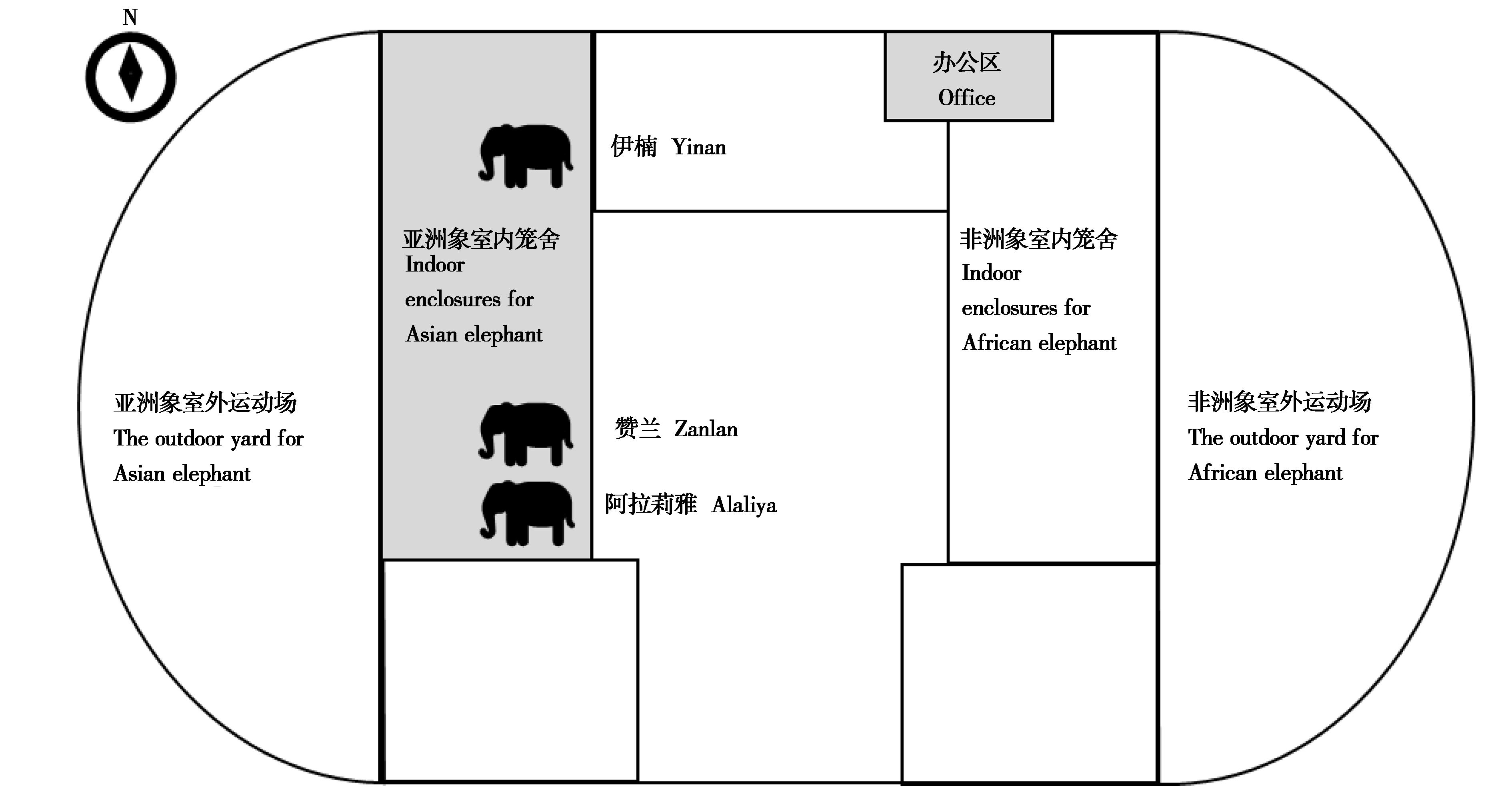
Fig. 1 The schematic diagram of elephant exhibit in Beijing Zoo
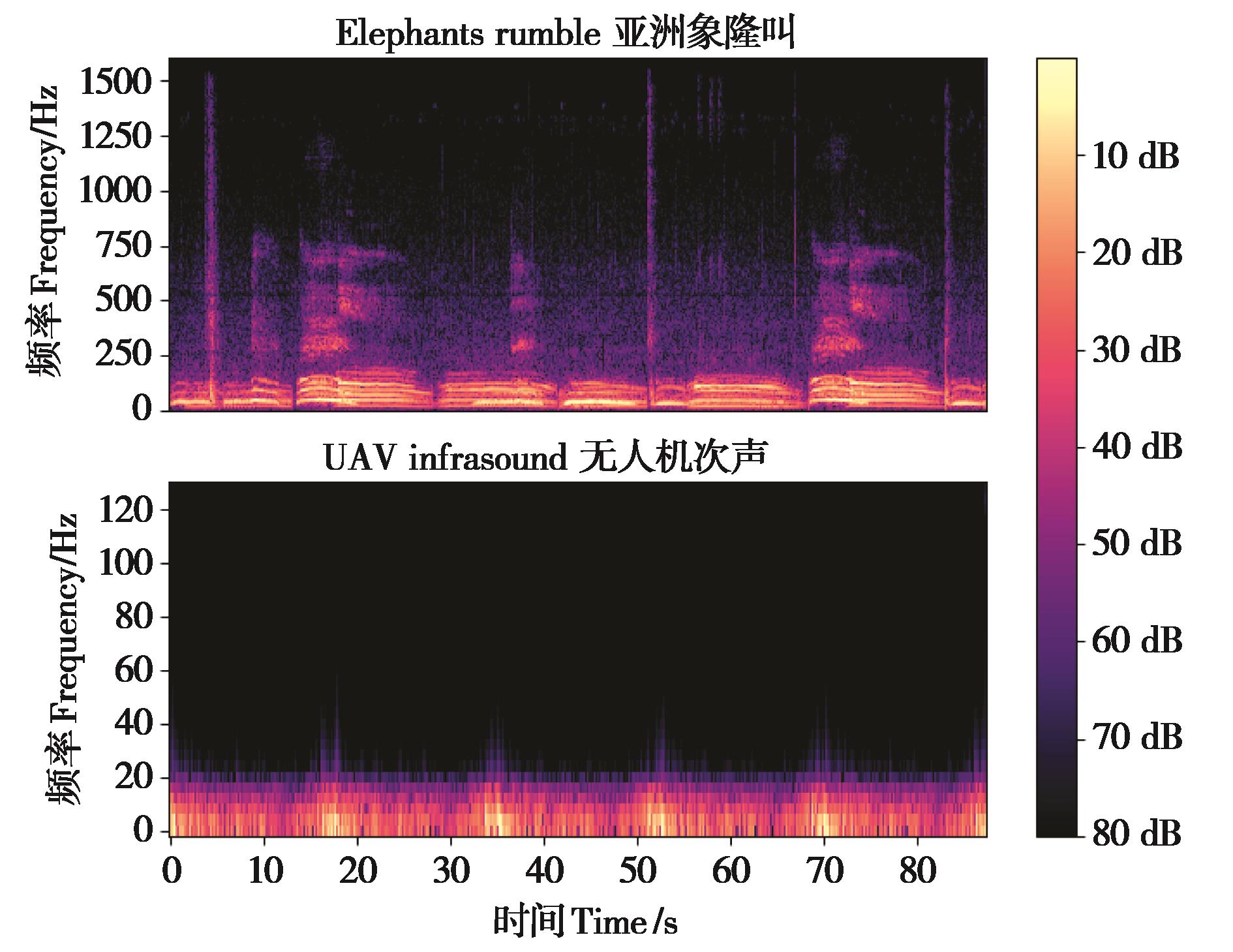
Fig. 2 Spectrograms of elephants’ rumble and the infrasound of drone. The brightness of the color represents the magnitude of the sound signal after converting its amplitude to decibel (dB) values, with the maximum amplitude set as the reference for the conversion
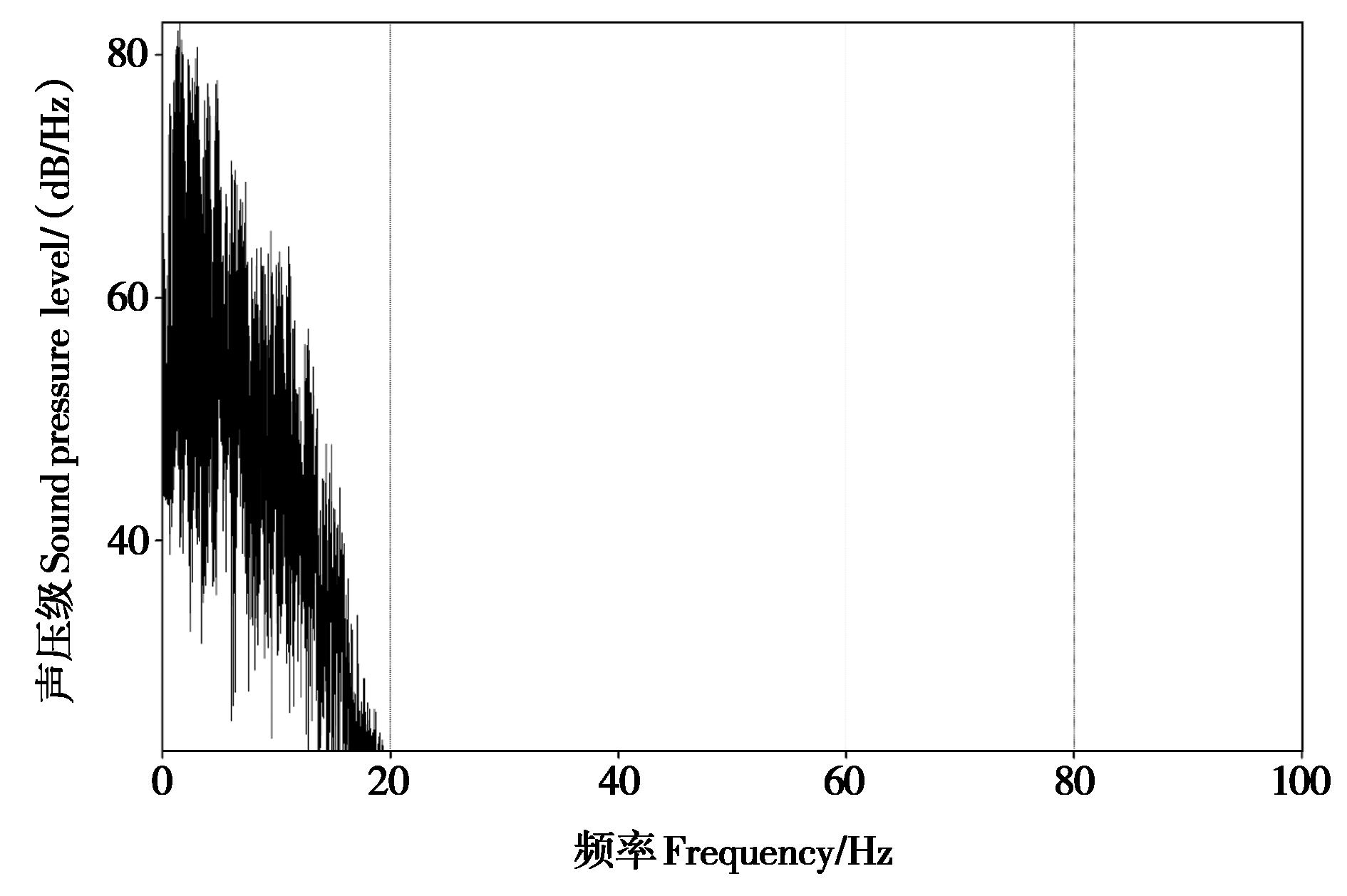
Fig. 3 The spectrum of filtered drone noise. The max frequency is less than 20 Hz
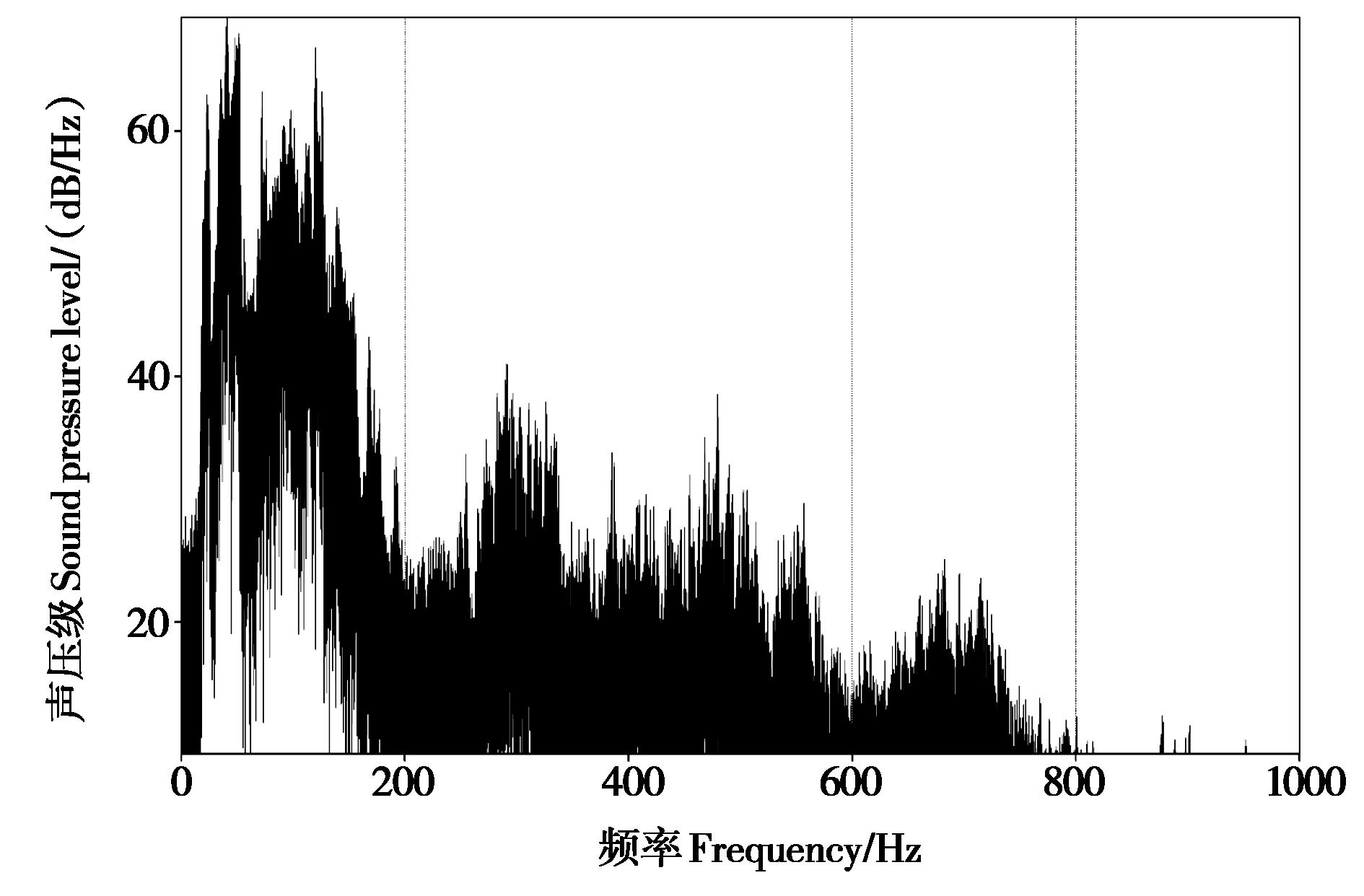
Fig. 4 The spectrum of filtered rumble

Fig. 5 The black and grey blocks represent elephant rumble (marked as H1 - H3) and the UAV infrasound (DH) playbacks, respectively. Each stimulus lasts 1.5 minutes. The white blocks represent the 2‑minute observation time window
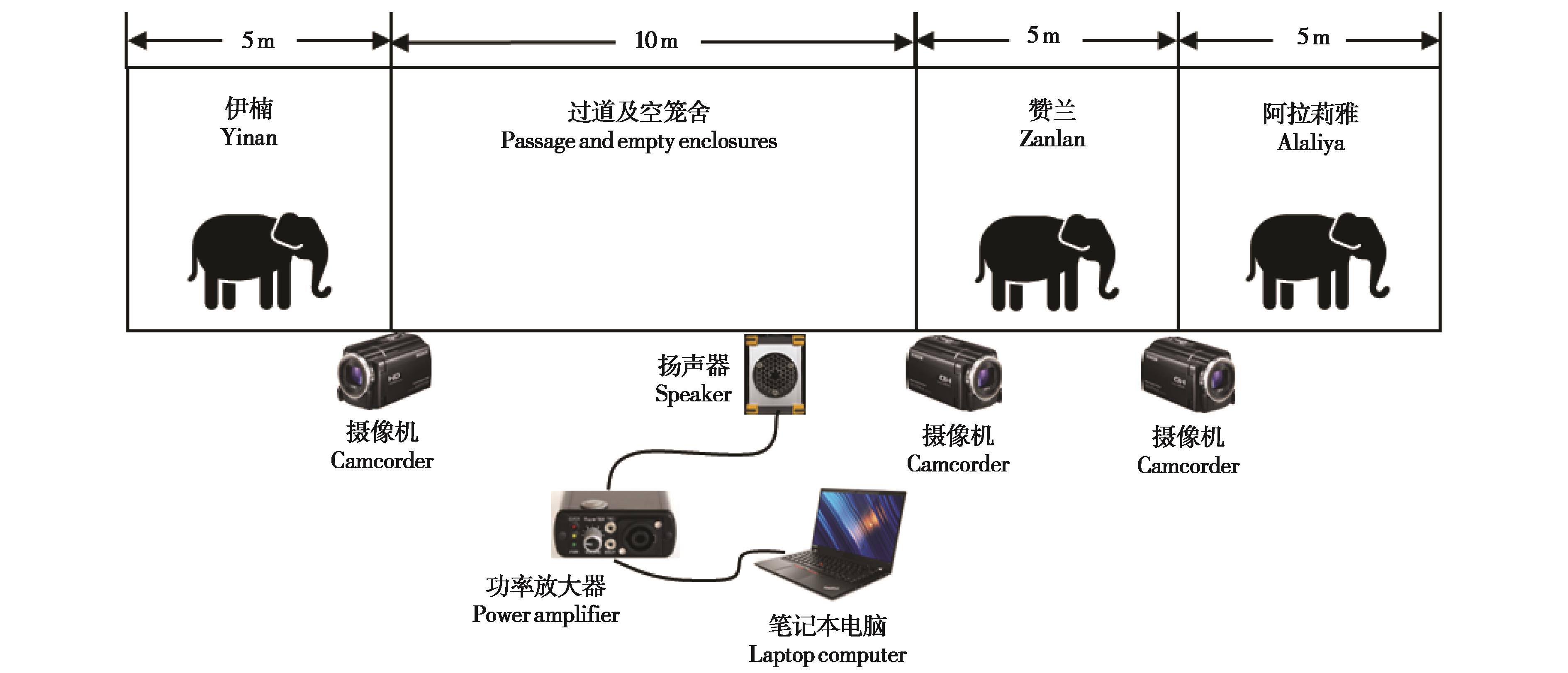
Fig. 6 Schematic diagram of the playback test site inside the elephant exhibit
行为类型 Behavior type | 定义 Definition |
|---|---|
倾听 Listening | 亚洲象持续抬起或张开双耳,并将头部转向声源方向以接收声信号;该行为发生后,个体可能进入静止状态,且此静止过程持续时间通常不短于2 s. 此类具有倾听功能的静止状态与休息状态存在显著差异:后者的典型表现为双耳与头部呈下垂姿态的静止不动 Asian elephants continuously lift or spread their ears and turn their heads toward the sound source to receive acoustic signals. After this behavior occurs, the individual may enter a stationary state, and the duration of this stationary period is usually not less than 2 seconds. This stationary state with listening function is significantly different from the resting state: the latter is typically characterized by immobility with drooping ears and head |
探索 Search | 亚洲象在不移动的情况下,通过伸展鼻子,向声源方向的地面或空气开展嗅闻、吹气等动作 When Asian elephants remain immobile, they extend their trunks to sniff or blow at the ground or air in the direction of the sound source |
靠近 Approach | 在录音播放后,亚洲象先将视线定向声源方向,随后向该声源位置发生位移 After the playback of audio recordings, Asian elephants first orient their gaze toward the sound source, and then move toward the location of the sound source |
后退 Retreat | 在录音播放后,亚洲象呈现倒退移动或主动远离播放器的行为 After the playback of audio recordings, Asian elephants exhibit backward movement or actively move away from the player |
发声 Vocalization | 在录音播放后,亚洲象发出低频的隆叫声表示回应 After the playback of audio recordings, Asian elephants produce low-frequency rumbles as a form of response |
Table 1 Behavior responses of Asian elephants in the playback test
行为类型 Behavior type | 定义 Definition |
|---|---|
倾听 Listening | 亚洲象持续抬起或张开双耳,并将头部转向声源方向以接收声信号;该行为发生后,个体可能进入静止状态,且此静止过程持续时间通常不短于2 s. 此类具有倾听功能的静止状态与休息状态存在显著差异:后者的典型表现为双耳与头部呈下垂姿态的静止不动 Asian elephants continuously lift or spread their ears and turn their heads toward the sound source to receive acoustic signals. After this behavior occurs, the individual may enter a stationary state, and the duration of this stationary period is usually not less than 2 seconds. This stationary state with listening function is significantly different from the resting state: the latter is typically characterized by immobility with drooping ears and head |
探索 Search | 亚洲象在不移动的情况下,通过伸展鼻子,向声源方向的地面或空气开展嗅闻、吹气等动作 When Asian elephants remain immobile, they extend their trunks to sniff or blow at the ground or air in the direction of the sound source |
靠近 Approach | 在录音播放后,亚洲象先将视线定向声源方向,随后向该声源位置发生位移 After the playback of audio recordings, Asian elephants first orient their gaze toward the sound source, and then move toward the location of the sound source |
后退 Retreat | 在录音播放后,亚洲象呈现倒退移动或主动远离播放器的行为 After the playback of audio recordings, Asian elephants exhibit backward movement or actively move away from the player |
发声 Vocalization | 在录音播放后,亚洲象发出低频的隆叫声表示回应 After the playback of audio recordings, Asian elephants produce low-frequency rumbles as a form of response |
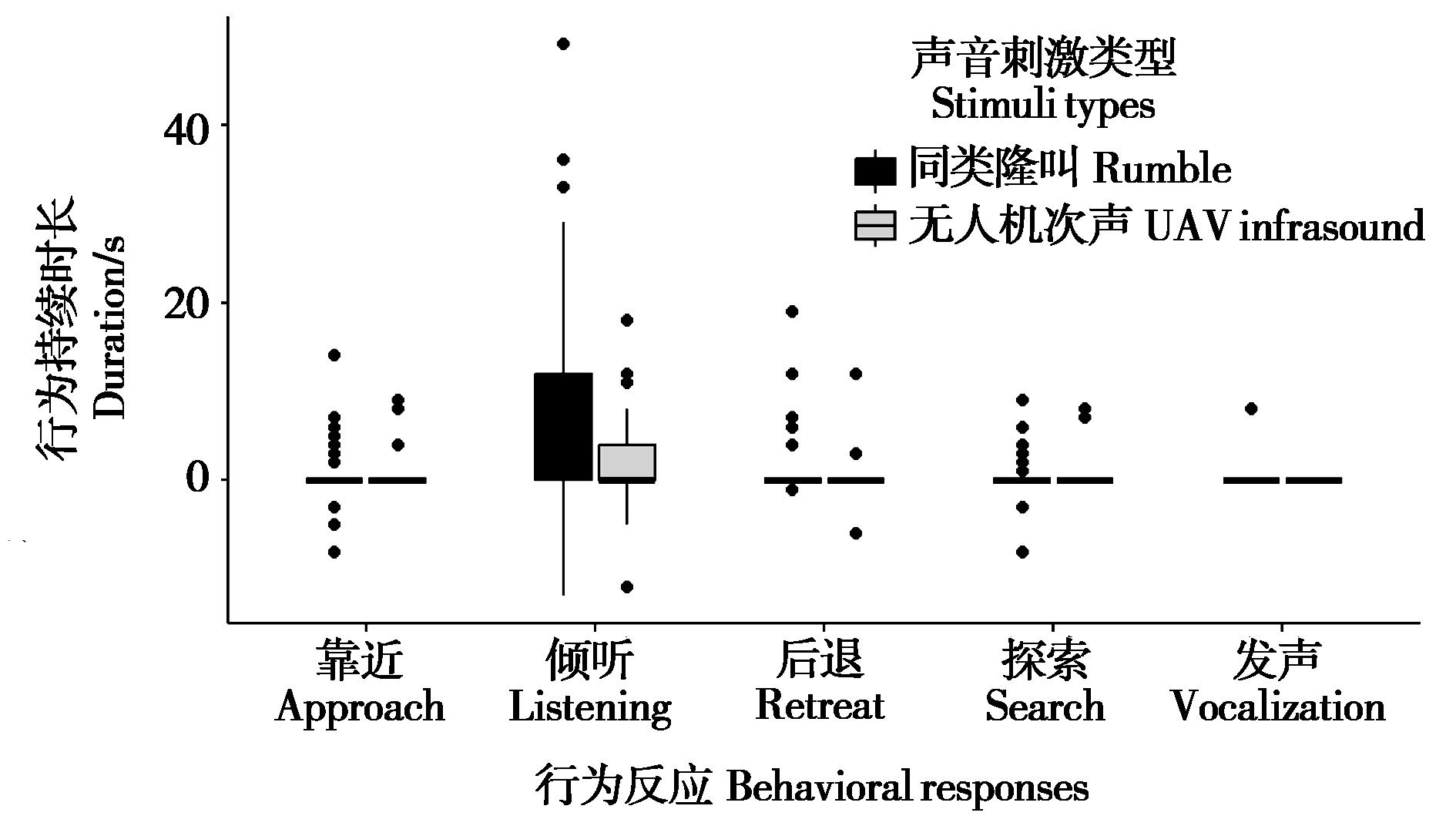
Fig. 7 The mean duration of behavioral responses of Asian elephants during the playback test of rumbles and UAV infrasound
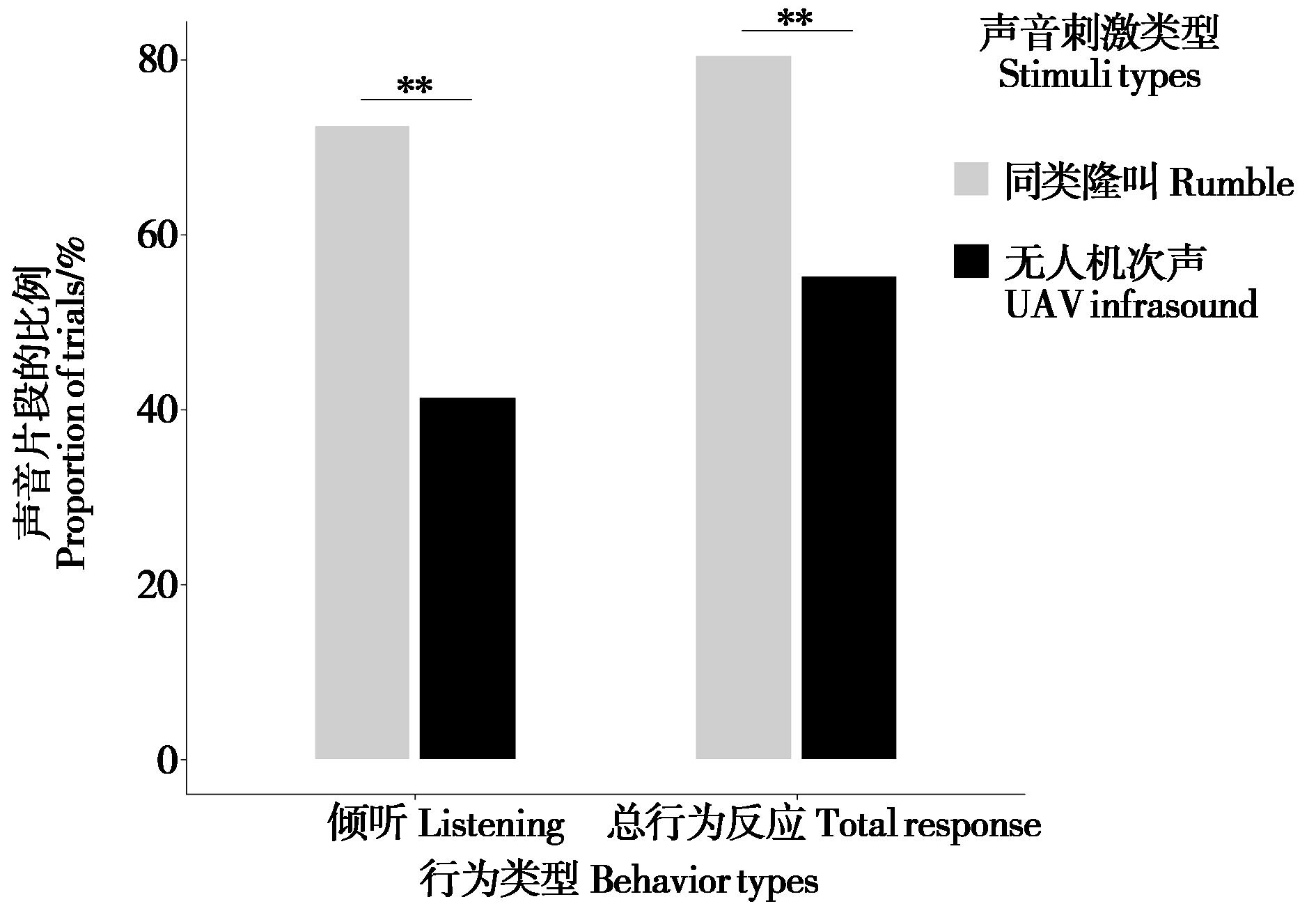
Fig. 8 Percentage of trials during which the Asian elephants displayed listening behavior or any behavioral response when played back with rumble recordings and UAV infrasound recordings respectively, relative to their total number of respective trials. ** P < 0.01
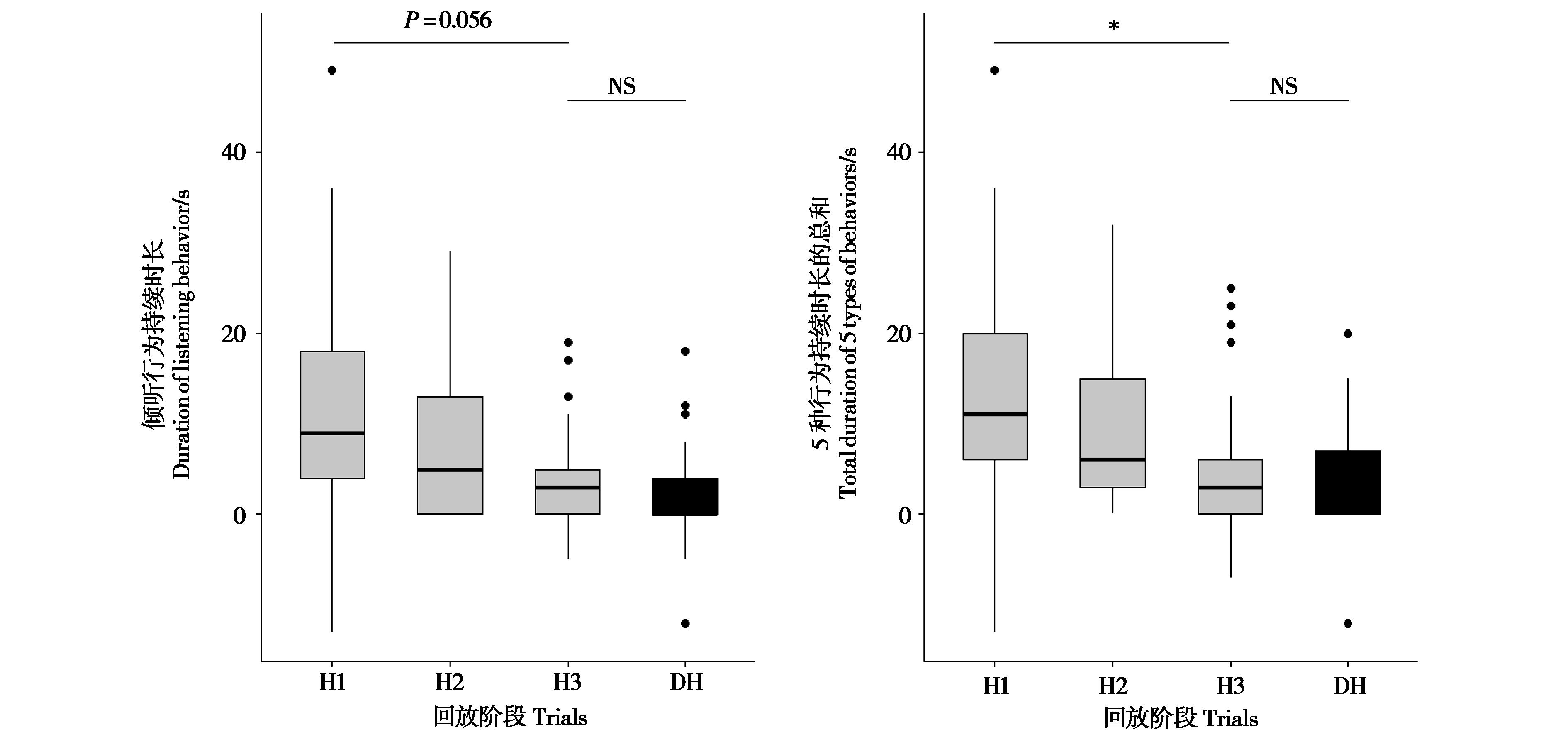
Fig. 9 The change of duration of listening behavior and duration of 5 types of behaviors to stimuli in each trial of sessions during which elephants showed behavioral responses. The grey boxes represent 3 habituation trials, and the black box represents the dishabituation trial. *P < 0.05. NS represents non-significant difference between trials
| 声音类别Sound types | 最大频率Highest frequency/Hz | 峰值频率Peak frequency/Hz | 平均频率Mean frequency/Hz | 重心频率Spectrum centroid/Hz |
|---|---|---|---|---|
隆叫 Rumble | 952.96 | 40.89 | 121.10 | 66.10 |
| 无人机次声波UAV infrasound | 19.30 | 1.48 | — | 2.71 |
Table 2 The highest frequency, peak frequency, mean frequency and spectrum centroid of the rumble of Asian elephant and UAV infrasound
| 声音类别Sound types | 最大频率Highest frequency/Hz | 峰值频率Peak frequency/Hz | 平均频率Mean frequency/Hz | 重心频率Spectrum centroid/Hz |
|---|---|---|---|---|
隆叫 Rumble | 952.96 | 40.89 | 121.10 | 66.10 |
| 无人机次声波UAV infrasound | 19.30 | 1.48 | — | 2.71 |
| Anderson K, Gaston K J. 2013. Lightweight unmanned aerial vehicles will revolutionize spatial ecology [J]. Frontiers in Ecology and the Environment, 11 (3): 138-146. | |
| Bateson M, Martin P R. 2021. Measuring Behaviour: An Introductory Guide [M]. 4th ed. Cambridge, United Kingdom: Cambridge University Press. | |
| Bee M A, Swanson E M. 2007. Auditory masking of anuran advertisement calls by road traffic noise [J]. Animal Behaviour, 74 (6): 1765-1776. | |
| Bennitt E, Bartlam‑Brooks H L A, Hubel T Y, Wilson A M. 2019. Terrestrial mammalian wildlife responses to Unmanned Aerial Systems approaches [J]. Scientific Reports, 9 (1): 2142.DOI: 10.1038/s41598-019-38610-x . | |
| Chabot D, Bird D M. 2015. Wildlife research and management methods in the 21st century: Where do unmanned aircraft fit in?[J]. Journal of Unmanned Vehicle Systems, 3 (4): 137-155. | |
| Charlton B D, Ellis W A H, Larkin R, Tecumseh Fitch W. 2012. Perception of size‑related formant information in male koalas (Phascolarctos cinereus) [J]. Animal Cognition, 15 (5): 999-1006. | |
| Charlton B D, Reby D, McComb K. 2007. Female perception of size‑related formant shifts in red deer, Cervus elaphus [J]. Animal Behaviour, 74 (4): 707-714. | |
| Eimas P D, Siqueland E R, Jusczyk P, Vigorito J. 1971. Speech perception in infants [J]. Science, 171 (3968): 303-306. | |
| Foerder P, Galloway M, Barthel T, Iii D E M, Reiss D. 2011. Insightful problem solving in an Asian elephant [J]. PLoS ONE, 6 (8): e23251.DOI: 10.1371/journal.pone.0023251 . | |
| Garstang M. 2004. Long‑distance, low‑frequency elephant communication [J]. Journal of Comparative Physiology A, 190 (10): 791-805. | |
| Islam R, Stimpson D A. 2017. Small UAV Noise Analysis [R]. Durham, NC, USA: Duke University. | |
| Jones G P, Pearlstine L G, Percival H F. 2006. An assessment of small Unmanned Aerial Vehicles for wildlife research [J]. Wildlife Society Bulletin, 34 (3): 750-758. | |
| Kaneko T, Tomonaga M. 2008. Utility of Habituation‑dishabituation procedure for comparative cognitive studies of Callithrix jacchus and Aotus spp.: preliminary assessments [J]. Perceptual and Motor Skills, 106 (3): 830-832. | |
| LaDue C A, Snyder R J. 2023. Asian elephants distinguish sexual status and identity of unfamiliar elephants using urinary odours [J]. Biology Letters, 19 (12): 20230491.DOI: 10.1098/rsbl.2023.0491 . | |
| Langbauer W R J, Payne K B, Charif R A, Rapaport L, Osborn F. 1991. African elephants respond to distant playbacks of low‑frequency conspecific calls [J]. Journal of Experimental Biology, 157 (1): 35-46. | |
| Langbauer W R J. 2000. Elephant communication [J]. Zoo Biology, 19 (5): 425-445. | |
| Marten K, Marler P. 1977. Sound transmission and its significance for animal vocalization [J]. Behavioral Ecology and Sociobiology, 2 (3): 271-290. | |
| McComb K, Moss C, Sayialel S, Baker L. 2000. Unusually extensive networks of vocal recognition in African elephants [J]. Animal Behaviour, 59 (6): 1103-1109. | |
| McComb K, Reby D, Baker L, Moss C, Sayialel S. 2003. Long‑distance communication of acoustic cues to social identity in African elephants [J]. Animal Behaviour, 65 (2): 317-329. | |
| McEvoy J F, Hall G P, McDonald P G. 2016. Evaluation of unmanned aerial vehicle shape, flight path and camera type for waterfowl surveys: disturbance effects and species recognition [J]. PeerJ, 4: e1831. DOI: 10.7717/peerj.1831 | |
| Mortimer B, Rees W L, Koelemeijer P, Nissen‑Meyer T. 2018. Classifying elephant behaviour through seismic vibrations [J]. Current Biology, 28 (9): R547-R548. | |
| Mortimer B, Walker J A, Lolchuragi D S, Reinwald M, Daballen D. 2021. Noise matters: elephants show risk‑avoidance behaviour in response to human‑generated seismic cues [J]. Proceedings of the Royal Society B: Biological Sciences, 288 (1953): 20210774.DOI: 10.1098/rspb.2021.0774 . | |
| Nelson B S. 2003. Reliability of sound attenuation in Florida scrub habitat and behavioral implications [J]. The Journal of the Acoustical Society of America, 113 (5): 2901-2911. | |
| Nemeth E, Winkler H, Dabelsteen T. 2001. Differential degradation of antbird songs in a Neotropical rainforest: adaptation to perch height? [J].The Journal of the Acoustical Society of America, 110 (6): 3263-3274. | |
| Pardo M A, Fristrup K, Lolchuragi D S, Poole J H, Granli P, Moss C J, Douglas‑Hamilton I, Wittemyer G. 2024. African elephants address one another with individually specific name‑like calls [J]. Nature Ecology & Evolution, 8 (7): 1353-1364. | |
| Payne K B, Thompson M, Kramer L. 2003. Elephant calling patterns as indicators of group size and composition: the basis for an acoustic monitoring system [J]. African Journal of Ecology, 41 (1): 99-107. | |
| Poole J H, Payne K, Langbauer W R, Moss C. 1988. The social contexts of some very low frequency calls of African elephants [J]. Behavioral Ecology and Sociobiology, 22 (6): 385-392. | |
| Poole J H. 1989. Mate guarding, reproductive success and female choice in African elephants [J]. Animal Behaviour, 37: 842-849. | |
| Poole J H. 1999. Signals and assessment in African elephants: evidence from playback experiments [J]. Animal Behaviour, 58 (1): 185-193. | |
| Qian Y, Wei Y, Kong D, Xu H. 2021. Experimental investigation on motor noise reduction of Unmanned Aerial Vehicles [J]. Applied Acoustics, 176: 1078730.DOI: 10.1016/j.apacoust.2020.107873 . | |
| Thuppil V, Coss R G. 2013. Wild Asian elephants distinguish aggressive tiger and leopard growls according to perceived danger [J]. Biology Letters, 9 (5): 20130518. DOI: 10.1098/rsbl.2013.0518 . | |
| Wang S W, Wang D L, Ling C X, Zhang J, Jin Y, Liu S G. 2023. Population and spatial distribution of moose in Nanwenghe National Nature Reserve, Heilongjiang Province based on unmanned aerial vehicle (UAV) remote sensing [J]. Chinese Journal of Wildlife, 44 (3): 486-493.(in Chinese) | |
| Zhang J H, Li N, Zhang Q H, Ma X W. 2023.The methods for monitoring nighttime positions of northward migrating Asian elephant herds. Bulletin of Surveying and Mapping, 2023 (8): 63-66. (in Chinese) | |
| Zhou Y, Radford A N, Magrath R D. 2019. Why does noise reduce response to alarm calls? Experimental assessment of masking, distraction and greater vigilance in wild birds [J]. Functional Ecology, 33 (7): 1280-1289. | |
| 王劭文, 王东亮, 凌成星, 张军, 金跃, 刘曙光. 2023. 基于无人机遥感的黑龙江南瓮河国家级自然保护区驼鹿种群数量及空间分布调查 [J]. 野生动物学报, 44 (3): 486-493. | |
| 张君华, 李娜, 张勤辉, 马小伟. 2023. 北移亚洲象群夜间位置监测方法 [J]. 测绘通报, 2023 (8): 63-66. |
| [1] | Jingshan WANG, Qiang GUO, Wenguang DUAN, Xu LI, Weibin WANG, Zhisheng WANG, Shaobing YANG. Characteristics of Asian elephant group in Nangunhe National Nature Reserve based on spatio-temporal analysis [J]. ACTA THERIOLOGICA SINICA, 2026, 46(2): 240-250. |
| [2] | Jiansong ZHANG, Jishan WANG, Zicheng YANG, Mingwei BAO, Bin WANG, Chaoyong XIONG, Rui SU, Fei CHEN. Satellite collar data reveals dual-peak activity rhythm of Asian elephant (Elephas maximus) [J]. ACTA THERIOLOGICA SINICA, 2026, 46(2): 251-263. |
| [3] | Xier CHEN, Lijie YIN, Dagong QIN, Jinxian YAO, Xiaoyu LI, Wenshi PAN. An overview of population survey methods of non-human primates [J]. ACTA THERIOLOGICA SINICA, 2022, 42(6): 716-727. |
| Viewed | ||||||
|
Full text |
|
|||||
|
Abstract |
|
|||||
 青公网安备 63010402000199号
青ICP备05000010号-2
青公网安备 63010402000199号
青ICP备05000010号-2