

中国核心期刊要目总览
中国科技核心期刊
CSCD数据库源刊
中国科技核心期刊
CSCD数据库源刊
ACTA THERIOLOGICA SINICA ›› 2026, Vol. 46 ›› Issue (5): 705-719.DOI: 10.16829/j.slxb.151156
• ORIGINAL PAPERS • Previous Articles Next Articles
Xiaolong GAO1( ), Wanxiang ZHANG1, Hongjuan ZHAI1, Hanyi ZHU1,2,3(), Zhibin ZHANG1,2,3()
Received:2025-11-07
Accepted:2026-03-10
Online:2026-09-30
Published:2026-10-12
Contact:
Hanyi ZHU, Zhibin ZHANG
高霄龙1(), 张万相1, 翟红娟1, 朱涵毅1,2,3(), 张知彬1,2,3()
通讯作者:
朱涵毅,张知彬
作者简介:高霄龙(2000- ),男,硕士,主要从事动物生态学研究. E‑mail:17690835747@163.com
基金资助:CLC Number:
Xiaolong GAO, Wanxiang ZHANG, Hongjuan ZHAI, Hanyi ZHU, Zhibin ZHANG. The role of gut microbiota differences in the coexistence of norway rats (Rattus norvegicus) and Asian house rats (Rattus tanezumi) in Hainan[J]. ACTA THERIOLOGICA SINICA, 2026, 46(5): 705-719.
高霄龙, 张万相, 翟红娟, 朱涵毅, 张知彬. 海南褐家鼠和黄胸鼠肠道菌群差异及共存机制探讨[J]. 兽类学报, 2026, 46(5): 705-719.
Add to citation manager EndNote|Ris|BibTeX

Fig. 1 Comparison of morphological indices between Rattus norvegicus and Rattus tanezumi. R. norvegicus (RN): n = 10; R. tanezumi (RT): n = 7; female R. norvegicus (RN‑F): n = 6; male R. norvegicus (RN‑M): n = 4; female R. tanezumi (RT‑F): n = 4; male R. tanezumi (RT‑M): n = 3. Student’s t‑test: ***P < 0.001
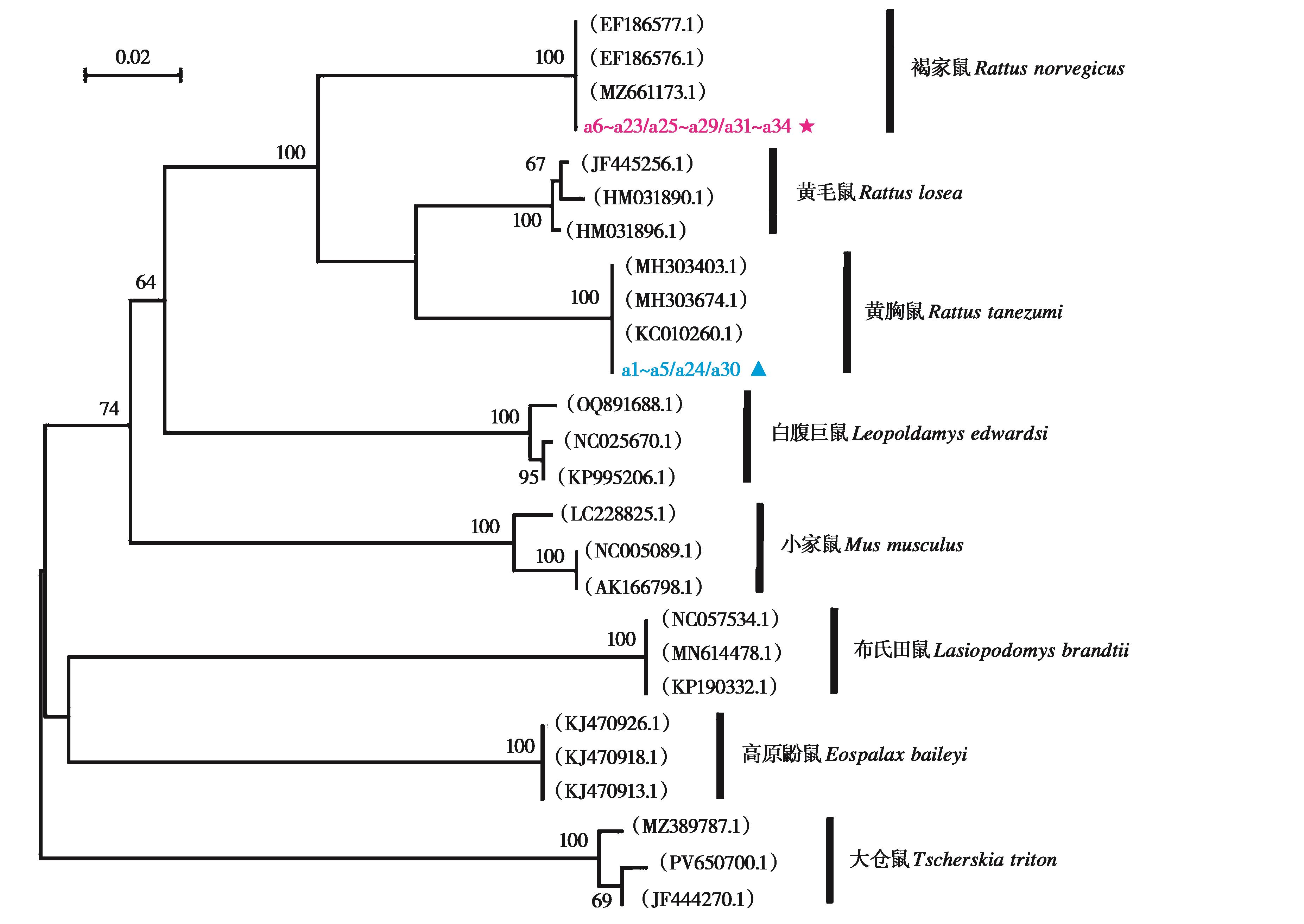
Fig. 2 Phylogenetic tree constructed based on the COI gene. ★ represents 27 samples identified as Rattus norvegicus; ▲ represents 7 samples identified as R. tanezumi

Fig. 3 Alpha diversity analysis (A ‑ C) and principal coordinate analysis (PCoA) (D ‑ F) of gut microbiota in Rattus norvegicus and R. tanezumi. R. norvegicus (RN): n = 10; R. tanezumi (RT): n = 7; female R. norvegicus (RN‑F): n = 6; male R. norvegicus (RN‑M): n = 4; female R. tanezumi (RT‑F): n = 4; male R. tanezumi (RT‑M): n = 3. A ‑ C: Student’s t‑test, **P < 0.01; D ‑ F: ANOSIM test
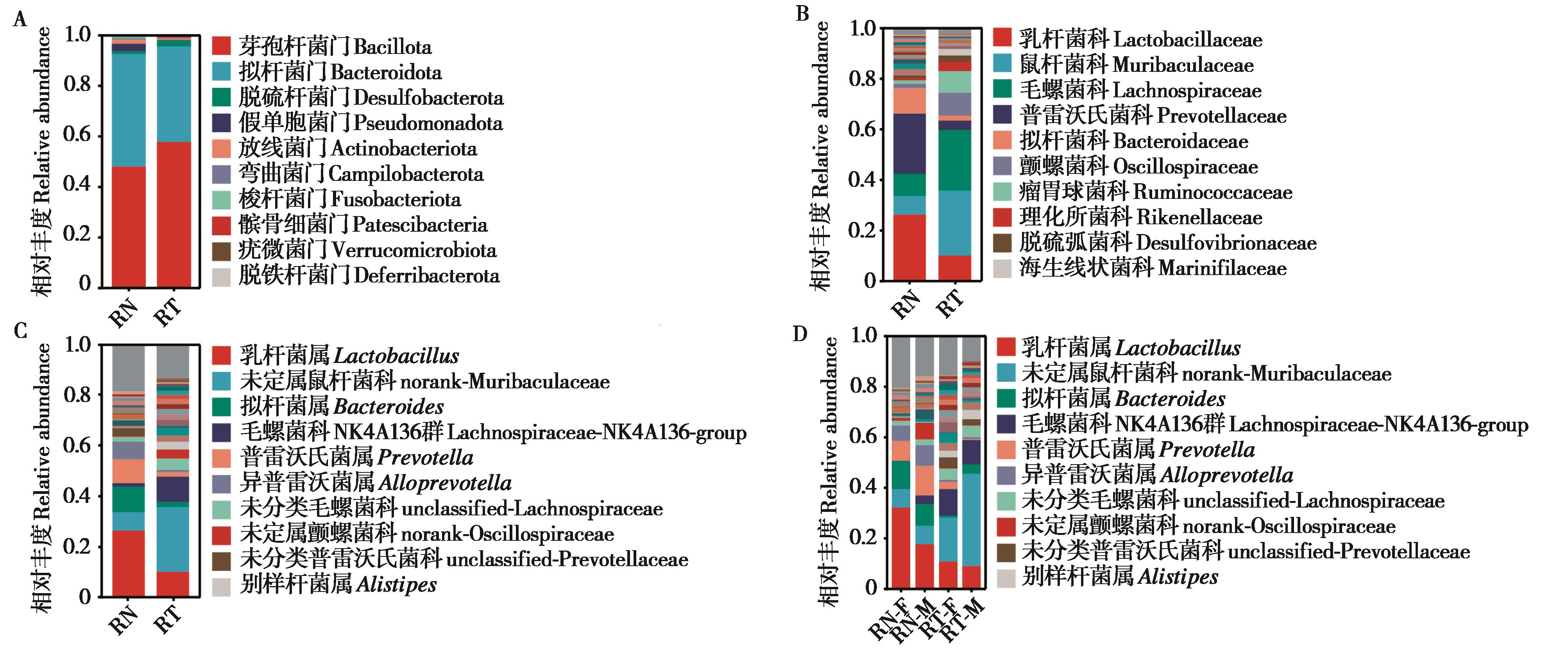
Fig. 4 Composition analysis of gut microbiota in Rattus norvegicus and R. tanezumi.A: At the Phylum level; B: At the Family level; C, D: At the Genus level. R. norvegicus (RN): n = 10; R. tanezumi (RT): n = 7; female R. norvegicus (RN‑F): n = 6; male R. norvegicus (RN‑M): n = 4; female R. tanezumi (RT‑F): n = 4; male R. tanezumi (RT‑M): n = 3
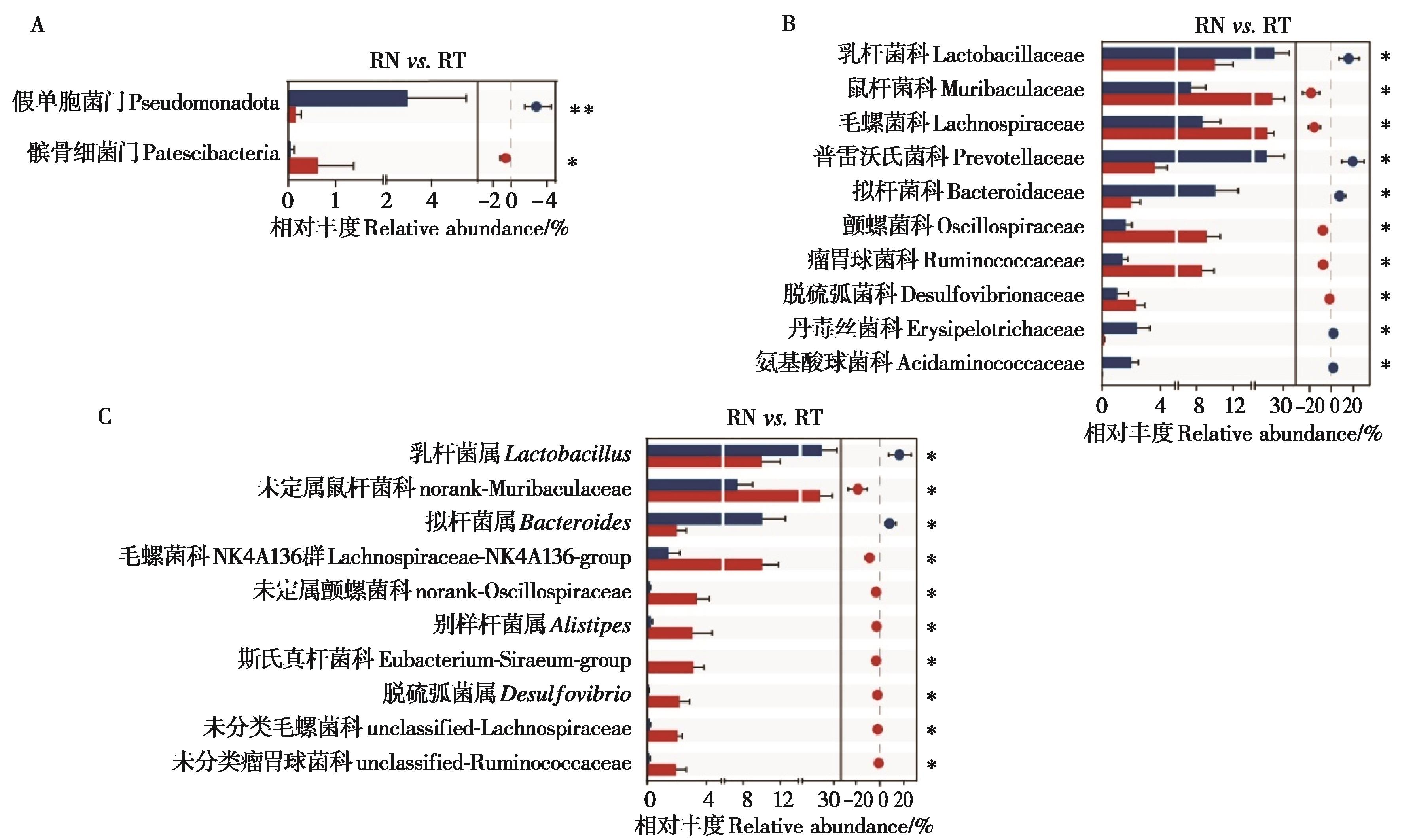
Fig. 5 Differential analysis of gut microbiomes between Rattus norvegicus and R. tanezumi. A: At the Phylum level; B: At the Family level; C: At the Genus level. R. norvegicus (RN): n = 10; R. tanezumi (RT): n = 7. Wilcoxon rank‑sum test with FDR correction: *q < 0.05, **q < 0.01
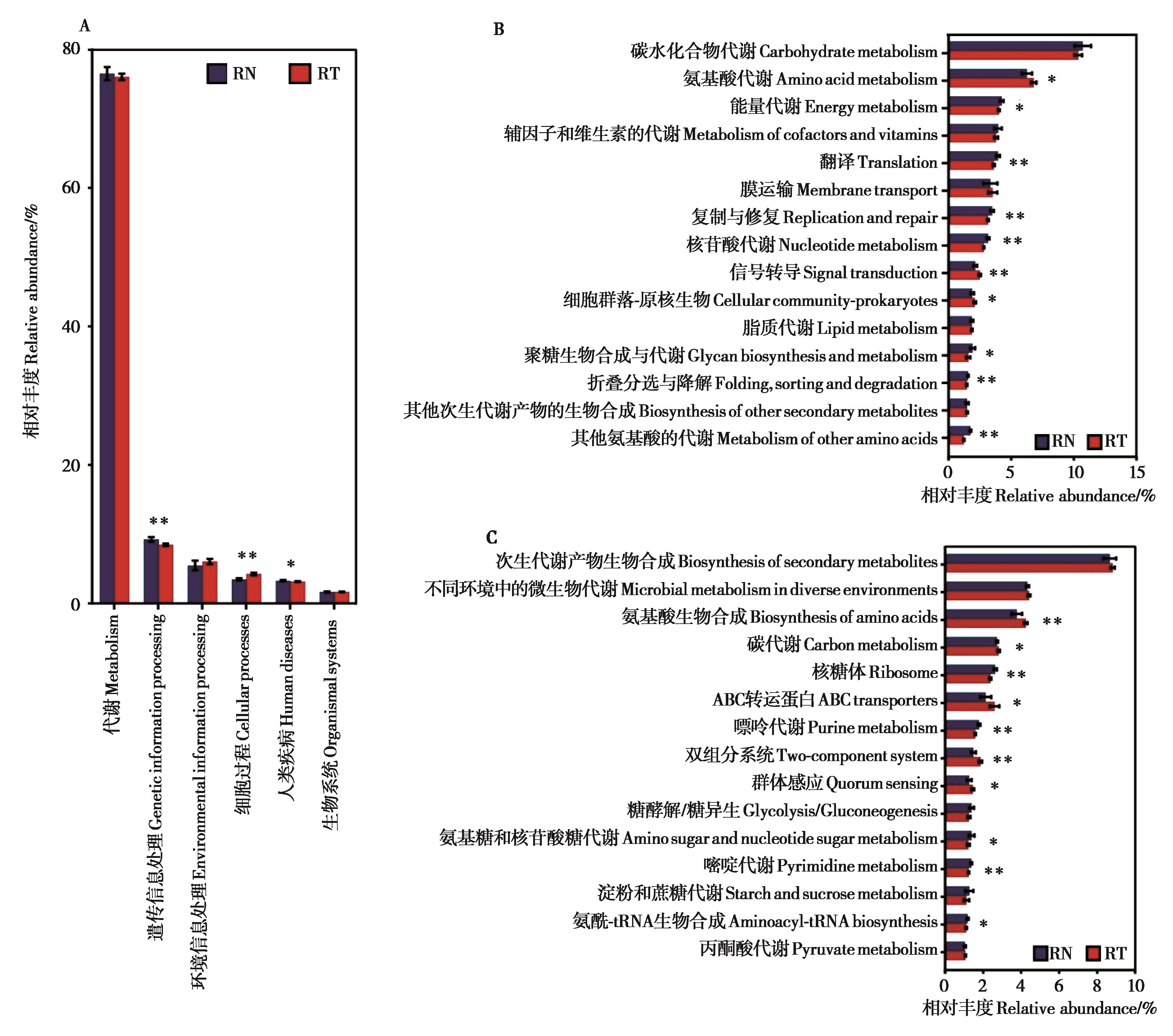
Fig. 6 Functional prediction analysis of gut microbiota based on PICRUSt2. A: KEGG Level 1 functions; B: KEGG Level 2 functions; C: KEGG Level 3 functions. Rattus norvegicus (RN): n = 10; R. tanezumi (RT): n = 7. Wilcoxon rank‑sum test: *P < 0.05, **P < 0.01
| Afonso B C, Rosalino L M, Matias G, Valdez V, Carvalho J, Albrecht M, Wauters J,2025. Under pressure:effects of habitat and interspecific interactions on small mammal stress levels and body condition[J].Mammal Research,71(1):2.DOI:10.1007/s13364-025-00832-y . | |
| Bai D P, Lin X Y, Hu Y Q, Chen Z Z, Chen L, Huang Y F, Huang X H, Li J,2021. Metagenomics approach to identify lignocellulose‑degrading enzymes in the gut microbiota of the chinese bamboo rat cecum[J].Electronic Journal of Biotechnology,50(2021):29‑36. DOI:10.1016/j.ejbt.2020.12.001 . | |
| Bird S, Prewer E, Kutz S, Leclerc L M, Vilaça S T, Kyle C J,2019. Geography,seasonality,and host‑associated population structure influence the fecal microbiome of a genetically depauparate arctic mammal[J].Ecology and Evolution,9(23):13202‑13217. DOI:10.1002/ece3.5768 . | |
| Borbón‑García A, Reyes A, Vives‑Flórez M, Caballero S,2017. Captivity shapes the gut microbiota of andean bears:insights into health surveillance[J].Frontiers in Microbiology,8:1316. DOI:10.3389/fmicb.2017.01316 . | |
| Chen S, Zhou Y, Chen Y, Gu J,2018. fastp:an ultra‑fast all‑in‑one FASTQ preprocessor[J].Bioinformatics,34(17):i884‑i890. DOI:10.1093/bioinformatics/bty560 . | |
| Del Arco S, Del Arco J M,2025. How rodent species adapt to the food resources of their habitat[J]. Animals,15(13):1874. DOI:10.3390/ani15131874 . | |
| Douglas G M, Maffei V J, Zaneveld J R, Yurgel S N, Brown J R, Taylor C M, Huttenhower C, Langille M G I,2020. PICRUSt2 for prediction of metagenome functions[J]. Nature Biotechnology,38(6):685‑688.DOI:10.1038/s41587- 020-0548-6 . | |
| Edgar R C,2013. UPARSE:highly accurate OTU sequences from microbial amplicon reads[J].Nature Publishing Group,10:996‑998. DOI:10.1038/nmeth.2604 . | |
| Fan C, Xue H, Xu J, Wu M, Chen L, Xu L,2025. Two species of long‑day breeding hamsters exhibit distinct gut microbial responses to photoperiodic variations[J]. Animals,15(11):1648. DOI:10.3390/ani15111648 . | |
| Felsenstein J,1985. Confidence limits on phylogenies:an approach using the bootstrap[J]. Evolution,39(4):783‑791. DOI:10.1111/j.1558-5646.1985.tb00420.x . | |
| Feng A Y T, Himsworth C G,2014. The secret life of the city rat: a review of the ecology of urban norway and black rats(Rattus norvegicus and Rattus rattus)[J].Urban Ecosystems,17(1):149‑162. DOI:10.1007/s11252-013-0305-4 . | |
| Fu H, Zhang L, Fan C, Liu C, Li W, Cheng Q, Zhao X, Jia S, Zhang Y,2021. Environment and host species identity shape gut microbiota diversity in sympatric herbivorous mammals[J]. Microbial Biotechnology,14(4):1300‑1315. DOI:10.1111/1751-7915.13687 . | |
| Fujimori S,2021. Humans have intestinal bacteria that degrade the plant cell walls in herbivores[J]. World Journal of Gastroenterology,27(45):7784‑7791.DOI:10.3748/wjg.v27.i45.7784 . | |
| Goldstein E J C, Tyrrell K L, Citron D M,2015. Lactobacillus species:taxonomic complexity and controversial susceptibilities[J]. Clinical Infectious Diseases,60(S2):S98‑S107. DOI:10.1093/cid/civ072 . | |
| Greene L K, Williams C V, Junge R E, Mahefarisoa K L, Rajaonarivelo T, Rakotondrainibe H, O’Connell T M, Drea C M,2020. A role for gut microbiota in host niche differentiation[J]. ISME Journal,14(7):1675‑1687.DOI:10.1038/s41396- 020-0640-4 . | |
| Guo S, Li G, Liu J, Wang J, Lu L, Liu Q,2019. Dispersal route of the Asian house rat(Rattus tanezumi)on mainland of China: insights from microsatellite and mitochondrial DNA[J]. BMC Genetics,20(1):11. DOI:10.1186/s12863-019-0714-3 . | |
| Ivanova N V, Clare E L, Borisenko A V,2012. DNA barcoding in mammals[M]//Kress W J,Erickson D L eds.DNA barcodes:methods and protocols.Totowa,NJ:Humana Press, 153‑182. DOI:10.1007/978-1-61779-591-6_8 . | |
| Janáč M, Šlapanský L, Kopeček L, Prudík B, Mrkvová M, Halačka K, Jurajda P,2022. Fine‑scale microhabitat niche separation allows coexistence of two invasive species[J]. Hydrobiologia,849(19):4407‑4425.DOI:10.1007/s10750- 022-04998-3 . | |
| Johnson A J, Vangay P, Al‑Ghalith G A, Hillmann B M, Ward T L, Shields‑Cutler R R, Kim A D, Shmagel A K, Syed A N, Walter J, Menon R, Koecher K, Knights D,2019. Daily sampling reveals personalized diet‑microbiome associations in humans[J]. Cell Host & Microbe,25(6):789‑802.e5. DOI:10.1016/j.chom.2019.05.005 . | |
| Kimura M,1980. A simple method for estimating evolutionary rates of base substitutions through comparative studies of nucleotide sequences[J].Journal of Molecular Evolution,16(2): 111‑120. DOI:10.1007/BF01731581 . | |
| Klingbeil E, De La Serre C B,2018. Microbiota modulation by eating patterns and diet composition:impact on food intake[J]. American Journal of Physiology‑Regulatory,Integrative and Comparative Physiology,315(6):R1254‑R1260.DOI:10.1152/ajpregu.00037.2018 . | |
| Lan D, Ji W, Lin B, Chen Y, Huang C, Xiong X, Fu M, Mipam T D, Ai Y, Zeng B, Li Y, Cai Z, Zhu J, Zhang D, Li J,2017. Correlations between gut microbiota community structures of Tibetans and geography[J].Scientific Reports,7 (1):16982.DOI:10.1038/s41598-017-17194-4 . | |
| Ley R E, Hamady M, Lozupone C, Turnbaugh P J, Ramey R R, Bircher J S, Schlegel M L, Tucker T A, Schrenzel M D, Knight R, Gordon J I,2008. Evolution of mammals and their gut microbes[J].Science,320(5883):1647‑1651. DOI:10.1126/science.1155725 . | |
| Li J, Huang E, Wu Y, Zhu C, Li W, Ai L, Xie Q, Tian Z, Zhong W, Sun G, Zhang L, Tan W,2024. Population structure,dispersion patterns and genetic diversity of two major invasive and commensal zoonotic disease hosts(Rattus norvegicus and Rattus tanezumi)from the southeastern coast of China[J]. Frontiers in Genetics,14:1174584.DOI:10.3389/fgene. 2023.1174584 . | |
| Liu Puyu, Wu Qun, Sun Dingwei, Liu Ying, Ou Tingting, Zeng Xuexia,2024. Correlation on rodent density and meteorological factors in Hainan Province from 2012 to 2022[J]. China Tropical Medicine,24(12):1507‑1512. DOI:10.13604/j.cnki. 46-1064/r.2024.12.12. (in Chinese with English abstract) | |
| Liu Xiaohui,2022. Discrepancy,paradox,challenges,and strategies in face of national needs for rodent management in China[J]. Journal of Plant Protection,49(1):407‑414. DOI:10.13802/j.cnki.zwbhxb.2022.2022836. (in Chinese with English abstract) | |
| Magoč T, Salzberg S L,2011. FLASH: fast length adjustment of short reads to improve genome assemblies[J].Bioinformatics,27(21):2957‑2963. DOI:10.1093/bioinformatics/btr507 . | |
| Magomedov M S,2021. Microhabitat partitioning in a rodent community in the arid conditions of the south‑western caspian lowland[J]. Journal of Vertebrate Biology,70(1):20091.1. DOI:10.25225/jvb.20091 . | |
| Masi E, Pino F A, Santos M das G S, Genehr L, Albuquerque J O M, Bancher A M, Alves J C M,2010. Socioeconomic and environmental risk factors for urban rodent infestation in Sao Paulo,brazil[J].Journal of Pest Science,83(3):231‑241.DOI:10.1007/s10340-010-0290-9 . | |
| Meerburg B G, Singleton G R, Kijlstra A,2009. Rodent‑borne diseases and their risks for public health[J]. Critical Reviews in Microbiology,35(3):221‑270.DOI:10.1080/10408410902989837 . | |
| Meng X, Huang G, Wang Z, Niu H, Zhang H,2023. Asymmetric competition for seeds between two sympatric food hoarding rodents:implications for coexistence[J]. Integrative Zoology,18(5):817‑830. DOI:10.1111/1749-4877.12650 . | |
| Nei M,1987. The neighbor‑joining method: a new method for reconstructing phylogenetic trees[J]. Molecular Biology and Evolution,4(4):406‑425. DOI:10.1093/oxfordjournals.molbev.a040454 . | |
| Neis E P J G, Dejong C H C, Rensen S S,2015. The role of microbial amino acid metabolism in host metabolism[J]. Nutrients,7(4):2930‑2946. DOI:10.3390/nu7042930 . | |
| Payne P, Polechová J,2020. Sympatric ecological divergence with coevolution of niche preference[J].Philosophical Transactions of the Royal Society B: Biological Sciences,375(1806):20190749. DOI:10.1098/rstb.2019.0749 . | |
| Reginaldo A A, Ong P S,2021. Small mammal‑microhabitat associations in a disturbed landscape in northern luzon,philippines[J].Philippine Science Letters,14(1):51‑64. | |
| Rondinella D, Raoul P C, Valeriani E, Venturini I, Cintoni M, Severino A, Galli F S, Mora V, Mele M C, Cammarota G, Gasbarrini A, Rinninella E, Ianiro G,2025.The detrimental impact of ultra‑processed foods on the human gut microbiome and gut barrier[J]. Nutrients,17(5):859. DOI:10.3390/nu17050859 . | |
| Ross F C, Patangia D, Grimaud G, Lavelle A, Dempsey E M, Ross R P, Stanton C,2024. The interplay between diet and the gut microbiome:implications for health and disease[J].Nat Rev Microbiol,22(11):671‑686. DOI:10.1038/s41579- 024-01068-4 . | |
| Rowland I, Gibson G, Heinken A, Scott K, Swann J, Thiele I, Tuohy K,2018. Gut microbiota functions:metabolism of nutrients and other food components[J].European Journal of Nutrition,57(1):1‑24. DOI:10.1007/s00394-017-1445-8 . | |
| Schloss P D, Westcott S L, Ryabin T, Hall J R, Hartmann M, Hollister E B, Lesniewski R A, Oakley B B, Parks D H, Robinson C J, Sahl J W, Stres B, Thallinger G G, Van Horn D J, Weber C F,2009.Introducing mothur: open‑source, platform‑independent,community‑supported software for describing and comparing microbial communities[J]. Applied and Environmental Microbiology,75(23):7537‑7541. DOI:10.1128/AEM.01541-09 . | |
| Shah T, Hou Y, Jiang J, Shah Z, Wang Yuhan, Li Q, Xu X, Wang Yixuan, Wang B, Xia X,2023. Comparative analysis of the intestinal microbiome in Rattus norvegicus from different geographies[J]. Frontiers in Microbiology,14:1283453. DOI:10.3389/fmicb.2023.1283453 . | |
| Shen Yuewu, Yang Junbao, Liang Suhua, Liu Yun, Hu Jinchu,2007. Research of the small mammal spatial niche in the suburb of Nanchong[J]. Journal of China West Normal University (Natural Sciences),28(3):216‑219. DOI:10.3969/j.issn. 1673-5072.2007.03.012. (in Chinese with English abstract) | |
| Shi Xiaomei, Zhao Zhiping, Zhang Weifeng,2008. The comparative experiment on daily activity of Rattus norvegicus and poisonous bait station[J].Journal of Shanxi Agricultural Sciences,36(12):77‑78.DOI:10.3969/j.issn.1002-2481.2008.12.030. (in Chinese with English abstract) | |
| Sorbara M T, Littmann E R, Fontana E, Moody T U, Kohout C E, Gjonbalaj M, Eaton V, Seok R, Leiner I M, Pamer E G,2020. Functional and genomic variation between human‑derived isolates of lachnospiraceae reveals inter‑ and intra‑species diversity[J].Cell Host & Microbe,28(1):134‑146.e4. DOI:10.1016/j.chom.2020.05.005 . | |
| Stackebrandt E, Goebel B M,1994. Taxonomic note: a place for DNA‑DNA reassociation and 16S rRNA sequence analysis in the present species definition in bacteriology[J]. International Journal of Systematic and Evolutionary Microbiology,44(4):846‑849. DOI:10.1099/00207713-44-4-846 . | |
| Stuart A, Prescott C, Singleton G,2008. Biology and management of rodent communities in complex agroecosystems‑lowlands[J]. Philippine Rice Research Institute,37‑55. | |
| Sutoyo D A, Atmaka D, Sidabutar L M G,2020. Dietary factors affecting firmicutes and bacteroidetes ratio in solving obesity problem: a literature review[J]. Media Gizi Indonesia,15(2):94. DOI:10.20473/mgi.v15i2.94-109 . | |
| Tamura K, Stecher G, Kumar S,2021. MEGA11:molecular evolutionary genetics analysis version 11[J]. Molecular Biology and Evolution,38(7):3022‑3027. DOI:10.1093/molbev/msab120 . | |
| Tremaroli V, Bäckhed F,2012. Functional interactions between the gut microbiota and host metabolism[J].Nature,489:242‑249.DOI:10.1038/nature11552 . | |
| Trevelline B K, Kohl K D,2022.The gut microbiome influences host diet selection behavior[J].Proceedings of the National Academy of Sciences,119(17):e2117537119. DOI:10.1073/pnas.2117537119 . | |
| Vinderola G, Ouwehand A, Salminen S, von Wright A,2024. Lactic acid bacteria:microbiological and functional aspects[M].Boca Raton,London,New York:CRC Press,1‑835. DOI:10.1201/9781003352075 . | |
| Wang Ling, Xiao Hansen, He Yaming, Li Zhifeng, Zhao Ting, Duan Gang,2024. Gut bacteria of Rattus tanezumi in Chongqing section of Three Gorges Reservoir Area,China based on high throughput sequencing[J]. Chinese Journal of Microecology,36(5):504‑511,517. DOI:10.13381/j.cnki.cjm.202405002. (in Chinese with English abstract) | |
| Wang Q, Garrity G M, Tiedje J M, Cole J R,2007. Naïve bayesian classifier for rapid assignment of rRNA sequences into the new bacterial taxonomy[J]. Applied and Environmental Microbiology,73(16):5261‑5267. DOI:10.1128/AEM.00062-07 . | |
| Wang W, Li Z M, Chen Y, Zhang J H, Zhang J X, Zhang Y H,2024. Species recognition and the divergences in the chemical and ultrasonic signals between two coexisting Rattus species[J]. Current Zoology,70(4):531‑538. DOI:10.1093/cz/zoad035 . | |
| Weber M G, Strauss S Y,2016. Coexistence in close relatives: beyond competition and reproductive isolation in sister taxa[J].Annual Review of Ecology,Evolution,and Systematics,47:359‑381. DOI:10.1146/annurev-ecolsys-112414-054048 . | |
| Williams B A, Grant L J, Gidley M J, Mikkelsen D,2017. Gut fermentation of dietary fibres:physico‑chemistry of plant cell walls and implications for health[J]. International Journal of Molecular Sciences,18(10):E2203. DOI:10.3390/ijms 18102203 . | |
| Xiao W, Zhang Q, Yu L, Tian F, Chen W, Zhai Q,2022. Effects of vegetarian diet‑associated nutrients on gut microbiota and intestinal physiology[J]. Food Science and Human Wellness,11(2):208‑217. DOI:10.1016/j.fshw.2021.11.0022213-4530 . | |
| Yan Hui, Liu Shiyou, Qi Shunxiang, Li Qi,2022. Distribution and migration of Rattus tanezumi [J]. Journal of Medical Pest Control,38(5):463‑466. DOI:10.7629/yxdwfz202205014. (in Chinese with English abstract) | |
| Yepes‑Arcila N A, Colorado Z G J,2025. Microhabitat segregation,foraging behavior,and elevation enable coexistence of new world warblers(aves:parulidae)in agroforestry systems[J]. Ornithology Research,33(1):42.DOI:10.1007/s43388- 025-00248-x . | |
| Zeng L, Ming C, Li Y, Su L Y, Su Y H, Otecko N O, Dalecky A, Donnellan S, Aplin K, Liu X H, Song Y, Zhang Z B, Esmailizadeh A, Sohrabi S S, Nanaei H A, Liu H Q, Wang M S, Ag Atteynine S, Rocamora G, Brescia F, Morand S, Irwin D M, Peng M S, Yao Y G, Li H P, Wu D D, Zhang Y P,2018. Out of southern east Asia of the brown rat revealed by large‑scale genome sequencing[J].Molecular Biology and Evolution,35(1):149‑158. DOI:10.1093/molbev/msx276 . | |
| Zhang Meiwen, Anguo Chan, Wang Yong, Guo Cong, Liu Huifen, Li Bo,2006.The biological characteristics of the buff‑breasted rats(Rattus flavipectus)in Yangtse Valley in China[J].Acta Theriologica Sinica,20(3):200‑211. DOI:10.16829/j.slxb.2000.03.007. (in Chinese with English abstract) | |
| Zhu Y, Chen B, Zhang X, Akbar M T, Wu T, Zhang Y, Zhi L, Shen Q,2024. Exploration of the muribaculaceae family in the gut microbiota:diversity,metabolism,and function[J].Nutrients,16(16):2660. DOI:10.3390/nu16162660 . | |
| Zmora N, Suez J, Elinav E,2019.You are what you eat:diet,health and the gut microbiota[J].Nature Reviews Gastroenterology & Hepatology,16(1):35‑56.DOI:10.1038/s41575- 018-0061-2 . | |
| Gharechahi J, Vahidi M F, Sharifi G, Ariaeenejad S, Ding X Z, Han J L, Salekdeh G H,2023. Lignocellulose degradation by rumen bacterial communities:new insights from metagenome analyses[J].Environmental Research,229:115925. DOI:10.1016/j.envres.2023.115925 . | |
| Ma S, Zhang Y, Li Z, Guo M, Liu B, Wang Z, Cui Y, Wang C, Li D, Shi Y,2024. Roughage quality determines the production performance of post‑weaned Hu sheep via altering ruminal fermentation,morphology,microbiota,and the global methylome landscape of the rumen wall[J]. Frontiers in Microbiomes,2:1272625. DOI:10.3389/frmbi.2023.1272625 . | |
| 王玲,肖汉森,何亚明,李志峰,赵婷,段刚,2024. 基于高通量测序的三峡库区重庆段黄胸鼠肠道菌群分析[J]. 中国微生态学杂志,36(5):504‑511,517. DOI:10.13381/j.cnki.cjm.202405002 . | |
| 申跃武,杨俊宝,梁素华,刘云,胡锦矗,2007. 南充市郊区鼠型小兽空间生态位研究[J]. 西华师范大学学报(自然科学版),28(3):216‑219. DOI:10.3969/j.issn.1673-5072. 2007.03.012 . | |
| 师小梅,赵治萍,郑卫锋,2008. 褐家鼠活动规律与毒饵站比对试验研究[J]. 山西农业科学,36(12):77‑78. DOI:10.3969/j.issn.1002-2481.2008.12.030 . | |
| 刘晓辉,2022. 中国鼠害防控需求的差异、矛盾、挑战与对策[J]. 植物保护学报,49(1):407‑414. DOI:10.13802/j.cnki.zwbhxb.2022.2022836 . | |
| 刘璞瑜,吴群,孙定炜,刘莹,欧婷婷,曾雪霞,2024. 海南省2012—2022年鼠密度与气象因素的相关性[J]. 中国热带医学,24(12):1507‑1512. DOI:10.13604/j.cnki.46-1064/r. 2024.12.12 . | |
| 严慧,刘世友,齐顺祥,李琦,2022. 黄胸鼠的分布与迁移[J]. 医学动物防制,38(5):463‑466. DOI:10.7629/yxdwfz 202205014 . | |
| 张美文,陈安国,王勇,郭聪,刘辉芬,李波,2006. 长江流域黄胸鼠生物学特性观察[J].兽类学报,20(3):200‑211. DOI:10.16829/j.slxb.2000.03.007 . |
| [1] | Zewei ZHANG, Siyu WANG, Guoliang LI. Effects of habitat type and seasonal changes on the gut microbiota of Brandt’s voles [J]. ACTA THERIOLOGICA SINICA, 2026, 46(5): 688-704. |
| [2] | Xinlei HUANG, wei LANG, Jiang FENG, Boyu LIU. Advances in bat gut microbiota research [J]. ACTA THERIOLOGICA SINICA, 2026, 46(5): 638-649. |
| [3] | Qiyuan XUE, He CAI, Yifei ZHANG, Yi GAO, Qiuying GUO, Zhihui ZHANG, Zhimin JIN, Junsheng ZHANG, Zhu LIU. Gut microbiota structure and function in Sorex caecutiens across different seasons within the same region [J]. ACTA THERIOLOGICA SINICA, 2026, 46(5): 734-743. |
| [4] | Tianxin ZHANG, Wanlong ZHU. Cross-scale physiological and ecological effects of gut microbiota in small mammals under food restriction [J]. ACTA THERIOLOGICA SINICA, 2026, 46(5): 650-669. |
| [5] | Binpeng WANG, Danhui ZHANG, Zhimei YANG, Yueting PAN, Xiaobin LUO, Ran MO, Linsen ZAN, Xiaoyu WANG, Chugang MEI. Analysis of structural and functional differences in the gut microbiota between juvenile and adult captive giant pandas in the Qinling region [J]. ACTA THERIOLOGICA SINICA, 2026, 46(5): 744-758. |
| [6] | Yuting SUN, Dongdong YANG, Yinhu LI, Congran GONG, Han HU, Lina SU, Peiwei LI, Yan LIU, Hongfeng ZHANG, Xiaomin WU. Effect of sex on the gut microbiota of Tibetan antelopes [J]. ACTA THERIOLOGICA SINICA, 2026, 46(2): 278-286. |
| [7] | Zhenyuan CAI, Hongying KONG, Zhenbang HE, Pengfei SONG, Fan GUO, Bin LI, Chengbo LIANG, Tianshi HU, Bo XU, Zhongyuan LIN, Tongzuo ZHANG. Species identification of zokors in the east of the Qinghai-Xizang Plateau based on both morphology and DNA barcoding [J]. ACTA THERIOLOGICA SINICA, 2026, 46(1): 116-128. |
| [8] | Yuxiang LI, Xi TIAN, Chunbing LIU, Li YU. The effects of captivity on gut microbiota of wild mammals [J]. ACTA THERIOLOGICA SINICA, 2026, 46(1): 1-19. |
| [9] | NIE Yonggang, ZHANG Chao, GAO Huayao, LIU Hanqing, XIE Bing. Advances in conservation research of large- and medium-sized terrestrial mammals in China [J]. ACTA THERIOLOGICA SINICA, 2025, 45(5): 559-576. |
| [10] | SUN Kai, ZHU Zhaoling, Naheya, HAO Shuxiang, LIANG Yongliang, XU Hao, Alima, LIU Zhen-sheng, TENG Liwei. Gender difference in gut microbiota composition of blue sheep (Pseudois nayaur) on the eastern slope of the Helan Mountains between summer and winter [J]. ACTA THERIOLOGICA SINICA, 2025, 45(4): 492-502. |
| [11] | ZHAO Xing, MA Rui, WU Wei, LI Mingxi, CHEN Chao, ZHOU Yanshan, HONG Mingsheng, QI Dunwu. Changing patterns of cortisol and gut microbiota in Ailurus fulgens under different living environments [J]. ACTA THERIOLOGICA SINICA, 2024, 44(4): 427-435. |
| [12] | Feng JIANG, Pengfei SONG, Jingjie ZHANG, Hongmei GAO, Haijing WANG, Zhenyuan CAI, Daoxin LIU, Tongzuo ZHANG. Comparative analysis of gut microbial composition and functions of forest musk deer in different breeding centres [J]. ACTA THERIOLOGICA SINICA, 2023, 43(2): 129-140. |
| [13] | Yadong LI, Bowen LI, Xi WANG, Penghui LI, Jinhua LI. Effects of food resources seasonality on home range utilization of wild Tibetan macaque (Macaca thibetana) [J]. ACTA THERIOLOGICA SINICA, 2022, 42(6): 624-633. |
| [14] | Min MAO, Ming YANG, Xinyu LIU. Effects of hibernation on cecal microbiota in Daurian ground squirrel [J]. ACTA THERIOLOGICA SINICA, 2022, 42(4): 420-431. |
| [15] | FAN Chao, ZHANG Liangzhi, FU Haibo, LIU Chuanfa, LI Wenjing, ZHANG He, TANG Xianjiang, CHENG Qi, SHEN Wenjuan, ZHANG Yanming. Seasonality of abundant and rare taxa in gut microbiota of plateau pikas [J]. ACTA THERIOLOGICA SINICA, 2021, 41(6): 617-630. |
| Viewed | ||||||
|
Full text |
|
|||||
|
Abstract |
|
|||||
 青公网安备 63010402000199号
青ICP备05000010号-2
