

中国核心期刊要目总览
中国科技核心期刊
CSCD数据库源刊
中国科技核心期刊
CSCD数据库源刊
兽类学报 ›› 2026, Vol. 46 ›› Issue (1): 60-72.DOI: 10.16829/j.slxb.151013
李文婷, 施鑫宇, 王品涵, 闻靖( )
)
收稿日期:2024-09-14
接受日期:2025-01-17
出版日期:2026-01-31
发布日期:2026-02-03
通讯作者:
闻靖
作者简介:李文婷(1999- ),女,硕士研究生,主要从事动物生理生态学研究.
基金资助:
Wenting LI, Xinyu SHI, Pinhan WANG, Jing WEN()
Received:2024-09-14
Accepted:2025-01-17
Online:2026-01-31
Published:2026-02-03
Contact:
Jing WEN
摘要:
小型哺乳动物在野外常常面临食物资源不确定性的挑战。野外环境中黑线仓鼠(Cricetulus barabensis)的食物资源具有明显的季节性变化,且食物数量和种类的改变均会影响其代谢表型。为了解随机禁食对不同食物质量下黑线仓鼠能量代谢的影响,我们假设高脂饮食下黑线仓鼠能够更好地抵抗食物资源短缺。将成年雄性黑线仓鼠随机分为高脂饮食对照组(HF‑Con)、高脂饮食禁食组(HF‑IF)、低脂饮食对照组(LF‑Con)和低脂饮食禁食组(LF‑IF),并驯化5周。测定动物的体质量、摄食量、代谢率、体脂和组织代谢等指标。结果发现,HF‑IF组显著降低了黑线仓鼠的体质量、皮下脂肪质量,而日代谢率和组织代谢水平的变化不显著;LF‑IF组的体质量、摄食量、褐色脂肪组织(brown adipose tissue,BAT)质量和夜间代谢率显著降低,但维持自身基础能耗的静息代谢率(resting metabolic rate,RMR)显著增加。其中,HF‑IF组的体质量在禁食期间显著下降,恢复进食后则迅速回升至新稳态。与之相反,LF‑IF组的体质量整体呈缓慢下降的趋势。因此,高脂饮食下黑线仓鼠在禁食和重喂食过程中表现出较强的补偿性机制,而低脂饮食下其无法适应随机禁食。原因可能在于高脂食物显著增加了动物的体脂含量,便于其调动自身能量储备以适应食物短缺,迅速实现“新稳态”。综上所述,食物质量在一定程度上决定动物的生存适应策略,高脂饮食下黑线仓鼠能够更好地抵抗食物资源短缺带来的风险。
中图分类号:
李文婷, 施鑫宇, 王品涵, 闻靖. 随机禁食对高、低脂饮食下黑线仓鼠能量代谢的影响[J]. 兽类学报, 2026, 46(1): 60-72.
Wenting LI, Xinyu SHI, Pinhan WANG, Jing WEN. Effects of random food deprivation on energy metabolism in striped hamsters with different diets[J]. ACTA THERIOLOGICA SINICA, 2026, 46(1): 60-72.
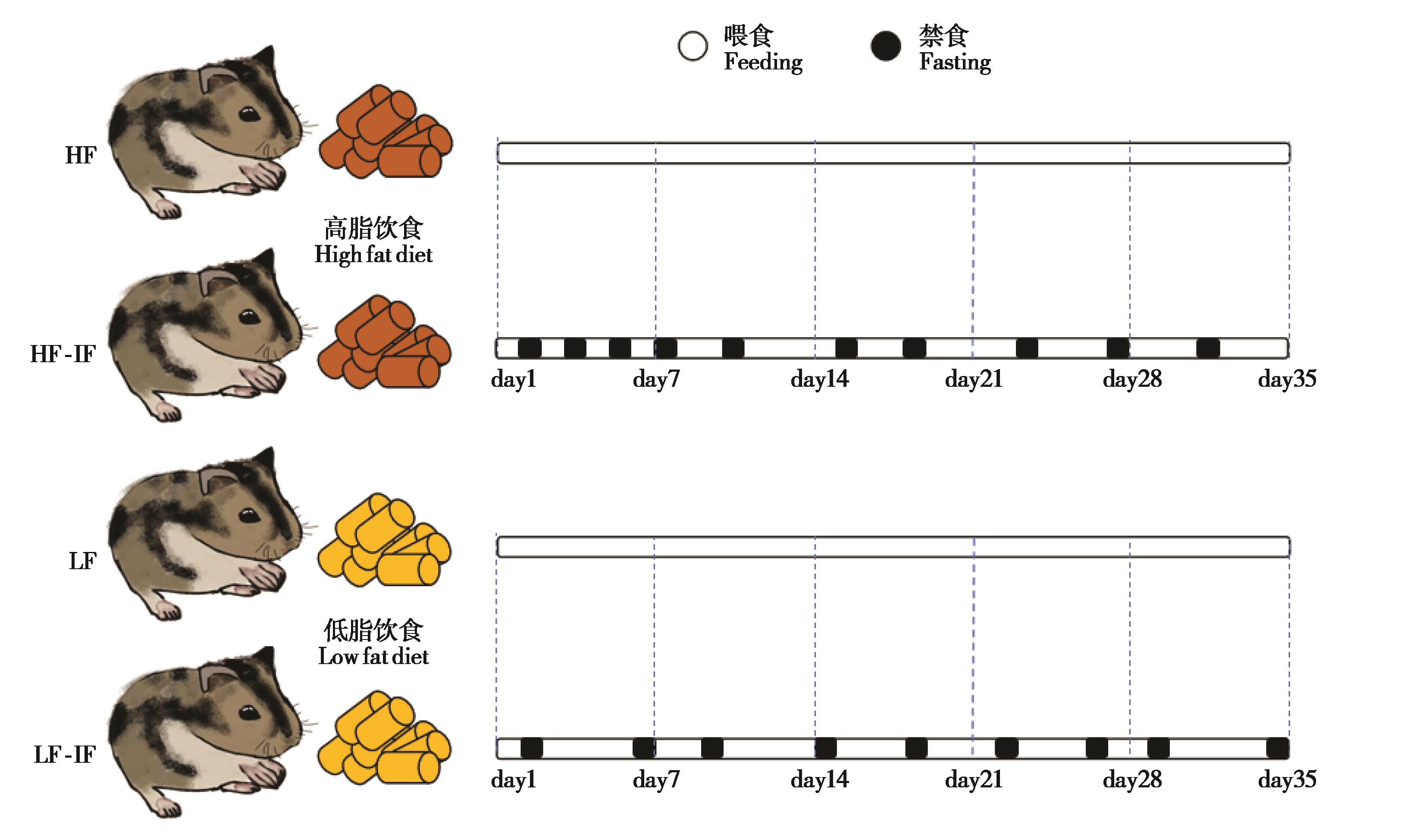
图1 不同食物质量下黑线仓鼠的禁食时间轴
Fig. 1 The timeline of fasting in striped hamsters with different diets
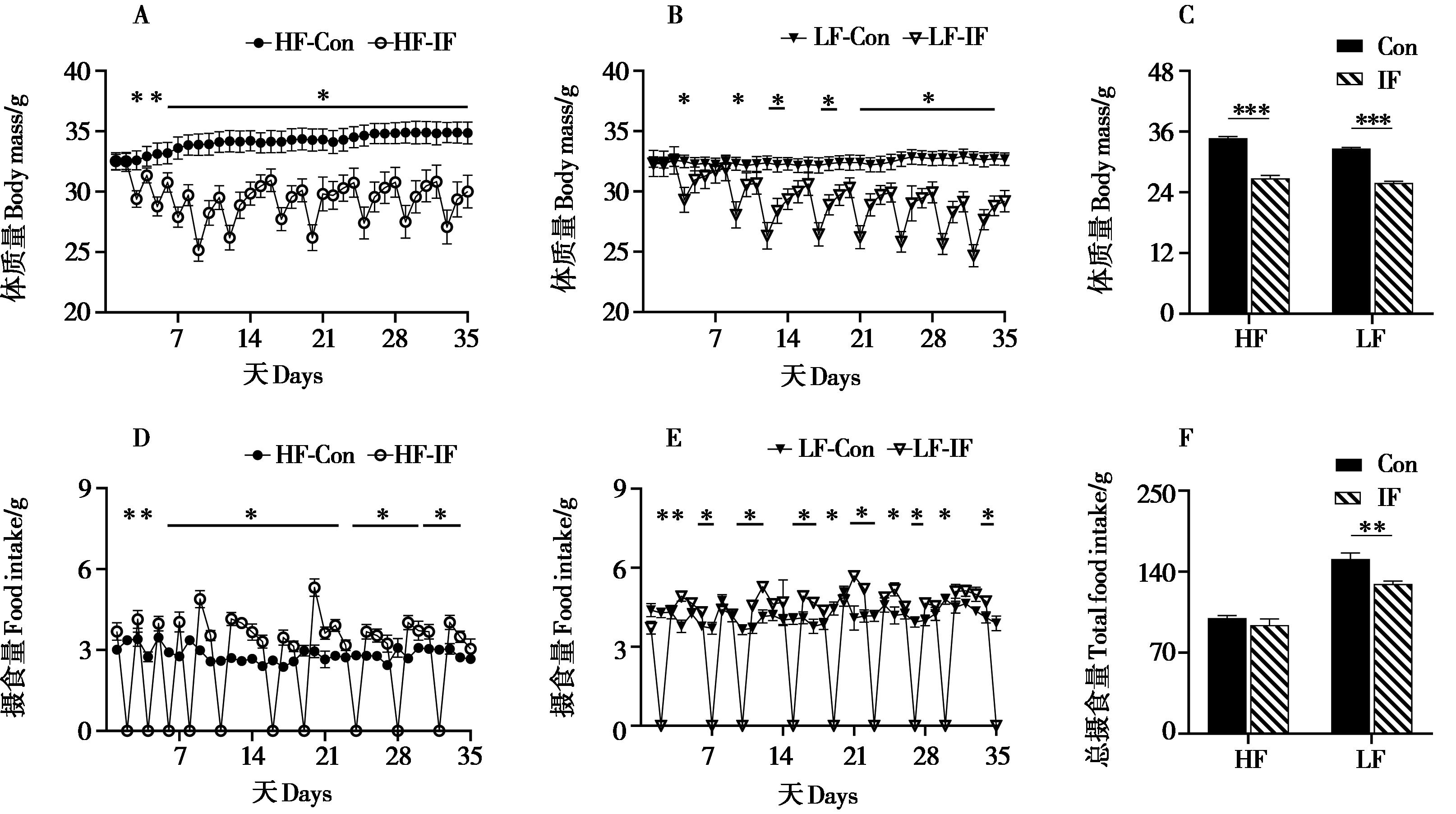
图2 随机禁食对不同食物质量下黑线仓鼠体质量和摄食量的影响. 驯化期间高脂(HF)(A)、低脂(LF)(B)饮食组黑线仓鼠体质量的连续变化,驯化结束后黑线仓鼠的平均体质量(C). 驯化期间高脂(D)、低脂(E)饮食组黑线仓鼠摄食量的连续变化,驯化期间黑线仓鼠的总摄食量(F). 数据是平均值 ± 标准误,* P < 0.05,** P < 0.01,*** P < 0.001. Con:对照组;IF:间歇禁食
Fig. 2 Effects of intermittent fasting on body mass and food intake in striped hamsters with different diets. Body mass of striped hamsters on high fat (HF) (A) and low fat (LF) (B) diets during acclimation,and the average body mass of striped hamsters at the end of acclimation (C). Food intake of striped hamsters on high fat (D) and low fat (E) diets during acclimation,and the total food intake of striped hamsters during acclimation (F). Data are mean ± SE. * P < 0.05, ** P < 0.01, *** P < 0.001. Con: Control; IF: Intermittent fasting
| 指标 Index | 高脂饮食对照组 HF-Con | 高脂饮食禁食组 HF-IF | FHF | PHF |
|---|---|---|---|---|
| 身体成分质量 Body composition weight/g | ||||
| 心 Heart | 0.148 ± 0.007 | 0.150 ± 0.009 | 3.605 | ns |
| 肝 Liver | 1.435 ± 0.055 | 1.657 ± 0.121 | 4.645 | ns |
| 脾 Spleen | 0.016 ± 0.001 | 0.018 ± 0.003 | 4.057 | ns |
| 肾 Kidney | 0.308 ± 0.011 | 0.306 ± 0.015 | 0.93 | ns |
| 胃 Stomach | 0.307 ± 0.018 | 0.276 ± 0.023 | 0.053 | ns |
| 大肠 Large intestine | 0.127 ± 0.009 | 0.119 ± 0.008 | 0.002 | ns |
| 小肠Small intestine | 0.523 ± 0.017 | 0.492 ± 0.045 | 0.031 | ns |
| 盲肠 Cecum | 0.142 ± 0.014 | 0.144 ± 0.018 | 0.175 | ns |
| 胴体 Carcass | 19.832 ± 0.533 | 17.667 ± 0.674 | 7.231 | * |
| 褐色脂肪组织 Brown adipose tissue | 0.227 ± 0.035 | 0.153 ± 0.009 | 2.738 | ns |
| 皮下脂肪 Subcutaneous fat | 0.465 ± 0.068 | 0.133 ± 0.019 | 11.845 | ** |
| 睾丸周脂 Peritestis fat | 1.556 ± 0.081 | 1.316 ± 0.091 | 1.012 | ns |
| 腹腔脂肪 Abdominal fat | 0.117 ± 0.018 | 0.094 ± 0.016 | 0.125 | ns |
| 胴体脂肪 Carcass fat | 3.055 ± 0.334 | 2.375 ± 0.239 | 0.107 | ns |
| 体脂含量Body fat content/% | 35.937 ± 2.815 | 30.709 ± 1.795 | 0.111 | ns |
表1 随机禁食对高脂饮食下黑线仓鼠身体成分质量和体脂含量的影响
Table 1 Effects of intermittent fasting on the body composition weight and body fat content in striped hamsters with high fat diet
| 指标 Index | 高脂饮食对照组 HF-Con | 高脂饮食禁食组 HF-IF | FHF | PHF |
|---|---|---|---|---|
| 身体成分质量 Body composition weight/g | ||||
| 心 Heart | 0.148 ± 0.007 | 0.150 ± 0.009 | 3.605 | ns |
| 肝 Liver | 1.435 ± 0.055 | 1.657 ± 0.121 | 4.645 | ns |
| 脾 Spleen | 0.016 ± 0.001 | 0.018 ± 0.003 | 4.057 | ns |
| 肾 Kidney | 0.308 ± 0.011 | 0.306 ± 0.015 | 0.93 | ns |
| 胃 Stomach | 0.307 ± 0.018 | 0.276 ± 0.023 | 0.053 | ns |
| 大肠 Large intestine | 0.127 ± 0.009 | 0.119 ± 0.008 | 0.002 | ns |
| 小肠Small intestine | 0.523 ± 0.017 | 0.492 ± 0.045 | 0.031 | ns |
| 盲肠 Cecum | 0.142 ± 0.014 | 0.144 ± 0.018 | 0.175 | ns |
| 胴体 Carcass | 19.832 ± 0.533 | 17.667 ± 0.674 | 7.231 | * |
| 褐色脂肪组织 Brown adipose tissue | 0.227 ± 0.035 | 0.153 ± 0.009 | 2.738 | ns |
| 皮下脂肪 Subcutaneous fat | 0.465 ± 0.068 | 0.133 ± 0.019 | 11.845 | ** |
| 睾丸周脂 Peritestis fat | 1.556 ± 0.081 | 1.316 ± 0.091 | 1.012 | ns |
| 腹腔脂肪 Abdominal fat | 0.117 ± 0.018 | 0.094 ± 0.016 | 0.125 | ns |
| 胴体脂肪 Carcass fat | 3.055 ± 0.334 | 2.375 ± 0.239 | 0.107 | ns |
| 体脂含量Body fat content/% | 35.937 ± 2.815 | 30.709 ± 1.795 | 0.111 | ns |
| 指标 Index | 低脂饮食对照组LF-Con | 低脂饮食禁食组LF-IF | FLF | PLF |
|---|---|---|---|---|
| 身体成分质量 Body composition weight/g | ||||
| 心 Heart | 0.158 ± 0.008 | 0.144 ± 0.007 | 1.041 | ns |
| 肝 Liver | 1.389 ± 0.054 | 1.450 ± 0.093 | 3.393 | ns |
| 脾 Spleen | 0.014 ± 0.002 | 0.017 ± 0.001 | 3.184 | ns |
| 肾 Kidney | 0.329 ± 0.012 | 0.298 ± 0.011 | 2.347 | ns |
| 胃 Stomach | 0.309 ± 0.018 | 0.353 ± 0.015 | 6.896 | * |
| 大肠 Large intestine | 0.193 ± 0.015 | 0.153 ± 0.011 | 3.514 | ns |
| 小肠 Small intestine | 0.631 ± 0.019 | 0.619 ± 0.032 | 0.059 | ns |
| 盲肠 Cecum | 0.158 ± 0.012 | 0.209 ± 0.014 | 7.585 | * |
| 胴体 Carcass | 17.627 ± 0.314 | 15.627 ± 0.562 | 22.977 | *** |
| 褐色脂肪组织 Brown adipose tissue | 0.118 ± 0.010 | 0.083 ± 0.005 | 6.933 | * |
| 皮下脂肪 Subcutaneous fat | 0.161 ± 0.024 | 0.224 ± 0.036 | 7.724 | * |
| 睾丸周脂 Peritestis fat | 0.458 ± 0.040 | 0.348 ± 0.057 | 1.276 | ns |
| 腹腔脂肪 Abdominal fat | 0.060 ± 0.013 | 0.071 ± 0.006 | 0.645 | ns |
| 胴体脂肪 Carcass fat | 1.880 ± 0.108 | 1.629 ± 0.077 | 2.133 | ns |
| 体脂含量Body fat content/% | 27.420 ± 1.163 | 24.840 ± 0.867 | 2.039 | ns |
表2 随机禁食对低脂饮食下黑线仓鼠身体成分质量和体脂含量的影响
Table 2 Effects of intermittent fasting on the body composition weight and body fat content in striped hamsters with low fat diet
| 指标 Index | 低脂饮食对照组LF-Con | 低脂饮食禁食组LF-IF | FLF | PLF |
|---|---|---|---|---|
| 身体成分质量 Body composition weight/g | ||||
| 心 Heart | 0.158 ± 0.008 | 0.144 ± 0.007 | 1.041 | ns |
| 肝 Liver | 1.389 ± 0.054 | 1.450 ± 0.093 | 3.393 | ns |
| 脾 Spleen | 0.014 ± 0.002 | 0.017 ± 0.001 | 3.184 | ns |
| 肾 Kidney | 0.329 ± 0.012 | 0.298 ± 0.011 | 2.347 | ns |
| 胃 Stomach | 0.309 ± 0.018 | 0.353 ± 0.015 | 6.896 | * |
| 大肠 Large intestine | 0.193 ± 0.015 | 0.153 ± 0.011 | 3.514 | ns |
| 小肠 Small intestine | 0.631 ± 0.019 | 0.619 ± 0.032 | 0.059 | ns |
| 盲肠 Cecum | 0.158 ± 0.012 | 0.209 ± 0.014 | 7.585 | * |
| 胴体 Carcass | 17.627 ± 0.314 | 15.627 ± 0.562 | 22.977 | *** |
| 褐色脂肪组织 Brown adipose tissue | 0.118 ± 0.010 | 0.083 ± 0.005 | 6.933 | * |
| 皮下脂肪 Subcutaneous fat | 0.161 ± 0.024 | 0.224 ± 0.036 | 7.724 | * |
| 睾丸周脂 Peritestis fat | 0.458 ± 0.040 | 0.348 ± 0.057 | 1.276 | ns |
| 腹腔脂肪 Abdominal fat | 0.060 ± 0.013 | 0.071 ± 0.006 | 0.645 | ns |
| 胴体脂肪 Carcass fat | 1.880 ± 0.108 | 1.629 ± 0.077 | 2.133 | ns |
| 体脂含量Body fat content/% | 27.420 ± 1.163 | 24.840 ± 0.867 | 2.039 | ns |
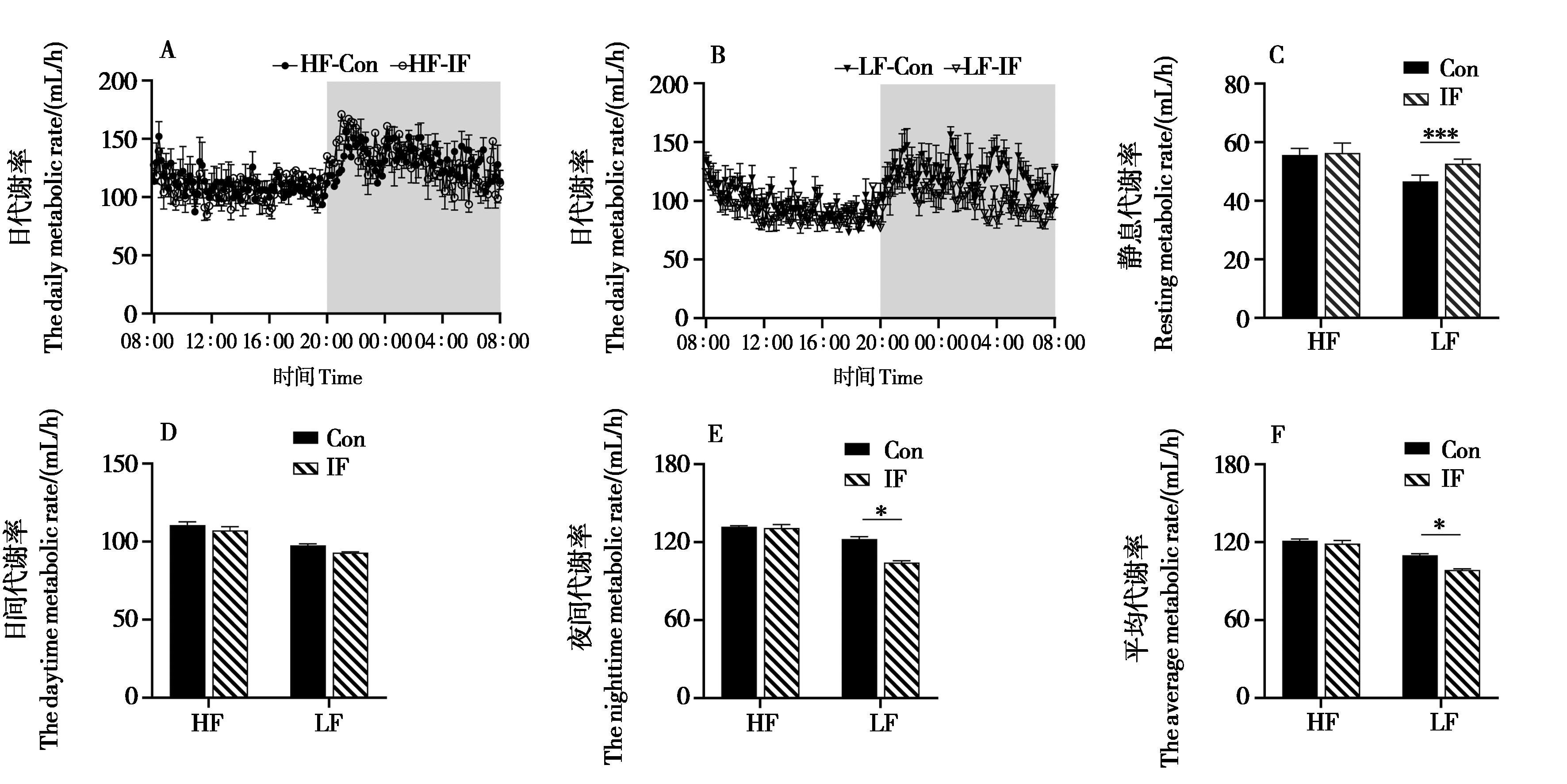
图3 随机禁食对不同食物质量下黑线仓鼠代谢率的影响. 高脂(A)、低脂(B)饮食对黑线仓鼠日代谢率、静息代谢率(C)、日间代谢率(D)、夜间代谢率(E)和日平均代谢率(F)的影响. 数据是平均值 ± 标准误,* P < 0.05,*** P < 0.001. Con:对照组;IF:间歇禁食
Fig. 3 Effects of intermittent fasting on metabolic rate in striped hamsters with different diets. The impact of high fat (A) and low fat (B) diets on the daily metabolic rate, resting metabolic rate (C), daytime metabolic rate (D), nighttime metabolic rate (E), and average metabolic rate (F) of striped hamsters. Data are mean ± SE. * P < 0.05, *** P < 0.001. Con: Control; IF: Intermittent fasting
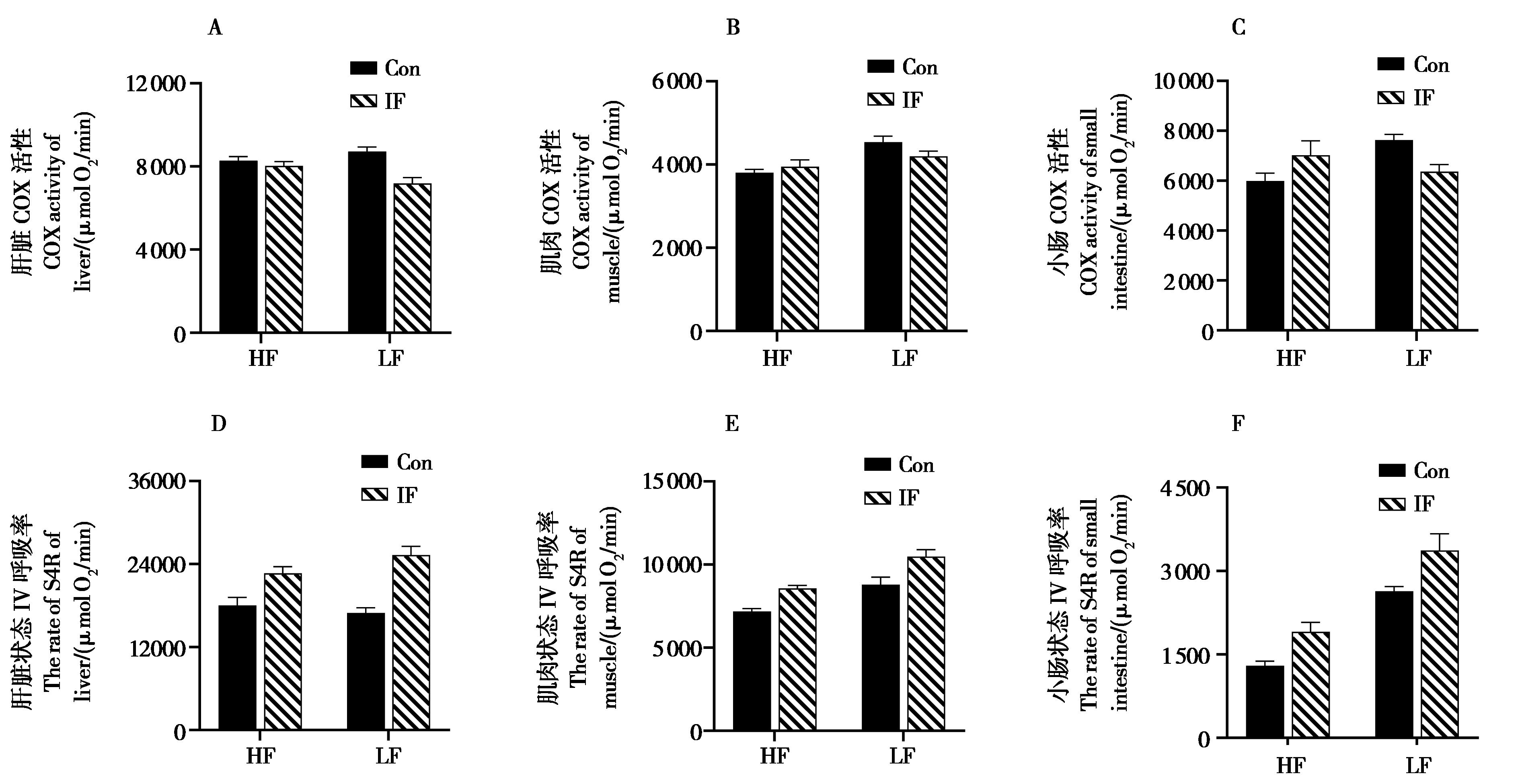
图4 随机禁食对不同食物质量下黑线仓鼠肝脏、肌肉和小肠线粒体细胞色素c氧化酶(COX)活性和呼吸状态Ⅳ(S4R)的影响. 肝脏 (A)、肌肉(B)和小肠(C)的COX活性,肝(D)、肌肉(E)和小肠(F)的S4R水平. 数据是平均值 ± 标准误. Con:对照组;IF:间歇禁食
Fig. 4 Effects of intermittent fasting on mitochondrial cytochrome c oxidase (COX) activity and state Ⅳ respiration (S4R) levels in the liver, muscle, and small intestine of striped hamsters with different diets. COX activity in the liver (A), muscle (B), and small intestine (C); S4R levels in the liver (D), muscle (E), and small intestine (F). Data are mean ± SE. Con: Control; IF: Intermittent fasting
| Bao Weidong, Wang Dehua, Wang Zuwang, Zhou Yanlin, Wang Limin,2017. The comparison of reproductive traits of the striped hamster from Kubuqi sandy‑land and Hohhot plain of Inner Mongolia[J]. Chinese Joumal of Zoology,36(1):15-18. DOI:10.13859/j.cjz.2001.01.004. (in Chinese with English abstract) | |
| Barzilai N, Banerjee S, Hawkins M, Chen W, Rossetti L,1998. Caloric restriction reverses hepatic insulin resistance in aging rats by decreasing visceral fat[J]. Journal of Clinical Investigation,101(7):1353-1361.DOI:10.1172/JCI485 . | |
| Calandra I, Labonne G, Mathieu O, Henttonen H, LéVêQue J, Milloux M J, Renvoisé É, Montuire S, Navarro N,2015. Isotopic partitioning by small mammals in the subnivium[J]. Ecology and Evolution,5(18):4132-4140.DOI:10.1002/ece3. 1653 . | |
| Chausse B, Vieiralara M A, Sanchez A B, Medeiros M H, Kowaltowski A J,2015. Intermittent fasting results in tissue‑specific changes in bioenergetics and redox state[J]. PLoS ONE,10(3):e0120413.DOI:10.1371/journal.pone.0120413 . | |
| Dedual M A, Wueest S, Borsigova M, Konrad D,2019. Intermittent fasting improves metabolic flexibility in short‑term high‑fat diet‑fed mice[J]. American Journal of Physiology‑Endocrinology and Metabolism,317(5):E773-E782.DOI:10.1152/ajpend o.00187.2019 . | |
| Desautels M, Dulos R A,1988. Effects of repeated cycles of fasting‑refeeding on brown adipose tissue composition in mice[J]. American Journal of Physiology-Endocrinology and Metabolism,255(2):E120-E128.DOI:10.1152/ajpendo. 1988.255.2.E120 . | |
| Estabrook R W,1967. Mitochondrial respiratory control and the polarographic measurement of ADP:O ratios[J]. Methods in Enzymology,10:41-47. DOI:10.1016/0076-6879(67)10010-4 . | |
| Fanti M, Mishra A, Longo V D, Brandhorst S,2021. Time‑restricted eating,intermittent fasting,and fasting‑mimicking diets in weight loss[J]. Current Obesity Reports,10(2):70-80. DOI:10.1007/s13679-021-00424-2 . | |
| Firth N L, Ross D A, Thonney M L,1985. Comparison of ether and chloroform for Soxhlet extraction of freeze‑dried animal tissues[J]. Journal-Association of Offcial Analytical Chemists,68:1228‑1231. | |
| Flier J, Maratos‑Flier E,2000. Energy homeostasis and body weight[J]. Current Biology,10(6):R215‑217.DOI:10.1016/S0960-9822(00)00393-6 . | |
| Gao Wenrong, Zhu Wanlong, Cao Neng, Meng Lihua, Wang Zhengkun, Yu Tingting, Mu Yuan, Zheng Jia, Zhang Di,2013. Effects of fasting and refeeding on body mass,thermogenesis and serum leptin in Eothenomys miletus [J]. Acta Theriologica Sinica,33(2):106‑112. DOI:10.16829/j.slxb. 2013.02.002. (in Chinese with English abstract) | |
| Gooley J J,2016. Circadian regulation of lipid metabolism[J]. The Proceedings of the Nutrition Society,75(4):440-450. DOI:10.1017/S0029665116000288 . | |
| Gutman R, Yosha D, Choshniak I, Kronfeldschor N,2007. Two strategies for coping with food shortage in desert golden spiny mice[J]. Physiology & Behavior,90(1):95-102.DOI:10.1016/j.physbeh.2006.08.033 . | |
| Hafner R P, Brown G C, Brand M D,1990. Analysis of the control of respiration rate,phosphorylation rate,proton leak rate and protonmotive force in isolated mitochondria using the ‘top‑down’ approach of metabolic control theory[J]. European Journal of Biochemistry,188(2):313-319.DOI:10.1111/j.1432-1033.1990.tb15405.x . | |
| Hall K D, Heymsfield S B, Kemnitz J W, Klein S, Schoeller D A, Speakman J R,2012. Energy balance and its components:implications for body weight regulation[J]. The American Journal of Clinical Nutrition,95(4):989-994.DOI:10.3945/ajcn. 112.036350 . | |
| Hambly C, Speakman J R,2005. Contribution of different mechanisms to compensation for energy restriction in the mouse[J]. Obesity Research,13(9):1548-1557.DOI:10.1038/oby. 2005.190 . | |
| Henderson C G, Turner D L, Swoap S J,2021. Health effects of alternate day fasting versus pair‑fed caloric restriction in diet‑induced obese C57Bl/6J male mice[J]. Frontiers in Physiology,12:641532. DOI:10.3389/fphys.2021.641532 . | |
| Houston A I, Mcnamara J M, Barta Z, Klasing K C,2007. The effect of energy reserves and food availability on optimal immune defence[J]. Proceedings of the Royal Society B:Biological Sciences,274(1627):2835-2842.DOI:10.1098/rspb.2007.0934 . | |
| Huo Daliang, Liao Shasha, Cao Jing, Zhao Zhijun,2022. The energy budget of striped hamsters in response to food shortage at different temperatures[J]. Acta Theriologica Sinica,42(1):58-68. DOI:10.16829/j.slxb.150584. (in Chinese with English abstract) | |
| Kliewer K L, Ke J Y, Lee H Y, Stout M B, Cole R M, Samuel V T, Shulman G I, Belury M A,2015. Short‑term food restriction followed by controlled refeeding promotes gorging behavior,enhances fat deposition,and diminishes insulin sensitivity in mice[J]. The Journal of Nutritional Biochemistry,26(7):721-728.DOI:10.1016/j.jnutbio.2015.01.010 . | |
| Kothari V, Luo Y, Tornabene T, O’Neill A M, Greene M W, Geetha T, Babu J R,2017. High fat diet induces brain insulin resistance and cognitive impairment in mice[J]. Biochimica et Biophysica Acta(BBA)-Molecular Basis of Disease,1863(2):499-508. DOI:10.1016/j.bbadis.2016.10.006 . | |
| Liao S S, Liu W, Cao J, Zhao Z J,2022. Territory aggression and energy budget in food‑restricted striped hamsters[J]. Physiology & Behavior,254:113897.DOI:10.1016/j.physbeh.2022.113897 . | |
| Liu B, Page A J, Hatzinikolas G, Chen M M, Wittert G A, Heilbronn L K,2019. Intermittent fasting improves glucose tolerance and promotes adipose tissue remodeling in male mice fed a high‑fat diet[J]. Endocrinology,160(1):169‑180. DOI:10.1210/en.2018-00701 . | |
| Madsen K, Ertbjerg P, Djurhuus M S, Pedersen P K,1996. Calcium content and respiratory control index of skeletal muscle mitochondria during exercise and recovery[J]. The American Journal of Physiology,271(6 Pt 1):E1044-1050. DOI:10.1152/ajpendo.1996.271.6.E1044 . | |
| Mantena S K, King A L, Andringa K K, Eccleston H B, Bailey S M,2008. Mitochondrial dysfunction and oxidative stress in the pathogenesis of alcohol‑ and obesity‑induced fatty liver diseases[J]. Free Radical Biology and Medicine,44(7):1259‑1272. DOI:10.1016/j.freeradbiomed.2007.12.029 . | |
| Mccarter R, Palmer J E,1992. Energy metabolism and aging:a lifelong study of Fischer 344 rats[J]. The American Journal of Physiology,263(3Pt1):E448‑E452.DOI:10.1152/ajpendo.1992.263.3.E448 . | |
| Mcnab B K,1980. Food habits,energetics,and the population biology of mammals[J]. The American Naturalist,116(1):106‑124. DOI:10.1086/283614 . | |
| Mitchell S E, Delville C, Konstantopedos P, Derous D, Green C L, Chen L, Han J‑D J, Wang Y, Promislow D E L, Douglas A, Lusseau D, Speakman J R,2015. The effects of graded levels of calorie restriction:Ⅲ. Impact of short term calorie and protein restriction on mean daily body temperature and torpor use in the C57BL/6 mouse[J]. Oncotarget,6(21):18314‑18337. DOI:10.18632/oncotarget.4506 . | |
| Nedergaard J,1983. The relationship between extramitochondrial Ca2+ concentration,respiratory rate,and membrane potential in mitochondria from brown adipose tissue of the rat[J]. European Journal of Biochemistry,133(1):185‑191. DOI:10.1111/j.1432-1033.1983.tb07446.x . | |
| Newell C, Hughey C, Nyamandi V, Johnsen V, Shearer J,2013. Impact of dietary induced fatty liver on mitochondrial oxidative phosphorylation[J]. The FASEB Journal,27(S1):1209.21. DOI:10.1096/fasebj.27.1_supplement.1209.21 . | |
| Nieminen P, Mustonen A, KäRjä V, Asikainen J, Rouvinen‐Watt K,2009. Fatty acid composition and development of hepatic lipidosis during food deprivation‑mustelids as a potential animal model for liver steatosis[J]. Experimental Biology and Medicine,234:278‑286.DOI:10.3181/0806-RM-210 . | |
| Nisoli E, Tonello C, Cardile A, Cozzi V, Bracale R, Tedesco L, Falcone S, Valerio A, Cantoni O, Clementi E, Moncada S, Carruba M O,2005. Calorie restriction promotes mitochondrial biogenesis by inducing the expression of eNOS[J]. Science,310(5746):314‑317.DOI:10.1126/science.1117728 . | |
| Ogawa R, Strader A, Clegg D, Sakai R, Seeley R, Woods S,2005. Chronic food restriction and reduced dietary fat:risk factors for bouts of overeating[J]. Physiology & Behavior,86(4):578‑585. DOI:10.1016/j.physbeh.2005.08.028 . | |
| Olsen L, Thum E, Rohner N,2021. Lipid metabolism in adaptation to extreme nutritional challenges[J]. Developmental Cell,56(10):1417‑1429.DOI:10.1016/j.devcel.2021.02.024 . | |
| Page A J, Christie S, Symonds E, Li H,2020. Circadian regulation of appetite and time restricted feeding[J]. Physiology & Behavior,220:112873.DOI:10.1016/j.physbeh.2020.112873 . | |
| Peng H B, Hou D M, Zhang D, Zhu W L,2020. Effects of food restriction on body mass,energy metabolism and thermogenesis in a tree shrew(Tupaia belangeri) [J]. Animal Biology,70(2):175‑187. DOI:10.1163/15707563-20191148 . | |
| Perez‑Leighton C, Kerr B, Scherer P E, Baudrand R, CortéS V,2024. The interplay between leptin,glucocorticoids,and GLP1 regulates food intake and feeding behaviour[J]. Biological Reviews of the Cambridge Philosophical Society,99(3):653‑674. DOI:10.1111/brv.13039 . | |
| Rothwell N J, Saville M E, Stock M J,1984. Brown fat activity in fasted and refed rats[J]. Bioscience Reports,4(4):351‑357. DOI:10.1007/BF01140499 . | |
| Selman C, Phillips T, Staib J L, Duncan J S, Leeuwenburgh C, Speakman J R,2005. Energy expenditure of calorically restricted rats is higher than predicted from their altered body composition[J]. Mechanisms of Ageing and Development,126(6‑7):783‑793. DOI:10.1016/j.mad.2005.02.004 . | |
| Shi Lulu, Tan Song, Wen Jing, Zhao Zhijun,2017. Individual differences in BMR and energetic strategies of striped hamsters in response to a high fat diet[J]. Acta Theriologica Sinica,37(2):179‑188. DOI:10.16829/j.slxb.201702009. (in Chinese with English abstract) | |
| Song Z G, Wang D H,2003. Metabolism and thermoregulation in the striped hamster Cricetulus barabensis [J]. Journal of Thermal Biology,28(6‑7):509‑514.DOI:10.1016/S0306-4565(03)00051-2 . | |
| Speakman J R, KróL E,2005. Limits to sustained energy intake IX:a review of hypotheses[J]. Journal of Comparative Physiology B,Biochemical,Systemic,and Environmental Physiology,175(6):375‑394. DOI:10.1007/s00360-005-0013-3 . | |
| Speakman J R,2005. Body size,energy metabolism and lifespan[J]. Journal of Experimental Biology,208(9):1717‑1730.DOI:10.1242/jeb.01556 . | |
| Speakman J R,2019. Fifty shades of brown:The functions,diverse regulation and evolution of brown adipose tissue[J]. Molecular Aspects of Medicine,68:1‑5. DOI:10.1016/j.mam.2019.07.006 . | |
| Spezani R, Da Silva R R, Martins F F, De Souza Marinho T, Aguila M B, Mandarim‑De‑Lacerda C A,2020. Intermittent fasting,adipokines,insulin sensitivity,and hypothalamic neuropeptides in a dietary overload with high‑fat or high‑fructose diet in mice[J]. The Journal of Nutritional Biochemistry,83:108419. DOI:10.1016/j.jnutbio.2020.108419 . | |
| Sundin U, Moore G, Nedergaard J, Cannon B,1987. Thermogenin amount and activity in hamster brown fat mitochondria:effect of cold acclimation[J]. The American Journal of Physiology,252(5 Pt2):R822‑R832.DOI:10.1152/ajpregu.1987.252.5.R822 . | |
| Veloso C, Bozinovic F,1993. Dietary and digestive constraints on basal energy metabolism in a small herbivorous rodent[J]. Ecology,74(7):2003‑2010. DOI:10.2307/1940843 . | |
| Wang Shuqing, Yang Hefang, Hao Shoushen, Zhang Zhibing, Xu Tongqin,1992. Food preference and consumption of striped hamsters(Cricetulus barabensis) [J]. Acta Zoologica Sinica,38(2):156‑164.(in Chinese with English abstract) | |
| Wen J, Tan S, Wang D H, Zhao Z J,2018. Variation of food availability affects male striped hamsters(Cricetulus barabensis)with different levels of metabolic rate[J]. Integrative Zoology,13(6):769‑782. DOI:10.1111/1749-4877.12337 . | |
| Wen Jing,2017. The behavioral and energetic mechanisms of striped hamster(Cricetulus barabensis)in response to food shortage:the role of leptin[D]. Wenzhou:Wenzhou University.(in Chinese with English abstract) | |
| Wikstrom M K F,1977. Proton pump coupled to cytochrome c oxidase in mitochondria[J]. Nature,266(5599):271‑273.DOI: 10.1038/266271a0 . | |
| Xu D L, Wang D H,2010. Fasting suppresses T cell‑mediated immunity in female Mongolian gerbils(Meriones unguiculatus) [J]. Comparative Biochemistry and Physiology Part A:Molecular & Integrative Physiology,155(1):25‑33.DOI:10.1016/j.cbpa.2009.09.003 . | |
| Xu Deli, Xu Laixiang,2015. Effect of food restriction on immune function in the striped hamster(Cricetulus barabensis) [J]. Acta Ecologica Sinica,35(6):1882‑1890. DOI:10.1242/jeb.153601. (in Chinese with English abstract) | |
| Xu Z J, Qin Y, Lv B B, Tian Z J, Zhang B,2022. Intermittent fasting improves high‑fat diet‑induced obesity cardiomyopathy via alleviating lipid deposition and apoptosis and decreasing m6A methylation in the heart[J]. Nutrients,14(2):251. DOI:10.3390/nu14020251 . | |
| Yang X F, Zhang Y, Lin J Y, Pen A F, Ying C J, Cao W H, Mao L M,2012. A lower proportion of dietary saturated/monounsaturated/polyunsaturated fatty acids reduces the expression of adiponectin in rats fed a high‑fat diet[J]. Nutrition Research,32(4):285‑291. DOI:10.1016/j.nutres.2011.12.016 . | |
| Zhang X P, Yang S S, Chen J L, Su Z G,2019. Unraveling the regulation of hepatic gluconeogenesis[J]. Frontiers in Endocrinology,9:802.DOI:10.3389/fendo.2018.00802 . | |
| Zhao Y, Chen L B, Mao S S, Min H X, Cao J,2018. Leptin resistance was involved in susceptibility to overweight in the striped hamster re‑fed with high fat diet[J]. Scientific Reports,8(1):255‑263. DOI:10.1038/s41598-017-18158-4 . | |
| Zhao Zhijun, Cao Jing, Wang Guiying, Ma Fei, Meng Xilong,2009. Effect of random food deprivation and re‑feeding on energy metabolism and behavior in mice[J]. Acta Theriologica Sinica,29(3):277‑285. DOI:10.16829/j.slxb.2009.03.007. (in Chinese with English abstract) | |
| Zhao Z J, Cao J,2009. Plasticity in energy budget and behavior in Swiss mice and striped hamsters under stochastic food deprivation and refeeding[J]. Comparative Biochemistry and Physiology Part A:Molecular & Integrative Physiology,154(1):84‑91. DOI:10.1016/j.cbpa.2009.05.004 . | |
| Zhao Z J, Chen J F, Wang D H,2010. Diet‑induced obesity in the short‑day‑lean Brandt’s vole[J]. Physiology & Behavior,99(1):47‑53. DOI:10.1016/j.physbeh.2009.10.008 . | |
| Zhao Z J, Derous D, Gerrard A, Wen J, Liu X, Tan S, Hambly C, Speakman J R,2020. Limits to sustained energy intake. XXX. Constraint or restraint? Manipulations of food supply show peak food intake in lactation is constrained[J]. The Journal of Experimental Biology,223(8):208314. DOI:10.1242/jeb.208314 . | |
| Zhao Z J, Wang D H,2009. Plasticity in the physiological energetics of Mongolian gerbils is associated with diet quality[J]. Physiological and Biochemical Zoology,82(5):504‑515. DOI:10.1086/603630 . | |
| Zhao Z J, Zhu Q X, Chen K X, Wang Y K, Cao J,2013. Energy budget,behavior and leptin in striped hamsters subjected to food restriction and refeeding[J]. PLoS ONE,8(1):e54244. DOI:10.1371/journal.pone.0054244 . | |
| Zhao Zhijun,2012. Effect of food restriction on energy metabolism and thermogenesis in striped hamster(Cricetulus barabensis) [J]. Acta Theriologica Sinica,32(4):297‑305. DOI:10.16829/j.slxb.2012.04.003. (in Chinese with English abstract) | |
| Zhu W L, Mu Y, Zhang H, Gao W R, Zhang L, Wang Z K,2014. Effects of random food deprivation on body mass,behavior and serum leptin levels in Eothenomys miletus(Mammalia:Rodentia:Cricetidae) [J]. Italian Journal of Zoology,81(2):227‑234. DOI:10.1080/11250003.2014.902511 . | |
| Zhu W L, Mu Y, Zhang H, Zhang L, Wang Z K,2013. Effects of food restriction on body mass,thermogenesis and serum leptin level in Apodemus chevrieri(Mammalia:Rodentia:Muridae) [J]. Italian Journal of Zoology,80(3):337‑344. DOI:10.1080/11250003.2013.796409 . | |
| 王淑卿,杨荷芳,郝守身,张知彬,许同钦,1992. 黑线仓鼠的食物与食量[J]. 动物学报,38(2):156‑164. | |
| 张知彬,王祖望,1998. 农业重要害鼠的生态学及控制对策[M]. 北京:海洋出版社. | |
| 赵志军,曹静,王桂英,马飞,孟喜龙,2009. 随机饥饿和重喂食对小鼠能量代谢和行为的影响[J]. 兽类学报,29(3):277‑285. DOI:10.16829/j.slxb.2009.03.007 . | |
| 赵志军,2012. 食物限制对黑线仓鼠能量代谢和产热的影响[J]. 兽类学报,32(4):297‑305. DOI:10.16829/j.slxb.2012. 04.003 . | |
| 徐德立,徐来祥,2015.食物限制对黑线仓鼠免疫功能的影响[J].生态学报,35(6):1882‑1890. DOI:10.1242/jeb.153601 . | |
| 施璐璐,谭松,闻靖,赵志军,2017. 黑线仓鼠的BMR个体差异及其应对高脂食物的能量学对策[J]. 兽类学报,37(2):179‑188. DOI:10.16829/j.slxb.201702009 . | |
| 闻靖,2017. 黑线仓鼠应对食物短缺的行为和能量学机理:瘦素的作用[D]. 温州:温州大学. | |
| 高文荣,朱万龙,曹能,孟丽华,王政昆,余婷婷,沐远,郑佳,章迪,2013. 禁食和重喂食对大绒鼠体重、产热和血清瘦素的影响[J]. 兽类学报,33(2):106‑112. DOI:10.16829/j.slxb.2013.02.002 . | |
| 鲍伟东,王德华,王祖望,周延林,王利民,2001. 内蒙古库布齐沙地和呼和浩特平原黑线仓鼠种群繁殖特征的比较[J]. 动物学杂志,36(1):15‑18. DOI:10.13859/j.cjz.2001.01.004 . | |
| 霍达亮,廖莎莎,曹静,赵志军,2022. 不同温度下黑线仓鼠应对食 物短缺的能量学对策[J]. 兽类学报,42(1):58‑68. DOI:10.16829/j.slxb.150584 . |
| [1] | 徐德立, 王逸, 张学英, 王德华. 切除肩胛间褐色脂肪组织对雌性黑线仓鼠免疫功能的影响[J]. 兽类学报, 2025, 45(4): 457-467. |
| [2] | 赵真, 张开元, 杨瑞, 曹静, 赵志军. 高纤维食物对黑线仓鼠哺乳期能量收支的影响[J]. 兽类学报, 2024, 44(4): 436-448. |
| [3] | 张锐涵, 罗丹, 罗欣欣, 胡陈晓, 林珑, 陈倩, 曹静, 赵志军. 高温暴露对黑线仓鼠能量代谢和组织氧化应激的影响[J]. 兽类学报, 2023, 43(6): 710-722. |
| [4] | 于祎, 赵明星, 王玉辉, 张学英, 徐德立, 王德华. 花生对非繁殖期雌性黑线仓鼠细胞免疫和血液指标的影响[J]. 兽类学报, 2022, 42(3): 286-294. |
| [5] | 霍达亮, 廖莎莎, 曹静, 赵志军. 不同温度下黑线仓鼠应对食物短缺的能量学对策[J]. 兽类学报, 2022, 42(1): 58-68. |
| [6] | 徐德立, 胡晓凯, 田玉芬, 王德华. 雌性黑线仓鼠免疫功能的季节变化[J]. 兽类学报, 2021, 41(2): 182-192. |
| [7] | 余静欣 邓光敏 鲍雨帆 赵志军. 黑线仓鼠断乳后能量代谢和脂肪累积的适应性调节[J]. 兽类学报, 2020, 40(6): 595-605. |
| [8] | 赵园春 张学英 王德华. 布氏田鼠哺乳期低温经历抑制成年期神经再生[J]. 兽类学报, 2019, 39(5): 485-495. |
| [9] | 毕中强 闻靖 施璐璐 谭松 徐小明 赵志军. 温度和高脂食物对黑线仓鼠代谢产热和体脂累积的影响[J]. 兽类学报, 2018, 38(4): 384-392. |
| [10] | 闵红霞 毛思思 黄奕鑫 赵志军. 防御性攻击行为对黑线仓鼠能量收支的影响[J]. 兽类学报, 2018, 38(2): 166-173. |
| [11] | 谭松 闻靖 赵志军. 暖温经历对雌性黑线仓鼠能量代谢、产热和体脂含量的影响[J]. 兽类学报, 2017, 37(2): 162-171. |
| [12] | 施璐璐 谭松 闻靖 赵志军. 黑线仓鼠的BMR个体差异及其应对高脂食物的能量学对策[J]. 兽类学报, 2017, 37(2): 179-188. |
| [13] | 徐金会 耿晓翠 陈蕾 薛慧良 徐来祥. 生长抑素基因在不同性别和年龄黑线仓鼠哈氏腺的差异表达[J]. 兽类学报, 2016, 36(4): 429-437. |
| [14] | 赵志军. 黑线仓鼠自身生存和繁殖输出间的权衡不受温度影响[J]. 兽类学报, 2015, 35(4): 359-368. |
| [15] | 张志强, 黄淑丽, 赵志军. KLH单独刺激不影响黑线仓鼠的静止代谢率[J]. 兽类学报, 2015, 35(4): 405-411. |
| 阅读次数 | ||||||
|
全文 |
|
|||||
|
摘要 |
|
|||||
 青公网安备 63010402000199号 青ICP备05000010号-2