

中国核心期刊要目总览
中国科技核心期刊
CSCD数据库源刊
中国科技核心期刊
CSCD数据库源刊
兽类学报 ›› 2026, Vol. 46 ›› Issue (2): 184-198.DOI: 10.16829/j.slxb.151022
郗鸿原1, 刘文静1, 窦海龙1,2( )
)
收稿日期:2024-10-18
接受日期:2025-02-20
出版日期:2026-03-30
发布日期:2026-03-06
通讯作者:
窦海龙
作者简介:郗鸿原(2004- ),男,本科,主要从事生态学研究.
基金资助:
Hongyuan XI1, Wenjing LIU1, Hailong DOU1,2()
Received:2024-10-18
Accepted:2025-02-20
Online:2026-03-30
Published:2026-03-06
Contact:
Hailong DOU
摘要:
狗獾(Meles meles)隶属食肉目狗獾属,以社会群体生活在地下环境中,具有明显的领地行为。狗獾主要在夜间活动,具有广泛的食物偏好,同时也是牲畜结核病感染的重要野生动物宿主。本研究运用生物信息学手段对狗獾基因组微卫星的分布特征进行系统分析,并对编码区含有微卫星的基因进行注释和功能分析。结果表明,狗獾全基因组大小为2.74 Gb,含有975 935个微卫星,微卫星相对丰度为356.35 loci/Mb。全基因组微卫星分布模式为单碱基重复序列 > 二碱基重复序列 > 四碱基重复序列 > 三碱基重复序列 > 五碱基重复序列 > 六碱基重复序列,其中GC含量二碱基重复最高,单碱基重复最低,微卫星中富含A/T碱基的重复序列占据明显优势。狗獾微卫星在基因组不同区域丰度不同,其中基因间区数量最多(595 769个),内含子相对丰度最高(385.22 loci/Mb),编码区数量(1 724个)和丰度(48.40 loci/Mb)最小。基因间区与全基因组微卫星的分布特征相似,而外显子中三碱基重复类型较为丰富,其中编码区表现出对三碱基重复和六碱基重复类型的强烈偏好。对于微卫星丰度分布的位置特征,微卫星在内含子区域丰度最高,其次为基因上下游500 bp,外显子区域最低。狗獾基因组中含有微卫星的CDS有1 724条,GO注释到1 325个基因,分配到11 971个GO条目,并归类到39个主要基因功能中。KEGG富集最显著的通路为信号传导通路,含有207个基因。本研究结果为后续开发狗獾高质量微卫星标记提供基础数据,也为理解食肉目物种微卫星在全基因组中的功能及分布特点提供了参考。
中图分类号:
郗鸿原, 刘文静, 窦海龙. 狗獾全基因组微卫星分布规律及特征分析[J]. 兽类学报, 2026, 46(2): 184-198.
Hongyuan XI, Wenjing LIU, Hailong DOU. Analysis of the distribution patterns and characteristics of microsatellites in Meles meles genome[J]. ACTA THERIOLOGICA SINICA, 2026, 46(2): 184-198.
| 类型 Type | 数量 Counts | 长度 Length/bp | 比例 Percent/% | 平均长度 Average length/bp | 相对丰度 Relative abundance/(loci/Mb) | 相对密度 Relative density/(bp/Mb) | GC | |
|---|---|---|---|---|---|---|---|---|
含量 Content/% | 长度 Length/bp | |||||||
| 单碱基重复 Mononucleotide repeat | 521 121 | 7 849 359 | 53.40 | 15.06 | 190.28 | 2 866.12 | 8.46 | 664 250 |
| 二碱基重复 Dinucleotide repeat | 238 388 | 5 083 296 | 24.43 | 21.32 | 87.05 | 1 856.12 | 44.29 | 2 251 565 |
| 三碱基重复 Trinucleotide repeat | 44 837 | 849 318 | 4.59 | 18.94 | 16.37 | 310.12 | 33.76 | 286 756 |
| 四碱基重复 Tetranucleotide repeat | 142 384 | 2 766 664 | 14.59 | 19.43 | 51.99 | 1 010.22 | 15.55 | 430 280 |
| 五碱基重复 Pentanucleotide repeat | 24 088 | 535 120 | 2.47 | 22.22 | 8.8 | 195.39 | 19.62 | 104 989 |
| 六碱基重复 Hexanucleotide repeat | 5 117 | 137 010 | 0.52 | 26.78 | 1.87 | 50.03 | 36.15 | 49 524 |
| 总计 Total | 975 935 | 17 220 767 | 100 | 17.65 | 356.35 | 6 288 | 21.99 | 3 787 364 |
表1 狗獾基因组中微卫星的分布
Table 1 Distribution of microsatellites in the genomes of Meles meles
| 类型 Type | 数量 Counts | 长度 Length/bp | 比例 Percent/% | 平均长度 Average length/bp | 相对丰度 Relative abundance/(loci/Mb) | 相对密度 Relative density/(bp/Mb) | GC | |
|---|---|---|---|---|---|---|---|---|
含量 Content/% | 长度 Length/bp | |||||||
| 单碱基重复 Mononucleotide repeat | 521 121 | 7 849 359 | 53.40 | 15.06 | 190.28 | 2 866.12 | 8.46 | 664 250 |
| 二碱基重复 Dinucleotide repeat | 238 388 | 5 083 296 | 24.43 | 21.32 | 87.05 | 1 856.12 | 44.29 | 2 251 565 |
| 三碱基重复 Trinucleotide repeat | 44 837 | 849 318 | 4.59 | 18.94 | 16.37 | 310.12 | 33.76 | 286 756 |
| 四碱基重复 Tetranucleotide repeat | 142 384 | 2 766 664 | 14.59 | 19.43 | 51.99 | 1 010.22 | 15.55 | 430 280 |
| 五碱基重复 Pentanucleotide repeat | 24 088 | 535 120 | 2.47 | 22.22 | 8.8 | 195.39 | 19.62 | 104 989 |
| 六碱基重复 Hexanucleotide repeat | 5 117 | 137 010 | 0.52 | 26.78 | 1.87 | 50.03 | 36.15 | 49 524 |
| 总计 Total | 975 935 | 17 220 767 | 100 | 17.65 | 356.35 | 6 288 | 21.99 | 3 787 364 |
类型 Type | 基序 Motif | 数量Counts | 比例 Percent/% |
|---|---|---|---|
单碱基重复 Mononucleotide repeat | A | 475 119 | 91.17 |
| G | 46 002 | 8.83 | |
二碱基重复 Dinucleotide repeat | AG | 119 219 | 50.01 |
| AC | 91 842 | 38.53 | |
三碱基重复 Trinucleotide repeat | AAC | 14 657 | 32.69 |
| AAT | 11 375 | 25.37 | |
四碱基重复 Tetranucleotide repeat | AAAT | 72 335 | 50.80 |
| AAAC | 22 494 | 15.80 | |
五碱基重复 Pentanucleotide repeat | AAAAC | 12 185 | 50.59 |
| AAAAT | 5 333 | 22.14 | |
六碱基重复 Hexanucleotide repeat | AAAAAC | 1 688 | 32.99 |
| AATCCC | 590 | 11.53 |
表2 狗獾最多微卫星重复基序的比较
Table 2 The most frequent microsatellite motifs found in genomes of Meles meles
类型 Type | 基序 Motif | 数量Counts | 比例 Percent/% |
|---|---|---|---|
单碱基重复 Mononucleotide repeat | A | 475 119 | 91.17 |
| G | 46 002 | 8.83 | |
二碱基重复 Dinucleotide repeat | AG | 119 219 | 50.01 |
| AC | 91 842 | 38.53 | |
三碱基重复 Trinucleotide repeat | AAC | 14 657 | 32.69 |
| AAT | 11 375 | 25.37 | |
四碱基重复 Tetranucleotide repeat | AAAT | 72 335 | 50.80 |
| AAAC | 22 494 | 15.80 | |
五碱基重复 Pentanucleotide repeat | AAAAC | 12 185 | 50.59 |
| AAAAT | 5 333 | 22.14 | |
六碱基重复 Hexanucleotide repeat | AAAAAC | 1 688 | 32.99 |
| AATCCC | 590 | 11.53 |
| 基序 Motif | 数量 Counts | 比例Percent/% |
|---|---|---|
| A | 475 119 | 48.68 |
| AG | 119 219 | 12.22 |
| AC | 91 842 | 9.41 |
| AAAT | 72 335 | 7.41 |
| G | 46 002 | 4.71 |
| AT | 26 969 | 2.76 |
| AAAC | 22 494 | 2.30 |
| AAC | 14 657 | 1.50 |
| AAAAC | 12 185 | 1.25 |
| AAAG | 12 101 | 1.24 |
表3 在全部微卫星序列中出现次数排名前十的基序
Table 3 The top 10 most frequent motifs in all microsatellite sequences
| 基序 Motif | 数量 Counts | 比例Percent/% |
|---|---|---|
| A | 475 119 | 48.68 |
| AG | 119 219 | 12.22 |
| AC | 91 842 | 9.41 |
| AAAT | 72 335 | 7.41 |
| G | 46 002 | 4.71 |
| AT | 26 969 | 2.76 |
| AAAC | 22 494 | 2.30 |
| AAC | 14 657 | 1.50 |
| AAAAC | 12 185 | 1.25 |
| AAAG | 12 101 | 1.24 |
重复 Repeat | 数量 Counts | 长度 Length/bp | 比例 Percent/% | 平均长度 Average length/bp | 相对丰度 Relative abundance/(loci/Mb) | 相对密度 Relative density/(bp/Mb) |
|---|---|---|---|---|---|---|
| 12 | 127 000 | 1 666 020 | 13.01 | 13.12 | 46.37 | 608.33 |
| 4 | 109 062 | 1 848 036 | 11.18 | 16.94 | 39.82 | 674.79 |
| 13 | 108 087 | 1 532 518 | 11.08 | 14.18 | 39.47 | 559.58 |
| 14 | 88 805 | 1 361 192 | 9.10 | 15.33 | 32.43 | 497.03 |
| 7 | 85 254 | 1 311 632 | 8.74 | 15.38 | 31.13 | 478.93 |
| 15 | 72 149 | 1 192 440 | 7.39 | 16.53 | 26.34 | 435.41 |
| 5 | 57 303 | 1 055 920 | 5.87 | 18.43 | 20.92 | 385.56 |
| 16 | 52 923 | 950 208 | 5.42 | 17.95 | 19.32 | 346.96 |
| 8 | 46 845 | 825 488 | 4.80 | 17.62 | 17.11 | 301.42 |
| 17 | 35 499 | 700 298 | 3.64 | 19.73 | 12.96 | 255.71 |
表4 微卫星中出现次数排名前十的重复
Table 4 The top 10 most frequent repeats in microsatellites
重复 Repeat | 数量 Counts | 长度 Length/bp | 比例 Percent/% | 平均长度 Average length/bp | 相对丰度 Relative abundance/(loci/Mb) | 相对密度 Relative density/(bp/Mb) |
|---|---|---|---|---|---|---|
| 12 | 127 000 | 1 666 020 | 13.01 | 13.12 | 46.37 | 608.33 |
| 4 | 109 062 | 1 848 036 | 11.18 | 16.94 | 39.82 | 674.79 |
| 13 | 108 087 | 1 532 518 | 11.08 | 14.18 | 39.47 | 559.58 |
| 14 | 88 805 | 1 361 192 | 9.10 | 15.33 | 32.43 | 497.03 |
| 7 | 85 254 | 1 311 632 | 8.74 | 15.38 | 31.13 | 478.93 |
| 15 | 72 149 | 1 192 440 | 7.39 | 16.53 | 26.34 | 435.41 |
| 5 | 57 303 | 1 055 920 | 5.87 | 18.43 | 20.92 | 385.56 |
| 16 | 52 923 | 950 208 | 5.42 | 17.95 | 19.32 | 346.96 |
| 8 | 46 845 | 825 488 | 4.80 | 17.62 | 17.11 | 301.42 |
| 17 | 35 499 | 700 298 | 3.64 | 19.73 | 12.96 | 255.71 |
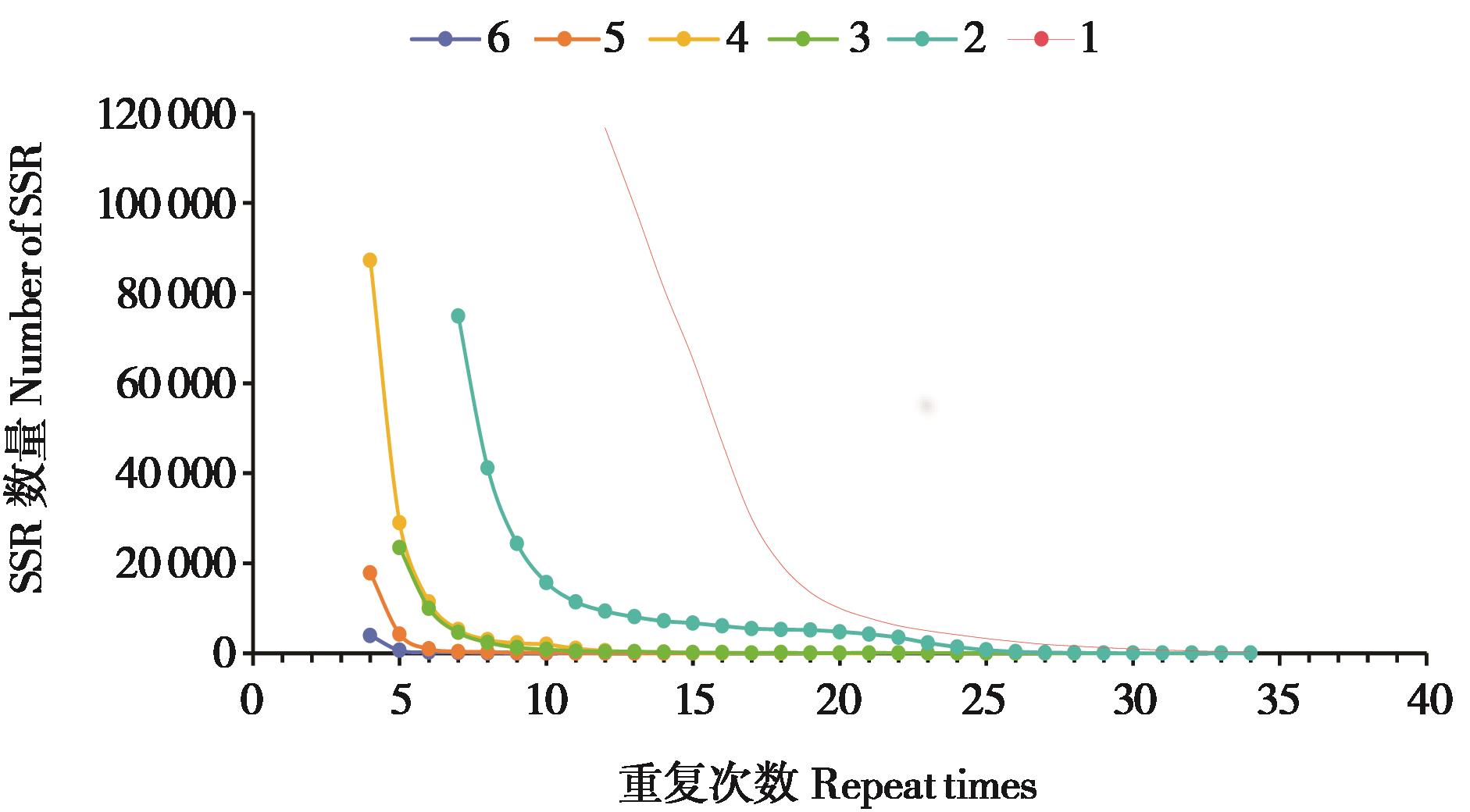
图1 狗獾各重复单元微卫星重复次数分布比较
Fig. 1 Repeat distribution of each microsatellite type in Meles meles
| 指标 Index | 基因区 Genetic region | 基因间区 Intergenic region | |||
|---|---|---|---|---|---|
| 编码区 CDS | 非翻译区 Untranslated | 外显子 Exon | 内含子 Intron | ||
| 数量 Counts | 1 724 | 7 274 | 9 427 | 390 137 | 595 769 |
| 丰度 Abundance/(loci/Mb) | 48.40 | 290.16 | 149.63 | 385.22 | 347.04 |
表5 狗獾微卫星在基因组不同区域的数量及分布特征
Table 5 Characterization of the number and distribution of microsatellites in different regions of Meles meles
| 指标 Index | 基因区 Genetic region | 基因间区 Intergenic region | |||
|---|---|---|---|---|---|
| 编码区 CDS | 非翻译区 Untranslated | 外显子 Exon | 内含子 Intron | ||
| 数量 Counts | 1 724 | 7 274 | 9 427 | 390 137 | 595 769 |
| 丰度 Abundance/(loci/Mb) | 48.40 | 290.16 | 149.63 | 385.22 | 347.04 |
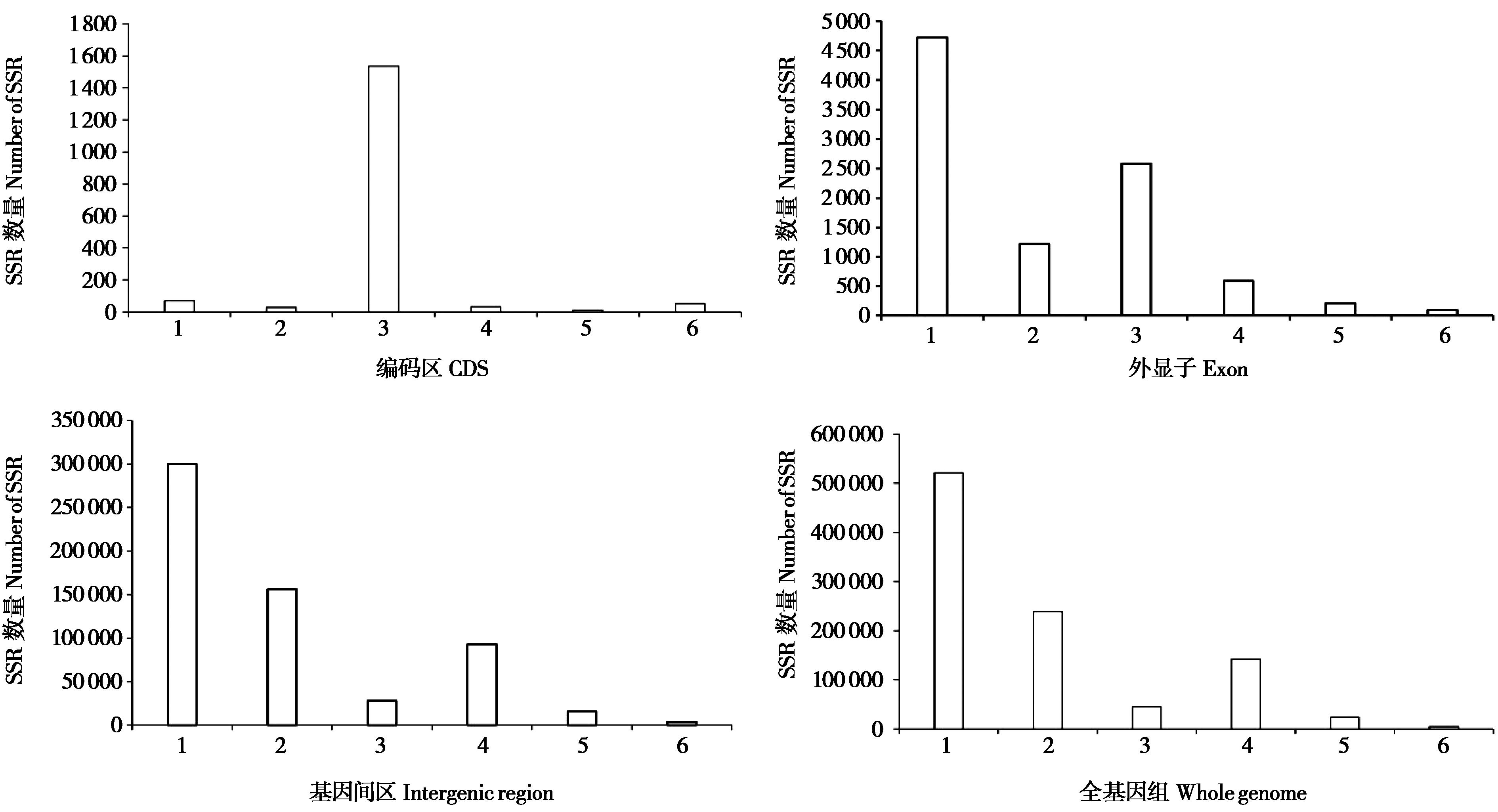
图2 狗獾基因组不同区域微卫星类型的数量分布
Fig. 2 The distribution of microsatellite types in different genomic regions of Meles meles
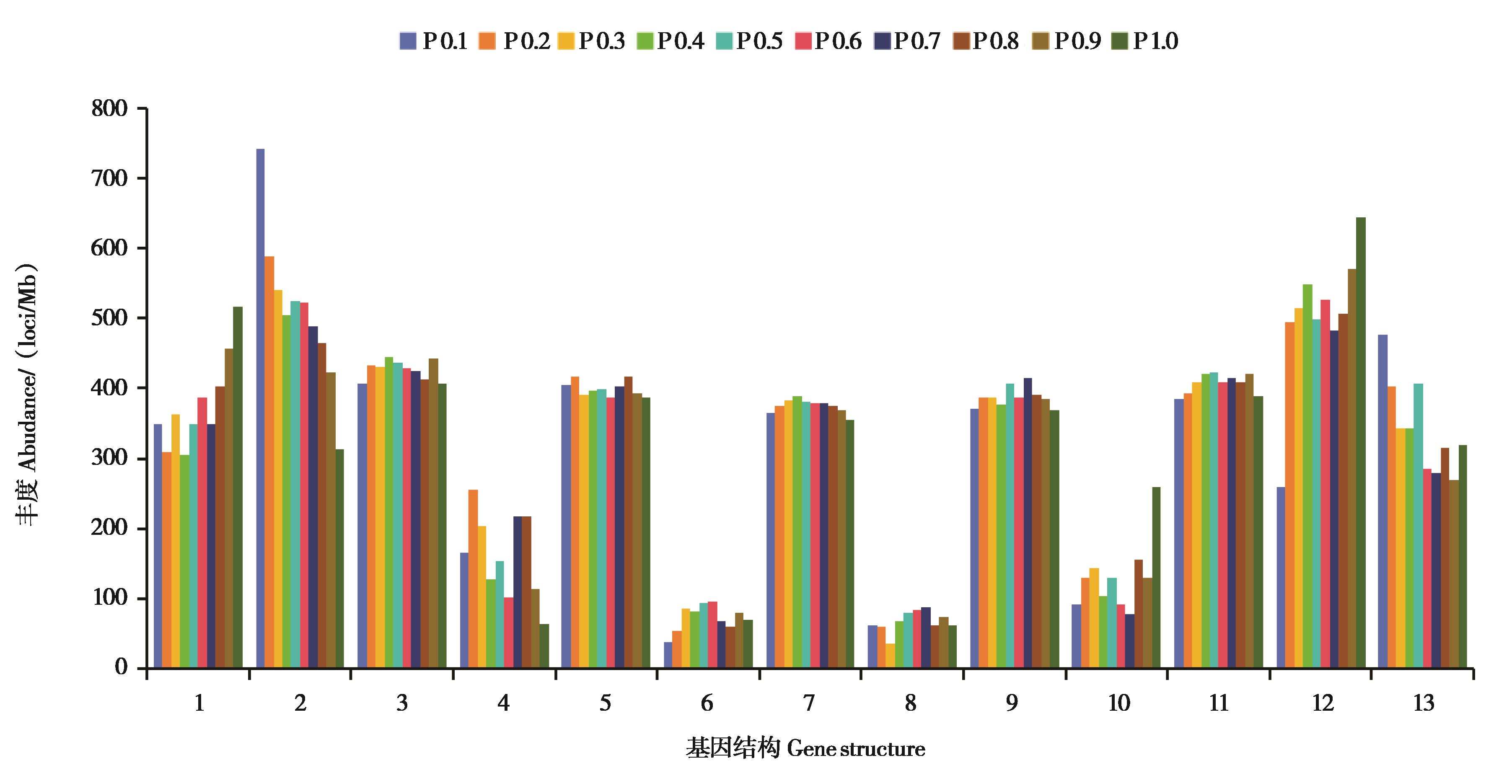
图3 狗獾基因区及上下游微卫星丰度分布. 横坐标1 ~ 13分别表示基因上游500 bp、第一外显子、第一内含子、第二外显子、第二内含子、中间左边外显子、中间内含子、中间右边外显子、倒数第二内含子、倒数第二外显子、倒数第一内含子、倒数第一外显子、基因下游500 bp
Fig. 3 The microsatellite abundance in gene regions and upstream and downstream regions of Meles meles. Horizontal coordinates 1 - 13 indicated upstream 500 bp, exon 1, intron 1, exon 2, intron 2, mid left exon, mid intron, mid right exon intron reverse 2, exon reverse 2, intron reverse 1, exon reverse 1, downstream 500 bp, respectively
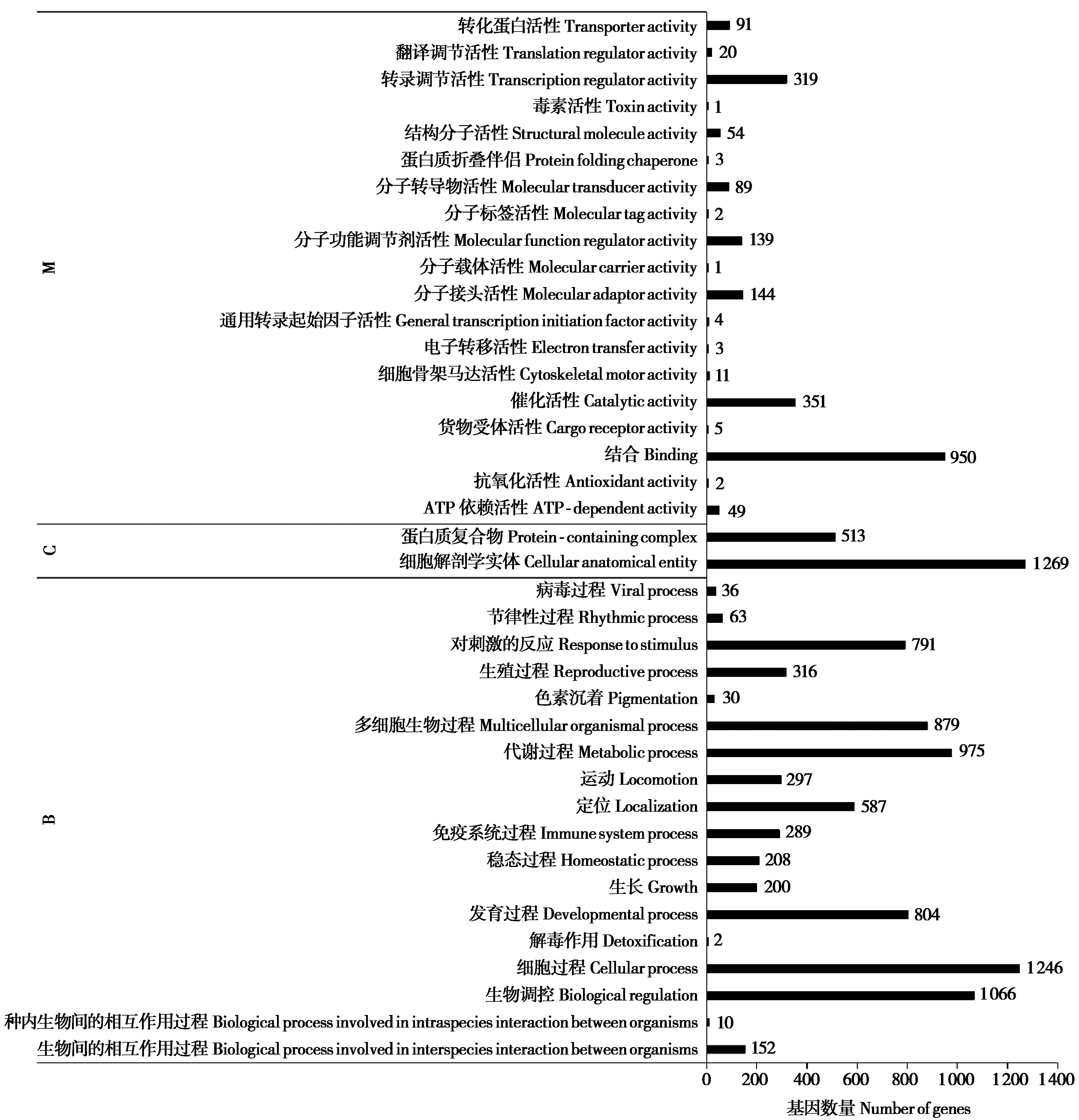
图4 狗獾编码区含有微卫星的基因GO功能分类. B:生物过程;C:细胞组分;M:分子功能
Fig. 4 GO functional classification of microsatellite-containing genes in the coding region of Meles meles. B: Biological process; C: Cellular component; M: Molecular function

图5 狗獾编码区含有微卫星的基因KEGG富集. A:环境信息处理;B:人类疾病;C:细胞过程;D:遗传信息处理;E:代谢;F:生物体系统
Fig. 5 The KEGG enrichment of microsatellite in the coding region of Meles meles. A: Environmental information processing; B: Human diseases; C: Cell process; D: Genetic information processing; E: Metabolism; F: Organismal systems
| Allen A, Guerrero J, Byrne A, Lavery J, Presho E, Courcier E, O'Keeffe J, Fogarty U, Delahay R, Wilson G, Newman C, Buesching C, Silk M, O’Meara D, Skuce R, Biek R, McDonald R A,2020. Genetic evidence further elucidates the history and extent of badger introductions from Great Britain into Ireland[J]. Royal Society Open Science,7:200288. DOI:10.1098/rsos.200288 . | |
| Biswas M K, Bagchi M, Biswas D, Harikrishna J A, Liu Y X, Li C Y, Sheng O, Mayer C, Yi G J, Deng G M,2020. Genome‑wide novel genic microsatellite marker resource development and validation for genetic diversity and population structure analysis of banana[J]. Genes,11:1479. DOI:10.3390/genes11121479 . | |
| Borodulina O R, Golubchikova J S, Ustyantsev I G, Kramerov D A,2016. Polyadenylation of RNA transcribed from mammalian SINEs by RNA polymerase III:complex requirements for nucleotide sequences[J]. Biochimica et Biophysica Acta (BBA)‑Gene Regulatory Mechanisms,1859(2):355‑365. DOI:10.1016/j.bbagrm.2015.12.003 . | |
| Chen C J, Wu Y, Li J W, Wang X, Zeng Z H, Xu J, Liu Y L, Feng J T, Chen H, He Y H, Xia R,2023. TBtools‑II:A ‘one for all,all for one’ bioinformatics platform for biological big‑data mining[J]. Molecular Plant,16:1733‑1742. DOI:10.1016/j.molp.2023.09.010 . | |
| Cleary G P, Corner L A L, O’Keeffe J, Marples N M,2009. The diet of the badger Meles meles in the Republic of Ireland[J]. Mammalian Biology,74:438‑447. DOI:10.1016/j.mambio.2009.07.003 . | |
| Corner L A L, Murphy D, Gormley E,2011. Mycobacterium bovis infection in the Eurasian badger(Meles meles):the disease,pathogenesis,epidemiology and control[J]. Journal of Comparative Pathology,144(1):1‑24. DOI:10.1016/j.jcpa. 2010.10.003 . | |
| Cortes O, Cañon J, Gama L T,2022. Applications of microsatellites and single nucleotide polymorphisms for the genetic characterization of cattle and small ruminants:an overview[J]. Ruminants,2:456‑470. DOI:10.3390/ruminants2040032 . | |
| Devillard S, Jacquier M, Vandel J M, Léger F, Duhayer J, Pardonnet S, Say L, Ruette S,2022. Genetic variability and population size covary positively across nine badgers(Meles meles)populations in France[J]. Mammal Research,67:239‑244. DOI:10.1007/s13364-021-00614-2 . | |
| Du L M, Zhang C, Liu Q, Zhang X Y, Yue B S,2018. Krait:an ultrafast tool for genome‑wide survey of microsatellites and primer design[J]. Bioinformatics,34:681‑683. DOI:10.1093/bioinformatics/btx665 . | |
| Duan Yongnan, Liu Yi, Hu Yinchang, Liu Chao, Song Hongmei, Wang Xuejie, Sun Jinhui, Mou Xidong,2019. Distribution regularity of microsatellites in Scleropages formosus genome[J]. Chinese Agricultural Science Bulletin,35:152‑158. DOI:10.11924/j.issn.1000-6850.casb18030101. (in Chinese with English abstract) | |
| Ellegren H,2004. Microsatellites:simple sequences with complex evolution[J]. Nature Reviews Genetics,5:435‑445. DOI:10.1038/nrg1348 . | |
| Fan S G, Huang H, Liu Y, Wang P F, Zhao C, Yan L L, Qiao X T, Qiu L H,2021. Genome‑wide identification of microsatellite and development of polymorphic SSR markers for spotted sea bass(Lateolabrax maculatus)[J]. Aquaculture Reports,20:100677. DOI:10.1016/j.aqrep.2021.100677 . | |
| Feng Chengwu, Li Yandong, Wang Dongmei, Zou Aihong, Liu Yutang,2017. Blood biochemical indexes of badger(Meles meles amurensis)during hibernation and non‑hibernation[J]. Chinese Journal of Wildlife,38:593‑598. DOI:10.19711/j.cnki.issn2310-1490.2017.04.010. (in Chinese with English abstract) | |
| Feng K, Zhou C, Wang L, Zhang C H, Yang Z X, Hu Z R, Yue B S, Wu Y J,2023. Comprehensive comparative analysis sheds light on the patterns of microsatellite distribution across birds based on the chromosome‑level genomes[J]. Animals,13(4):655. DOI:10.3390/ani13040655 . | |
| Fujimori S, Washio T, Higo K, Ohtomo Y, Murakami K, Matsubara K, Kawai J, Carninci P, Hayashizaki Y, Kikuchi S, Tomita M,2003. A novel feature of microsatellites in plants:a distribution gradient along the direction of transcription[J]. FEBS Letters,554:17‑22. DOI:10.1016/S0014-5793(03)01041-X . | |
| Gemayel R, Vinces M D, Legendre M, Verstrepen K J,2010. Variable tandem repeats accelerate evolution of coding and regulatory sequences[J]. Annual Review of Genetics,44(1):445‑477. DOI:10.1146/annurev-genet-072610-155046 . | |
| Goszczyński J, Jedrzejewska B, Jedrzejewski W,2000. Diet composition of badgers(Meles meles) in a pristine forest and rural habitats of Poland compared to other Eurasian populations[J]. Journal of Zoology,250(4):495‑505. DOI:10.1017/S0952836900004076 . | |
| Grover A, Aishwarya V, Sharma P C,2007. Biased distribution of microsatellite motifs in the rice genome[J]. Molecular Genetics and Genomics,277:469‑480. DOI:10.1007/s00438-006-0204-y . | |
| Guerrero J, Byrne A W, Lavery J, Presho E, Kelly G, Courcier E A, O’Keeffe J, Fogarty U, O’Meara D B, Ensing D, McCormick C, Biek R, Skuce R A, Allen A R,2018. The population and landscape genetics of the European badger(Meles meles)in Ireland[J]. Ecology and Evolution,8:10233‑10246. DOI:10.1002/ece3.4498 . | |
| Huang J, Li W J, Jian Z Y, Yue B S, Yan Y F,2016. Genome‑wide distribution and organization of microsatellites in six species of birds[J]. Biochemical Systematics and Ecology,67:95‑102. DOI:10.1016/j.bse.2016.05.023 . | |
| Huang Weijie, Guo Xiangzhao, Zhang Zihao, Dong Qiang, Xiong Xuemei, Gao Zexia,2022. Analysis of microsatellite in the entire grass carp(Ctenopharyngodon idella)genome and the application in parentage identification[J]. Journal of Fisheries of China,46:161‑172. DOI:10.11964/jfc.20201112489. (in Chinese with English abstract) | |
| Huson D H, Xie C,2014. A poor man’s BLASTX‑high‑throughput metagenomic protein database search using PAUDA[J]. Bioinformatics,30:38‑39. DOI:10.1093/bioinformatics/btt254 . | |
| Jabbari K, Bernardi G,1998. CpG doublets,CpG islands and Alu repeats in long human DNA sequences from different isochore families[J]. Gene,224(1‑2):123‑128. DOI:10.1016/S0378-1119(98)00474-0 . | |
| Jacquier M, Vandel J M, Léger F, Duhayer J, Pardonnet S, Queney G, Kaerle C, Say L, Ruette S, Devillard S,2020. Population genetic structures at multiple spatial scales:importance of social groups in European badgers[J]. Journal of Mammalogy,101:1380‑1391. DOI:10.1093/jmammal/gyaa090 . | |
| Jensen E L, Tschritter C, de Groot P V C, Hayward K M, Branigan M, Dyck M, Clemente‑Carvalho R B G, Lougheed S C,2020. Canadian polar bear population structure using genome‑wide markers[J]. Ecology and Evolution,10:3706‑3714. DOI:10.1002/ece3.6159 . | |
| Jin P, Warren S,2000. Understanding the molecular basis of fragile X syndrome[J]. Human Molecular Genetics,9:901‑908. DOI:10.1093/hmg/9.6.901 . | |
| Jones P A, Takai D,2001. The role of DNA methylation in mammalian epigenetics[J]. Science,293(5532):1068‑1070. DOI:10.1126/science.1063852 . | |
| Karaoglu H, Lee C M Y, Meyer W,2005. Survey of simple sequence repeats in completed fungal genomes[J]. Molecular Biology and Evolution,22(3):639‑649. DOI:10.1093/molbev/msi057 . | |
| Katti M V, Ranjekar P K, Gupta V S,2001. Differential distribution of simple sequence repeats in eukaryotic genome sequences[J]. Molecular Biology and Evolution,18:1161‑1167. DOI:10.1093/oxfordjournals.molbev.a003903 . | |
| Kruglyak S, Durrett R T, Schug M D, Aquadro C F,1998. Equilibrium distributions of microsatellite repeat length resulting from a balance between slippage events and point mutations[J]. Proceedings of the National Academy of Sciences,95(18):10774‑10778. DOI:10.1073/pnas.95.18.10774 . | |
| Kruuk H, Parish T, Brown C A J, Carrera J,1979. The use of pasture by the Eurasian badger(Meles meles)[J]. Journal of Applied Ecology,16(2):453‑459. DOI:10.2307/2402521 . | |
| Kumpatla S P, Mukhopadhyay S,2005. Mining and survey of simple sequence repeats in expressed sequence tags of dicotyledonous species[J]. Genome,48(6):985‑998. DOI:10.1139/g05-060 . | |
| Kurek P, Piechnik Ł, Wiatrowska B, Ważna A, Nowakowski K, Pardavila X, Cichocki J, Seget B,2022. Badger Meles meles as ecosystem engineer and its legal status in Europe[J]. Animals,12:898. DOI:10.3390/ani12070898 . | |
| Lawson M J, Zhang L,2006. Distinct patterns of SSR distribution in the Arabidopsis thaliana and rice genomes[J]. Genome Biology,7:1‑11. DOI:10.1186/gb-2006-7-2-r14 . | |
| Lei Y, Zhou Y, Price M G, Song Z B,2021. Genome‑wide characterization of microsatellite DNA in fishes:survey and analysis of their abundance and frequency in genome‑specific regions[J]. BMC Genomics,22:421. DOI:10.1186/s12864-021-07752-6 . | |
| Li Chengyun, Li Jinbin, Zhou Xiaogang, Zhang Shaosong, Xu Minghui,2004. Frequency and distribution of microsatellites in the genome of Filamentous fungus,Neurospora crassa [J]. Scientia Agricultura Sinica,37:851‑858. DOI:10.3864/j.issn.0578-1752.040612. (in Chinese with English abstract) | |
| Li C Y, Liu L, Yang J, Li J B, Su Y, Zhang Y, Wang Y Y, Zhu Y Y,2009. Genome‑wide analysis of microsatellite sequence in seven filamentous fungi[J]. Interdisciplinary Sciences:Computational Life Sciences,1:141‑150. DOI:10.1007/s12539-009-0014-5 . | |
| Li Feng, Jiang Zhigang,2014. Is nocturnal rhythm of Asian badger(Meles leucurus)caused by human activity? A case study in the eastern area of Qinghai Lake[J]. Biodiversity Science,22:758‑763. DOI:10.3724/SP.J.1003.2014.14182. (in Chinese with English abstract) | |
| Li Wujiao, Li Yuzhi, Du Lianming, Huang Jie, Shen Yongmei, Zang Xiuyue, Yue Bisong,2014. Comparative analysis of microsatellite sequences distribution in the genome of gian panda and polar bear[J]. Sichuan Journal of Zoology,33:874‑878. DOI:10.3969/j.issn.1000-7083.2014.06.012. (in Chinese with English abstract) | |
| Li Y C, Korol A B, Fahima T, Nevo E,2004. Microsatellites within genes:structure,function,and evolution[J]. Molecular Biology and Evolution,21:991‑1007. DOI:10.1093/molbev/msh073 . | |
| Lim S, Notley‑McRobb L, Lim M, Carter D A,2004. A comparison of the nature and abundance of microsatellites in 14 fungal genomes[J]. Fungal Genetics and Biology,41(11):1025‑1036. DOI:10.1016/j.fgb.2004.08.004 . | |
| Lin W H, Kussell E,2012. Evolutionary pressures on simple sequence repeats in prokaryotic coding regions[J]. Nucleic Acids Research,40:2399‑2413. DOI:10.1093/nar/gkr1078 . | |
| Liu S X, Hou W, Sun T L, Xu Y T, Li P, Yue B S, Fan Z X, Li J,2017. Genome‑wide mining and comparative analysis of microsatellites in three macaque species[J]. Molecular Genetics and Genomics,292:537‑550. DOI:10.1007/s00438-017-1289-1 . | |
| Liu W C, Xu Y T, Li Z K, Fan J, Yang Y,2019. Genome‑wide mining of microsatellites in king cobra(Ophiophagus hannah)and cross‑species development of tetranucleotide SSR markers in Chinese cobra(Naja atra)[J]. Molecular Biology Reports,46:6087‑6098. DOI:10.1007/s11033-019-05044-7 . | |
| Luo Xiao, Li Feng, Chen Jing, Jiang Zhigang,2016. The taxonomic status of badgers in the Qinghai Lake area and evolutionary history of Meles [J]. Biodiversity Science,24:694‑700. DOI:10.17520/BIODS.2016003. (in Chinese with English abstract) | |
| Luo X, Zhang L, Chen S,2023. Microsatellite Genome‑Wide Database development for the commercial blackhead seabream(Acanthopagrus schlegelii)[J]. Genes,14(3):620. DOI:10.3390/genes14030620 . | |
| Mirkin S,2007. Expandable DNA repeats and human disease[J]. Nature,447:932‑940. DOI:10.1038/nature05977 . | |
| Murdoch J D, Buyandelger S,2010. An account of badger diet in an arid steppe region of Mongolia[J]. Journal of Arid Environments,74(10):1348‑1350. DOI:10.1016/j.jaridenv.2010.04.009 . | |
| Newman C, Tsai M S, Buesching C D, Holland P W, Macdonald D W,2022. The genome sequence of the European badger,Meles meles(Linnaeus,1758)[J]. Wellcome Open Research,7:239. DOI:10.12688/wellcomeopenres.18230.1 . | |
| Nie Hu, Cao Shasha, Zhao Minglang, Du Linfang,2017. Comparative analysis of microsatellite distributions in genomes of Boa constrictor and Protobothrops mucrosquamatus [J]. Sichuan Journal of Zoology,36:639‑648. DOI:10.11984/j.issn. 1000-7083.20170070. (in Chinese with English abstract) | |
| Payseur B A, Jing P, Haasl R J,2011. A genomic portrait of human microsatellite variation[J]. Molecular Biology and Evolution,28(1):303‑312. DOI:10.1093/molbev/msq198 . | |
| Pei J C, Guan Y, Xiao W H, Ge J P, Feng L M, Yang H T,2024. The comparison of gut microbiota between wild and captive Asian badgers(Meles leucurus)under different seasons[J]. Scientific Reports,14:18199. DOI:10.1038/s41598-024-69277-8 . | |
| Qi W H, Jiang X M, Du L M, Xiao G S, Hu T Z, Yue B S, Quan Q M,2015. Genome‑wide survey and analysis of microsatellite sequences in bovid species[J]. PLoS ONE,10(7):e0133667. DOI:10.1371/journal.pone.0133667 . | |
| Qi Wenhua, Jiang Xuemei, Xiao Guosheng, Huang Xiaoyun, Du Lianming,2013. Seeking and bioinformatics analysis of microsatellite sequence in the genomes of cow and sheep[J]. Acta Veterinaria et Zootechnica Sinica,44:1724‑1733. DOI:10.11843/J.ISSN.0366-6964.2013.11.005. (in Chinese with English abstract) | |
| Qi Wenhua, Yan Chaochao, Xiao Guosheng, Zhang Wanqing, Yue Bisong,2016. Distribution regularities and bioinformatics analysis of microsatellite in the whole genomes of goat and Tibetan antelope[J]. Journal of Sichuan University(Natural Science Edition),53:937‑944. (in Chinese with English abstract) | |
| Qi W H, Yan C C, Li W J, Jiang X M, Li G Z, Zhang X Y, Hu T Z, Li J, Yue B S,2016. Distinct patterns of simple sequence repeats and GC distribution in intragenic and intergenic regions of primate genomes[J]. Aging(Albany NY),8(11):2635. DOI:10.18632/aging.101025 . | |
| Ren Yi, Wang Jifei, Gao Hui, Liu Zhensheng, Teng Liwei,2019. Studying on the food habits of badger(Meles meles)in summer in the Helan Mountains,Ningxia[J]. Chinese Journal of Wildlife,4:627‑633. DOI:10.19711/j.cnki.issn2310-1490. 2019.03.012. (in Chinese with English abstract) | |
| Revilla E, Palomares F, Fernández N,2001. Characteristics,location and selection of diurnal resting dens by Eurasian badgers(Meles meles)in a low density area[J]. Journal of Zoology,255(3):291‑299. DOI:10.1017/S0952836901001388 . | |
| Richardson S R, Morell S, Faulkner G J,2014. L1 retrotransposons and somatic mosaicism in the brain[J]. Annual Review of Genetics,48(1):1‑27. DOI:10.1146/annurev-genet-120213- 092412 . | |
| Rogers L M, Forrester G J, Wilson G J, Yarnell R W, Cheeseman C L,2003. The role of setts in badger(Meles meles) group size,breeding success and status of TB(Mycobacterium bovis)[J]. Journal of Zoology,260(2):209‑215. DOI:10.1017/S0952836903003649 . | |
| Roper T J,1992. Badger Meles meles setts‑architecture,internal environment and function[J]. Mammal Review,22(1):43‑53. DOI:10.1111/j.1365-2907.1992.tb00118.x . | |
| Sahu B P, Majee P, Singh R R, Sahoo A, Nayak D,2020. Comparative analysis,distribution,and characterization of microsatellites in Orf virus genome[J]. Scientific Reports,10:13852. DOI:10.1038/s41598-020-70634-6 . | |
| Sakai T, Kikkawa Y, Miura I, Inoue T, Moriwaki K, Shiroishi T, Satta Y, Takahata N, Yonekawa H,2005. Origins of mouse inbred strains deduced from whole‑genome scanning by polymorphic microsatellite loci[J]. Mammalian Genome,16:11‑19. DOI:10.1007/s00344-004-3013-9 . | |
| Schlötterer C, Harr B,2000. Drosophila virilis has long and highly polymorphic microsatellites[J]. Molecular Biology and Evolution,17(11):1641‑1646. DOI:10.1093/oxfordjournals.molbev.a026263 . | |
| Shao W W, Cai W, Qiao F, Lin Z H, Wei L,2023. Comparison of microsatellite distribution in the genomes of Pteropus vampyrus and Miniopterus natalensis(Chiroptera)[J]. BMC Genomic Data,24:5. DOI:10.1186/s12863-023-01108-7 . | |
| Shao Weiwei, Qiao Fen, Cai Wei, Lin Zhihua, Wei Li,2023. Characteristics of microsatellite distributions in genomes of Hipposideros armiger(Chiroptera)[J]. Acta Theriologica Sinica,43:182‑192. DOI:10.16829/j.slxb.150724. (in Chinese with English abstract) | |
| Sharma P C, Grover A, Kahl G,2007. Mining microsatellites in eukaryotic genomes[J]. Trends in Biotechnology,25(11):490‑498. DOI:10.1016/j.tibtech.2007.07.013 . | |
| Shi J Q, Huang S M, Zhan J P, Yu J Y, Wang X F, Hua W, Liu S Y, Liu G H, Wang H Z,2014. Genome‑wide microsatellite characterization and marker development in the sequenced Brassica crop species[J]. DNA Research,21(1):53‑68. DOI:10.1093/dnares/dst040 . | |
| Spada A R L, Wilson E M, Lubahn D B, Harding A E, Fischbeck K H,1991. Androgen receptor gene mutations in X‑linked spinal and bulbar muscular atrophy[J]. Nature,352(6330):77‑79. DOI:10.1038/352077a0 . | |
| Srivastava S, Avvaru A K, Sowpati D T, Mishra R K,2019. Patterns of microsatellite distribution across eukaryotic genomes[J]. BMC Genomics,20:1‑14. DOI:10.1186/s12864-019-5516-5 . | |
| Subramanian S, Mishra R K, Singh L,2003. Genome‑wide analysis of microsatellite repeats in humans:their abundance and density in specific genomic regions[J]. Genome Biology,4:1‑10. DOI:10.1186/gb-2003-4-2-r13 . | |
| Timchenko N A, Iakova P, Cai Z J, Smith J R, Timchenko L T,2001. Molecular basis for impaired muscle differentiation in myotonic dystrophy[J]. Molecular and Cellular Biology,21:6927‑6938. DOI:10.1128/MCB.21.20.6927-6938.2001 . | |
| Tóth G, Gáspári Z, Jurka J,2000. Microsatellites in different eukaryotic genomes:survey and analysis[J]. Genome Research,10(7):967‑981. DOI:10.1101/gr.10.7.967 . | |
| Ulrich L E, Zhulin I B,2007. MiST:a microbial signal transduction database[J]. Nucleic Acids Research,35():386‑390. DOI:10.1093/nar/gkl932 . | |
| Vashistha G, Deepika S, Dhakate P M, Khudsar F A, Kothamasi D,2020. The effectiveness of microsatellite DNA as a genetic tool in crocodilian conservation[J]. Conservation Genetics Resources,12:733‑744. DOI:10.1007/s12686-020-01164-6 . | |
| Vinogradov A E,2001. Bendable genes of warm‑blooded vertebrates[J]. Molecular Biology and Evolution,18(12):2195‑2200. DOI:10.1093/oxfordjournals.molbev.a003766 . | |
| Vinogradov A E,2003. DNA helix:the importance of being GC‑rich[J]. Nucleic Acids Research,31(7):1838‑1844. DOI:10.1093/nar/gkg296 . | |
| Vowles E J, Amos W,2006. Quantifying ascertainment bias and species‑specific length differences in human and chimpanzee microsatellites using genome sequences[J]. Molecular Biology and Evolution,23(3):598‑607. DOI:10.1093/molbev/msj065 . | |
| Wang Yueyue, Liu Xuexue, Dong Kunzhe, Chen Xiaofei, Ye Shaohui, Ma Yuehui,2015. Distribution difference of microsatellite in 7 domestic animals genomes[J]. China Animal Husbandry and Veterinary Medicine,42:2418‑2426. DOI:10.16431/j.cnki.1671-7236.2015.09.031. (in Chinese with English abstract) | |
| Wu Tong, Chu Kelong, Jiang Wenzhong, Gu Guolin, Yuan Xiao, Xu Hongfa,2017. Setts habitat features of reintroduced Meles meles after release[J]. Sichuan Journal of Zoology,36:94‑99. DOI:10.11984/j.issn.1000-7083.20160184. (in Chinese with English abstract) | |
| Xu S Y, Song N, Xiao S J, Gao T X,2020. Whole genome survey analysis and microsatellite motif identification of Sebastiscus marmoratus [J]. Bioscience Reports,40:BSR20192252. DOI:10.1042/BSR20192252 . | |
| Xu Y T, Hu Z X, Wang C, Zhang X Y, Li J, Yue B S,2016. Characterization of perfect microsatellite based on genome‑wide and chromosome level in rhesus monkey(Macaca mulatta)[J]. Gene,592(2):269‑275. DOI:10.1016/j.gene. 2016.07.016 . | |
| Xu Y T, Li W J, Hu Z X, Zeng T, Shen Y M, Liu S X, Zhang X Y, Li J, Yue B S,2018. Genome‑wide mining of perfect microsatellites and tetranucleotide orthologous microsatellites estimates in six primate species[J]. Gene,643:124‑132. DOI:10.1016/j.gene.2017.12.008 . | |
| Xu Yuhui, Ma Zhijie, Guo Weixing, Mo Yanxin, Chen Shengmei,2024. Analysis on the distribution features of perfect microsatellite in the whole genome of yak[J]. Journal of China Agricultural University,29:134‑142. DOI:10.11841/j.issn.1007-4333. 2024.03.12. (in Chinese with English abstract) | |
| Zhao X Y, Tan Z Y, Feng H P, Yang R H, Li M F, Jiang J H, Shen G L, Yu R Q,2011. Microsatellites in different Potyvirus genomes:survey and analysis[J]. Genes,488:52‑56. DOI:10.1016/j.gene.2011.08.016 . | |
| 王月月,刘雪雪,董坤哲,陈潇飞,叶绍辉,马月辉,2015. 7种家养动物全基因组微卫星分布的差异研究[J]. 中国畜牧兽医研究,42(9):2418‑2416. DOI: 10.16431/j.cnki. 1671-7236.2015.09.031 . | |
| 冯成武,李彦东,王冬梅,邹爱红,刘玉堂,2017. 狗獾东北亚种冬眠期与非冬眠期血液生化指标的对比研究[J]. 野生动物学报,38(4):593‑598. DOI:10.19711/j.cnki.issn2310-1490. 2017.04.010 . | |
| 任毅,王继飞,高惠,刘振生,滕丽微,2019. 宁夏贺兰山地区狗獾夏季食性研究[J]. 野生动物学报,40(3):627‑633. DOI:10.19711/j.cnki.issn2310-1490.2019.03.012 . | |
| 李午佼,李玉芝,杜联明,黄杰,沈咏梅,张修月,岳碧松,2014. 大熊猫和北极熊基因组微卫星分布特征比较分析[J]. 四川动物,33:874‑878. DOI:10.3969/j.issn.1000-7083. 2014.06.012 . | |
| 李成云,李进斌,周晓罡,张绍松,许明辉,2004. 粗糙脉孢菌基因组中的微卫星序列的组成和分布[J]. 中国农业科学,37(6):851‑858. DOI:10.3864/j.issn.0578-1752.040612 . | |
| 李峰,罗振华,李春林,李春旺,蒋志刚,2013. 古北界狗獾食性的生物地理模式:狗獾是蚯蚓专食者吗?[J]. 中国科学公报,58(16):1565‑1572. DOI:10.1360/csb2013-58-16-1565 . | |
| 李峰,蒋志刚,2014. 狗獾夜间活动节律是受人类活动影响而形成的吗?基于青海湖地区的研究实例[J]. 生物多样性,22(6):758‑763. DOI:10.3724/SP.J.1003.2014.14182 . | |
| 吴彤,褚可龙,蒋文忠,顾国林,袁晓,徐宏发,2017. 重引入狗獾释放后定居巢的生境特征[J]. 四川动物,36(1):94‑99. DOI:10.11984/j.issn.1000-7083.20160184 . | |
| 邵伟伟,乔芬,蔡玮,林植华,韦力,2023. 大蹄蝠全基因组微卫星分布特征分析[J]. 兽类学报,43(2):182‑192. DOI:10.16829/j.slxb.150724 . | |
| 罗晓,李峰,陈静,蒋志刚,2016. 青海湖地区狗獾分类地位和狗獾属进化历史探讨[J]. 生物多样性,24 (6):694‑700. DOI:10.17520/biods.2016003 . | |
| 段永楠,刘奕,胡隐昌,刘超,宋红梅,汪学杰,孙金辉,牟希东,2019. 美丽硬仆骨舌鱼全基因组微卫星分布规律特征[J]. 中国农学通报,35(23):152‑158. DOI:10.11924/j.issn.1000-6850.casb18030101 . | |
| 聂虎,曹莎莎,赵明朗,杜林方,2017. 红尾蚺和原矛头蝮基因组微卫星分布特征比较分析[J]. 四川动物,36:639‑648. DOI:10.11984/j.issn.1000-7083.20170070 . | |
| 徐宇辉,马志杰,郭卫兴,莫延新,陈生梅,2024. 牦牛全基因组单纯型微卫星分布特征分析[J]. 中国农业大学学报,29(3):134‑142. DOI:10.11841/j.issn.1007-4333.2024.03.12 . | |
| 黄纬杰,郭向召,张子豪,董强,熊雪梅,高泽霞,2022. 草鱼全基因组微卫星特征分析与亲子鉴定[J]. 水产学报,46(2):161‑172. DOI:10.11964/jfc.20201112489 . | |
| 戚文华,严超超,肖国生,张婉清,岳碧松,2016. 山羊和藏羚羊全基因组微卫星分布规律及其生物信息学分析[J]. 四川大学学报(自然科学版),53:937‑944. | |
| 戚文华,蒋雪梅,肖国生,黄小云,杜联明,2013. 牛和绵羊全基因组微卫星序列的搜索及其生物信息学分析[J]. 畜牧兽医学报,44:1724‑1733. DOI:10.11843/J.ISSN.0366-6964. 2013.11.005 . |
| [1] | 吴昊, 梁英, 胡发涛, 伏海莉, 徐武成, 于鹏. 甘肃安南坝保护区野生双峰驼种群遗传多样性及其数量研究[J]. 兽类学报, 2026, 46(3): 349-357. |
| [2] | 唐小澄, 杨婧, 董艳民, 张洪亮, 沈延京, 王小萌, 鲍伟东. 北京松山国家级自然保护区野猪种群遗传结构初步分析[J]. 兽类学报, 2025, 45(3): 345-355. |
| [3] | 吕泽龙, 李可欣, 胡义波. 全球野生猫科动物遗传多样性比较及其空间分布格局[J]. 兽类学报, 2024, 44(6): 795-803. |
| [4] | 上官周怡, 冯超凡, 王佳宁, 万冬梅, 张雷. 基于MaxEnt模型的辽西地区亚洲狗獾生境适宜性分析[J]. 兽类学报, 2024, 44(5): 611-621. |
| [5] | 张阳, 陈璐瑶, 韩卫杰, 詹建文, 刘武华, 黄晓凤. 基于微卫星标记的江西桃红岭梅花鹿遗传多样性[J]. 兽类学报, 2024, 44(3): 268-276. |
| [6] | 郑凯丹, 汪巧云, 范朋飞, 韩雪松, 肖梅, 谌利民, 董正一, 张璐. 基于微卫星的欧亚水獭个体识别和遗传多样性[J]. 兽类学报, 2024, 44(2): 146-158. |
| [7] | 邵伟伟, 乔芬, 蔡玮, 林植华, 韦力. 大蹄蝠全基因组微卫星分布特征分析[J]. 兽类学报, 2023, 43(2): 182-192. |
| [8] | 田新民, 张明海. 基于粪便DNA的东北马鹿遗传多样性[J]. 兽类学报, 2023, 43(1): 41-49. |
| [9] | 赵琪, 张琪, 李浩玲, 兰月, 鄢行安, 赵贵军, 戚文华. 林麝及其近缘物种编码区微卫星分布规律及功能分析[J]. 兽类学报, 2022, 42(6): 705-715. |
| [10] | 田新民, 廉明栋, 宋雅祺, 刘小慧, 杨孟平, 陈红. 黑龙江省张广才岭北部小飞鼠的遗传多样性与种群历史动态[J]. 兽类学报, 2022, 42(4): 398-409. |
| [11] | 朱奇峰, 赵青侠, 金学林, 师动, 吴桥兴, 杨明海. 秦岭地区中段死亡斑羚空间分布规律初探[J]. 兽类学报, 2021, 41(6): 714-720. |
| [12] | 张沼, 张蕊, 李晓宇, 赛罕, 杨振东, 韩志庆, 鲍伟东. 内蒙古赛罕乌拉自然保护区东北马鹿种群遗传多样性与性别结构分析[J]. 兽类学报, 2021, 41(1): 42-50. |
| [13] | 王豆 许冠 王洪永 何森 卜书海 郑雪莉. 中国圈养林麝微卫星DNA多样性研究[J]. 兽类学报, 2019, 39(6): 599-607. |
| [14] | 张于光 Charlotte Hacker 张宇 薛亚东 乌力吉 代云川 罗平 谢然尼玛 Jan E Janecka 李迪强. 三江源和祁连山国家公园雪豹种群的遗传结构分析[J]. 兽类学报, 2019, 39(4): 442-449. |
| [15] | 乔麦菊 冉江洪 张和民. 微卫星标记在大熊猫研究中的应用进展[J]. 兽类学报, 2019, 39(1): 103-110. |
| 阅读次数 | ||||||
|
全文 |
|
|||||
|
摘要 |
|
|||||
 青公网安备 63010402000199号 青ICP备05000010号-2